

Severe or sudden breathlessness, difficulty speaking because of breathing, chest pain, blue or grey lips, collapse or new confusion needs emergency help: call 000 in Australia. Do not wait for respiratory physiotherapy at home or a reply to an appointment enquiry. New or worsening breathlessness without these warning signs still needs prompt medical advice; home physiotherapy belongs in the care of symptoms that have been medically assessed and are stable.
- Call 000 for severe breathlessness, chest pain, collapse or difficulty speaking because of breathing.
- New or worsening breathlessness needs medical advice, not a routine home physiotherapy booking.
- Foveria Health offers respiratory physiotherapy at home; medical assessment comes first when breathing changes.
Why this matters
Breathlessness can feel frightening, particularly when you are supporting an older parent or someone who already has a breathing condition. You do not need to identify the cause before asking for help. The immediate decision is whether the person needs emergency care, prompt medical assessment or planned support.
Foveria Health provides respiratory physiotherapy at home across Greater Sydney. That is a planned care service, not a substitute for emergency assessment. This 2026 guide explains the distinction so families and professional referrers can choose the appropriate next step.
When is breathlessness urgent rather than a home physio concern?
Breathlessness is urgent when it is severe, starts suddenly, is getting worse or comes with warning signs such as chest pain, confusion or difficulty speaking. Someone can need urgent medical assessment even if they already have asthma, chronic obstructive pulmonary disease or another diagnosed condition.
Use the person's current symptoms and change from their usual breathing to guide your response. A familiar diagnosis does not make a new episode safe to manage through a routine appointment.
| Care option | Best for | What it provides | Important limitation |
|---|---|---|---|
| Emergency ambulance care: call 000 | Severe or sudden breathing difficulty, or emergency warning signs | An emergency response and assessment | Do not wait for a home visit or online reply |
| Prompt medical advice or assessment | New or worsening breathlessness without emergency warning signs | Assessment of the change and advice about treatment | A routine future appointment is not a substitute for prompt advice |
| Planned respiratory physiotherapy at home | Medically assessed, stable symptoms with an appropriate physiotherapy goal | Assessment and individually selected rehabilitation or breathing support | It does not rule out serious causes of new breathlessness |
If symptoms worsen while you are arranging advice, reassess the situation. Call 000 if emergency warning signs appear. Do not keep following a routine booking process when the person's condition has changed.
When should you call 000 for breathlessness?
Call 000 when someone has severe breathing difficulty, cannot speak normally because they are struggling to breathe, or has breathlessness with chest pain, collapse, new confusion or blue or grey lips. Sudden breathlessness also needs an emergency response, particularly when it is unexplained or distressing.
Describe what you can see and hear. You do not need a diagnosis, a referral or permission from a treating clinician before calling.
While emergency help is being arranged:
- Stay with the person, if it is safe to do so, and follow the call-taker's instructions.
- Help a conscious person remain in a position they find comfortable; do not make them walk around to test their breathing.
- Give the call-taker the address, access details and a clear description of the symptoms.
- Tell the call-taker about any prescribed emergency action plan and follow their instructions.
- If the person becomes unresponsive or is not breathing normally, tell the call-taker immediately and follow their resuscitation instructions.
Do not delay the call while looking for discharge paperwork, checking funding arrangements or contacting a physiotherapist. Those details can be gathered after help is on its way.
When does breathlessness need prompt medical advice?
New breathlessness, a clear increase in usual breathlessness or a change that makes ordinary activities harder needs prompt medical advice. Contact your GP or treating medical team and explain that the breathing has changed. Ask for advice about how urgently the person needs to be assessed rather than simply requesting the next routine appointment.
Examples include becoming more breathless during an activity that was previously manageable, developing breathlessness with a fever or cough, or needing more pauses than usual when moving around the home. These changes do not establish a diagnosis. They are reasons to seek assessment before starting or increasing exercise.
In Australia, healthdirect provides telephone health advice on 1800 022 222, 24 hours a day, 7 days a week. Use 000 instead when emergency warning signs are present. A telephone advice service does not replace an ambulance response for severe breathing difficulty.
When you call for advice in 2026, describe the change plainly: what the person normally manages, what is different now and whether symptoms are worsening. If you cannot obtain prompt advice and the person is deteriorating, seek urgent medical care rather than waiting for a physiotherapy appointment.
When is respiratory physiotherapy at home appropriate?
Respiratory physiotherapy at home is appropriate to consider when a person's condition has been medically assessed, their symptoms are stable and there is a clear reason for physiotherapy. Depending on the assessment, care can include help with clearing mucus, managing breathing during activity or rebuilding activity after illness.
Not every person who feels breathless needs airway-clearance treatment or breathing exercises. The physiotherapist needs to understand the condition, current symptoms, medical advice and the person's own goals before choosing an approach.
Foveria Health's respiratory physiotherapy at home is best suited to people seeking planned, goal-focused support after medical assessment, not emergency assessment of new breathlessness. Care at home allows discussion of the activities that matter to you, such as moving between rooms or managing everyday tasks. Its limitation is equally important: being assessed at home does not make a sudden change in breathing a routine rehabilitation issue.
The respiratory physiotherapy at home guide for families explains the planned-care side of this decision. Use it after urgent medical needs have been addressed, not as a reason to postpone medical advice.
Why the right response varies
The decision is not based on breathlessness alone. These features help explain why two people describing the same symptom can need different responses:
- Severity: struggling to speak or appearing exhausted from breathing is different from familiar, mild breathlessness during activity.
- Onset: a sudden change needs a different response from a longstanding symptom that has already been assessed.
- Associated symptoms: chest pain, collapse, confusion or blue or grey lips change the urgency.
- Change from usual: a person with an existing breathing condition still needs medical advice when their normal pattern changes.
- Current care plan: an individual medical action plan can guide immediate steps, but it must not delay emergency help when warning signs are present.
These are reasons to seek the right level of assessment, not a checklist that clears someone for exercise. You do not need every warning sign to call for help.
What should you tell a clinician about changed breathing?
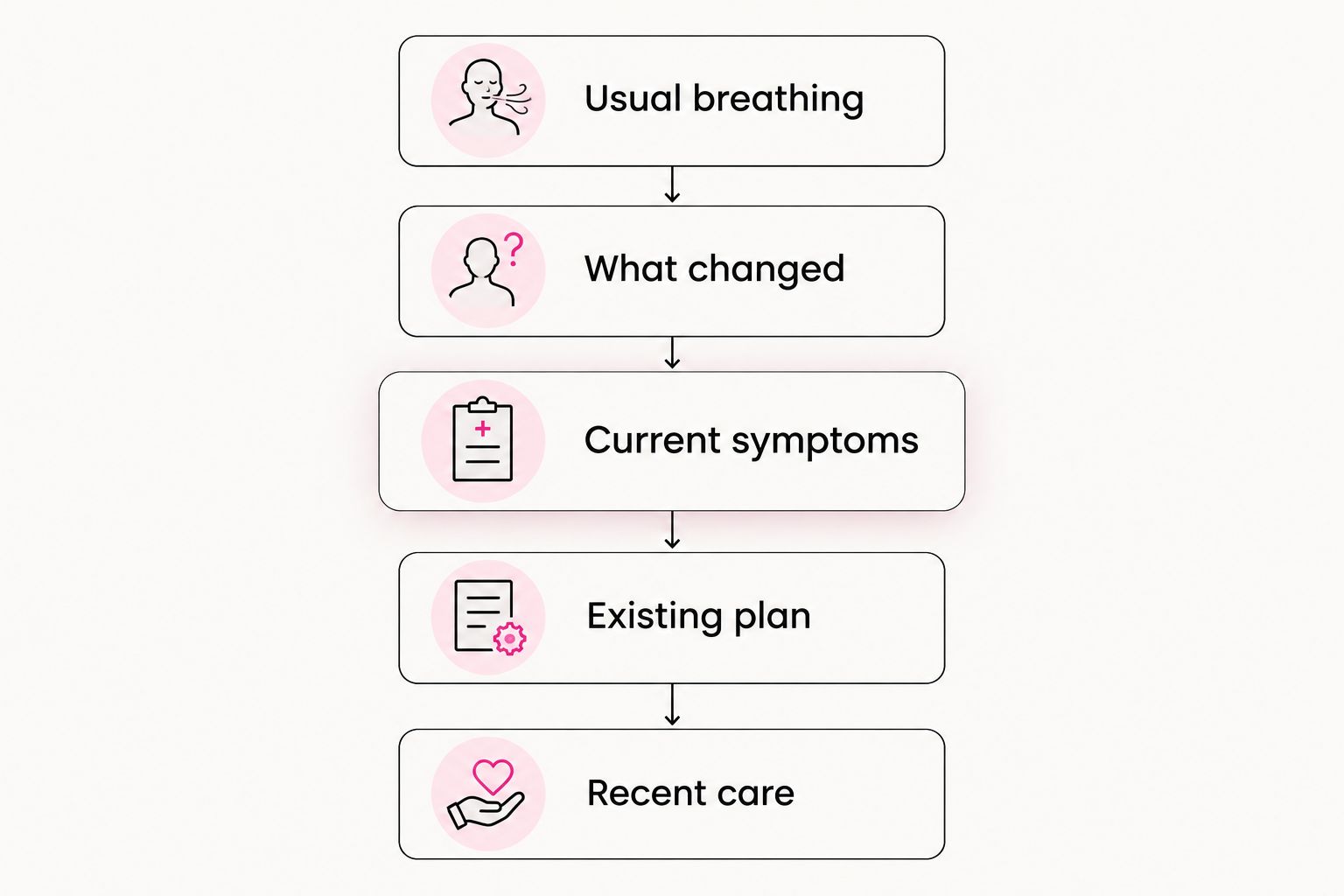
Clear observations are more useful than trying to name the illness. The same information helps a family member speak to a GP and helps a home care worker give an accurate handover.
- Usual breathing: explain what the person normally manages, including walking around the home and speaking comfortably.
- What changed: describe when the difference began and whether it appeared suddenly or developed gradually.
- Current symptoms: report breathing difficulty at rest, trouble speaking, chest discomfort, fever, confusion or other changes you have noticed.
- Existing plan: mention known diagnoses, prescribed medicines, oxygen if used, and any written medical action plan.
- Recent care: explain any recent hospital attendance, discharge instructions or changes to treatment.
Share observations rather than conclusions. Saying that your parent now stops halfway to the bathroom conveys more than saying their lungs seem weak. You do not need to make the person repeat an activity to demonstrate the problem.
For professional referrers, distinguish what you observed from what the client or family reported. Record who received the handover and what advice was given, following your organisation's procedures. Documentation supports continuity of care; it must not delay an emergency call.
What should families arrange before a planned home visit?
Once urgent concerns have been addressed, gather the information that will help the physiotherapist understand the person's needs. For a planned visit in 2026, current information matters more than a long history that no longer reflects the person's condition.
Have relevant discharge instructions, a medicine list and any breathing action plan available. Explain the person's goals in everyday terms, including tasks they find difficult and what they would like support to do. Tell the service about any changes since the medical assessment, rather than assuming an earlier referral still describes the situation.
If you are arranging care in Punchbowl, a nearby suburb or elsewhere in Greater Sydney, provide the suburb and practical access details when enquiring. Confirm whether the proposed visit suits the person's needs and location. An enquiry is not confirmation of an appointment, funding or clinical suitability.
Discuss a planned home visit
Ask Simon whether home physiotherapy suits your needs after urgent medical concerns have been addressed.
Can you wait for home physio if breathlessness settles?
Call 000 if severe breathlessness or other emergency warning signs are present, even if symptoms fluctuate. If an episode has settled but was new, unexplained or different from usual, seek prompt medical advice about what happened. Improvement alone does not establish that the cause was harmless.
Do not use a booked physiotherapy visit as reassurance that waiting is safe. Tell the medical clinician about the episode and follow their advice about further assessment.
Can breathing exercises replace medical assessment?
Breathing exercises cannot establish the cause of new breathlessness or replace urgent assessment. A technique that has been prescribed for a stable condition is not a general treatment for every episode of breathing difficulty.
For respiratory care in 2026, the safe distinction remains the same: follow an individual plan for an assessed condition, but seek medical help for new or worsening symptoms. Do not start an unfamiliar exercise programme while trying to decide whether a breathing change is serious.
FAQ
Should I call an ambulance if my parent cannot finish a sentence because of breathlessness?
Call 000 if your parent cannot speak normally because they are struggling to breathe. Stay with them and follow the call-taker's instructions rather than waiting for a home physiotherapy visit.
Is respiratory physiotherapy at home suitable for sudden shortness of breath?
Respiratory physiotherapy at home is not the appropriate first response to sudden shortness of breath. Sudden or severe breathing difficulty needs emergency assessment; call 000.
Does an existing lung condition make new breathlessness less urgent?
An existing lung condition does not make new or worsening breathlessness less urgent. Follow the person's medical action plan and seek help according to the symptoms, including calling 000 for emergency warning signs.
Who can I call if I am unsure how urgently breathing symptoms need assessment?
Call healthdirect on 1800 022 222 for telephone health advice in Australia when there are no emergency warning signs. The service operates 24 hours a day, 7 days a week; severe breathing difficulty needs 000 instead.
Can a home physiotherapist help after a respiratory illness?
A home physiotherapist can assess whether planned rehabilitation or respiratory treatment is appropriate after a respiratory illness. The approach depends on medical advice, current symptoms and the person's goals; new or worsening breathlessness needs medical assessment first.
What should a support coordinator include in a respiratory physiotherapy referral?
Include the reason for referral, the person's goals, relevant medical information and any current action or discharge plan. New or worsening breathlessness needs medical attention before a routine referral process.
Does Foveria Health provide respiratory physiotherapy at home in Sydney?
Foveria Health provides respiratory physiotherapy at home across Greater Sydney. Discuss the person's needs and location with Simon to establish whether a planned visit is appropriate; do not use an appointment enquiry for urgent breathing symptoms.
One last thing
A change from the person's usual breathing matters more than whether they already have a diagnosis. Before a planned home visit in 2026, write down what has changed and share it with the treating clinician. If breathing becomes severe or emergency warning signs appear, put the paperwork aside and call 000.