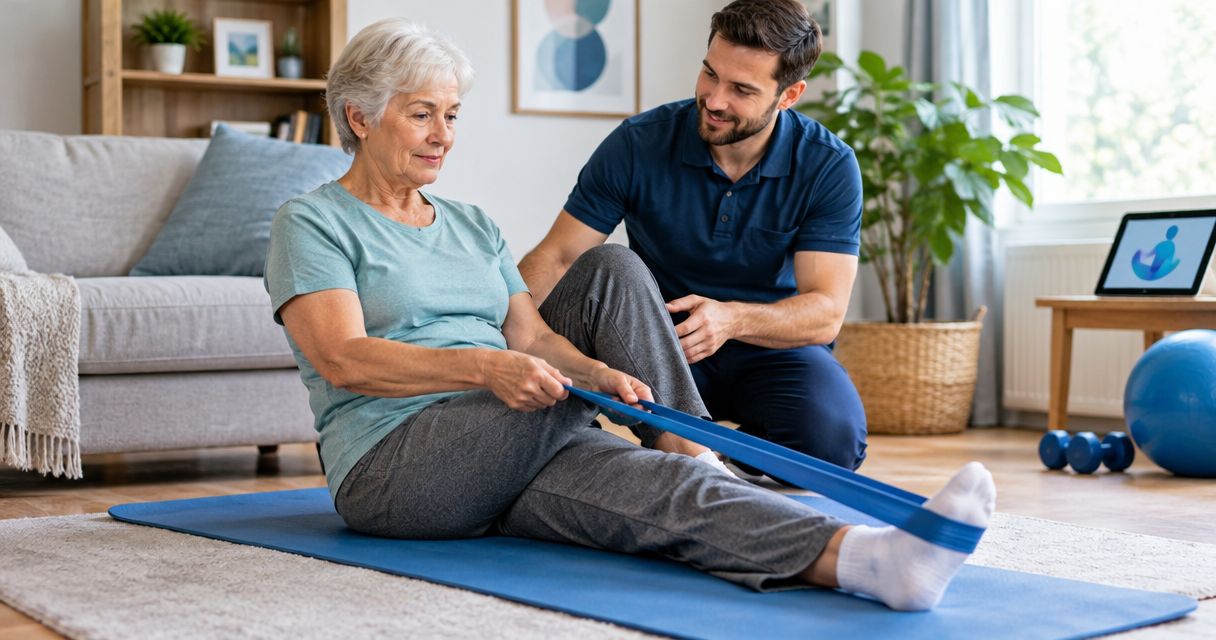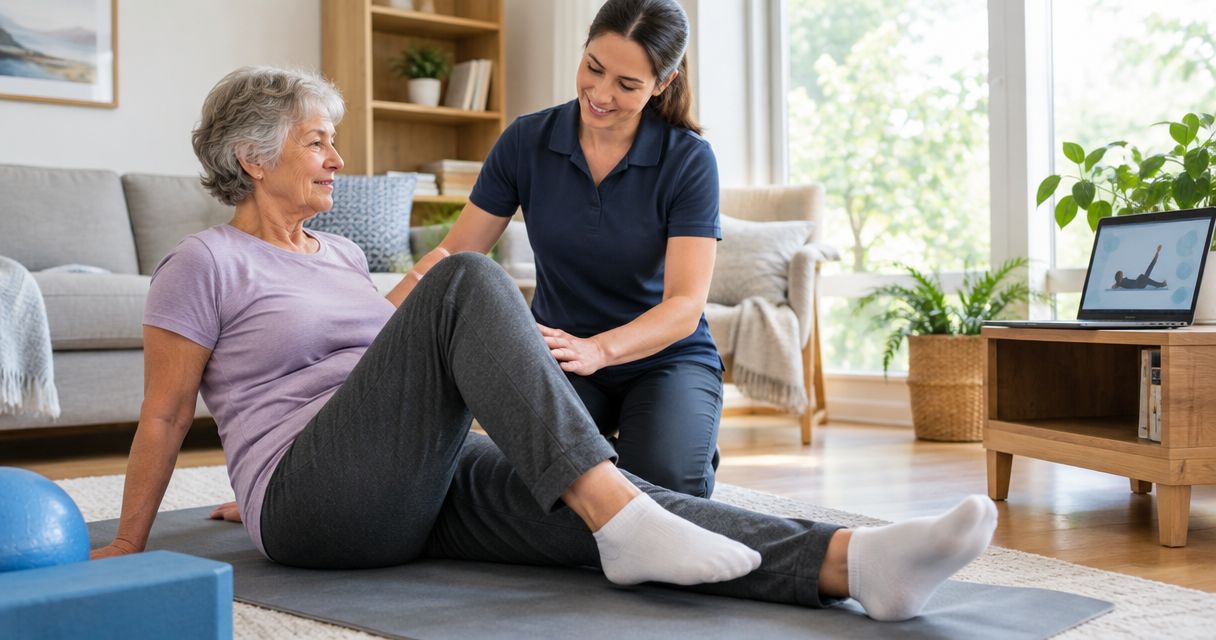
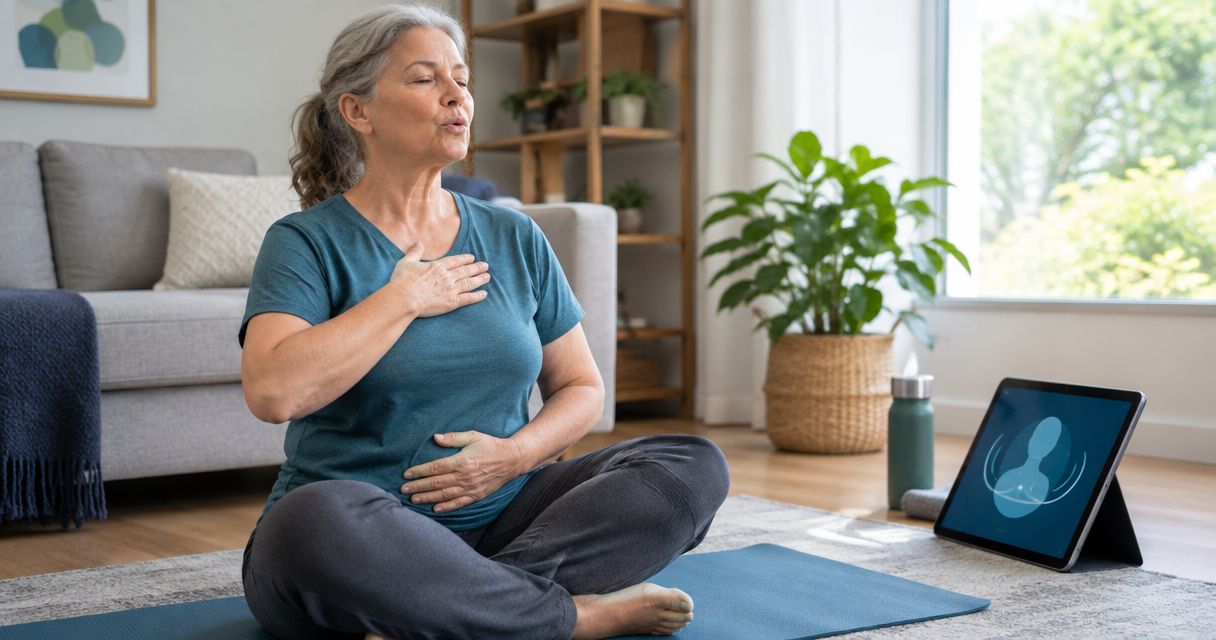
For people living with COPD, respiratory physiotherapy at home is assessment and treatment focused on breathing, movement and, when needed, clearing mucus, with the aim of supporting everyday activity. COPD affects people differently, so your home plan should reflect your symptoms, medical care and the tasks you want to manage—not a standard breathing-exercise sheet.
- Foveria Health offers respiratory physiotherapy at home for people seeking assessment and treatment across Greater Sydney.
- COPD care should connect breathing support with daily activities, movement and your existing medical plan.
- Airway clearance is not necessary for everyone with COPD; assessment comes before choosing techniques.
- Sudden or severe breathing difficulty needs urgent medical help, not a routine home physiotherapy appointment.
Why respiratory physiotherapy matters for people with COPD
Breathlessness can make showering, dressing and walking outside feel demanding. Travelling to an appointment adds another task, particularly when you also need transport or someone to accompany you.
A home assessment lets you discuss those difficulties where they happen. Your physiotherapist can consider your usual chair, the route to your bathroom and the activities you avoid, rather than relying only on a description of your day.
Foveria Health provides respiratory physiotherapy at home for Greater Sydney clients seeking assessment and treatment in familiar surroundings. The service includes clients in aged care, NDIS, private and Medicare settings; the appropriate arrangements need individual confirmation. You can read about Foveria Health before discussing your needs with Simon.
For your 2026 care planning, keep the distinction clear: physiotherapy supports COPD management but does not replace prescribed medicines, medical reviews or an emergency action plan. It does not reverse COPD, and no practitioner should promise that every person will become less breathless.
How to arrange respiratory physiotherapy at home
Start with your daily priorities
Write down what you want help with before looking for particular treatments. A practical goal gives the assessment a clearer purpose than simply asking for stronger lungs.
Choose 3 daily tasks that matter to you, such as getting dressed, walking to the letterbox or preparing lunch. Describe what interrupts each task: breathlessness, coughing, fatigue, pain, fear of falling or a combination. You do not need to test your limits or provoke symptoms to prepare this list.
If you support someone with COPD, ask what they want to change rather than choosing goals on their behalf. Independence means different things to different people.
- Name the tasks you want to make more manageable.
- Describe where you stop or need help.
- Note whether symptoms have recently changed.
- Include activities you have stopped doing.
- Ask the person receiving care which goal comes first.
Gather your medical information
Begin with information you already have at home. A current medicine list, recent discharge summary and existing COPD action plan help your physiotherapist understand the care already in place.
Prepare a 1-page summary if that makes sharing information easier. Include relevant diagnoses and the clinicians involved, but do not worry about producing a polished document. For a 2026 appointment, check that older paperwork still reflects your current medicines and instructions.
Tell the physiotherapist about prescribed oxygen and any instructions attached to it. Do not change oxygen settings, inhalers or other medicines to prepare for the visit. If breathing has worsened, follow your medical action plan and seek medical advice rather than waiting for routine physiotherapy.
- Gather your current medicine list.
- Find any COPD action plan or discharge instructions.
- Note recent hospital admissions or chest infections.
- Record other conditions affecting movement or exercise.
- Bring existing instructions for prescribed oxygen.
Discuss the appointment before booking
Contact the practice with a short description of your needs and your suburb. Ask whether home respiratory assessment is appropriate, what information Simon needs and how the visit will fit with your existing care.
Foveria Health offers in-home respiratory physiotherapy across Greater Sydney. If you live in Punchbowl or a nearby suburb, give your address when enquiring; do the same elsewhere in Greater Sydney rather than assuming appointment arrangements.
You can prepare the background information yourself, then ask Simon to guide the assessment and next steps. Family members, home care providers and support coordinators can help organise information with your consent. The physiotherapy referral checklist for home care providers provides a related starting point for professional referrers.
- Explain the main reason for seeking help.
- Provide your suburb and relevant access details.
- Ask what referral or clinical documents are needed.
- Confirm fees and payment arrangements directly.
- Ask whether your chosen support person can attend.
Prepare your usual living space
You do not need to turn your lounge room into a gym. Ask what space is needed and prepare a comfortable area where you can talk without feeling rushed.
Keep your usual walking aid nearby and leave everyday items in their normal places unless they create a trip hazard. Seeing how you manage your actual surroundings helps make the conversation practical. Tell the physiotherapist about stairs, difficult entry or pets before the visit.
A family member can help with preparation, but should avoid rearranging everything around assumptions about treatment. The first priority is a safe, useful assessment—not having exercise equipment ready.
- Clear loose items from the main walking route.
- Keep your usual walking aid within reach.
- Choose a comfortable place to sit and talk.
- Have medical paperwork ready in one place.
- Explain entry instructions and access difficulties.
Build an individual plan with your physiotherapist
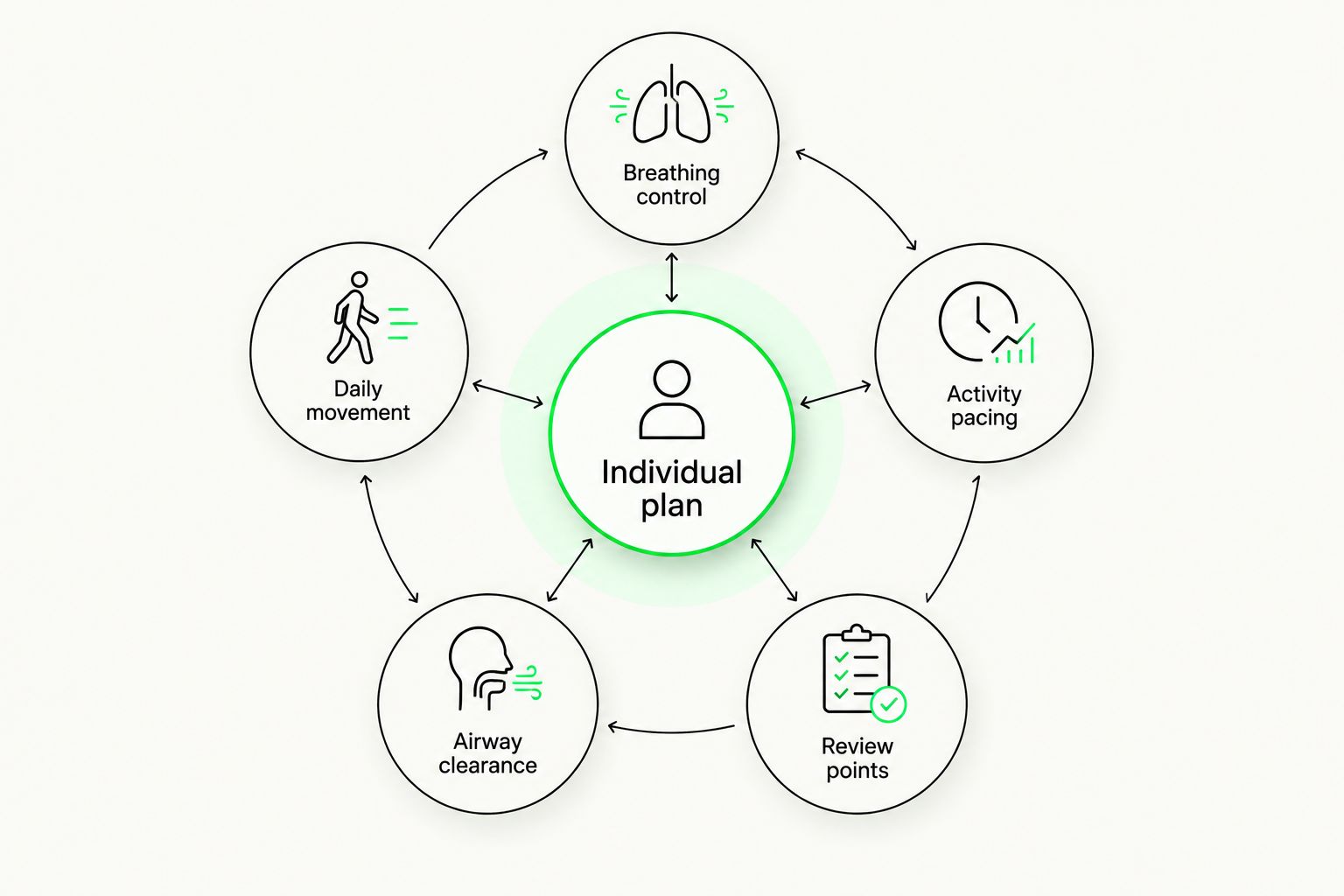
Respiratory physiotherapy is not one technique. Assessment helps determine whether the useful focus is breathing control, movement, pacing, airway clearance or a combination.
Breathing strategies can support symptom management, while individually prescribed movement addresses strength and activity tolerance. Airway clearance techniques help move mucus when there is a reason to use them; they are not automatically needed because someone has COPD. Pulmonary rehabilitation is another important option to discuss because it combines exercise, education and support rather than focusing only on breathing exercises.
Ask why each part of the plan is included. You should understand what to practise, how to recognise difficulty and when to stop and seek advice. Avoid copying an online routine or buying breathing devices before assessment.
- Discuss breathing control for relevant activities.
- Ask about daily movement matched to your assessment.
- Consider activity pacing around meaningful tasks.
- Discuss airway clearance if mucus is a concern.
- Agree on review points and safety instructions.
Review progress against everyday tasks
Start with a simple written record rather than buying tracking equipment. Note what you managed, what made the task difficult and whether the plan was practical to follow.
Progress is not only a longer walk. It can include understanding how to pace a task, knowing when to ask for help or feeling clearer about your instructions. Changes in symptoms still need appropriate clinical review; do not interpret a difficult day as a reason to push harder.
Bring 2 questions to each review: what should stay the same, and what needs adjusting? For families and referrers, agree who will receive updates and obtain the person's consent before sharing health information.
- Record changes in the tasks you identified.
- Note difficulties following the agreed plan.
- Report new or worsening symptoms promptly.
- Ask before increasing exercise or changing techniques.
- Confirm who will receive agreed care updates.
Compare your support options in 2026
The right option depends on your needs, not on which setting sounds most convenient. Home physiotherapy, clinic appointments and pulmonary rehabilitation serve overlapping but different purposes. Medical care remains essential alongside them.
| Option | Best for | Main advantage | Key limitation |
|---|---|---|---|
| Foveria Health home respiratory physiotherapy | Greater Sydney clients wanting assessment in their own surroundings | Connects assessment with everyday tasks at home | Does not replace medical treatment, emergency care or every component of pulmonary rehabilitation |
| Clinic-based physiotherapy | People who can travel and prefer attending a clinic | Provides assessment and treatment outside the home | Requires travel and does not directly show the home environment |
| Pulmonary rehabilitation | People seeking a structured COPD exercise and education programme | Combines activity, education and support | Requires assessment and confirmation of local programme arrangements |
| GP or respiratory specialist review | People needing diagnosis, medical treatment review or assessment of changing symptoms | Addresses medical management and further investigation | Does not replace individual practice of everyday movement strategies |
These options are not necessarily alternatives. A home physiotherapist can work alongside your medical team, while a pulmonary rehabilitation programme can provide a different structure of support. Ask your treating clinician how the pieces should fit together.
Common mistakes when arranging COPD physiotherapy
Assuming every cough needs airway clearance
A cough does not identify the right technique by itself. Explain whether you bring up mucus, whether this has changed and what your medical team has advised. Your physiotherapist can assess whether airway clearance belongs in your plan rather than prescribing it automatically.
Waiting for physiotherapy when breathing worsens
A routine home visit is not an urgent response service. Follow your COPD action plan and seek medical advice for worsening symptoms. Call 000 for severe breathing difficulty, blue lips, collapse or new confusion. Do not wait for a physiotherapy appointment to assess these symptoms.
Treating breathlessness as a reason to avoid all movement
Stopping every activity can make daily life more restricted, but pushing through severe symptoms is not the answer either. Ask for an individually assessed plan and clear instructions about stopping. A generic online exercise target is not a substitute for that conversation.
Booking around paperwork instead of the person's goals
Families and referrers often need to organise several services at once. Still, the person receiving care should understand the purpose of physiotherapy and have a say in it. Confirm consent, priorities, payment arrangements and communication preferences rather than assuming a diagnosis settles every decision.
FAQ
Can respiratory physiotherapy at home help someone with COPD?
Respiratory physiotherapy at home can support COPD management through individual assessment, breathing strategies, movement and airway clearance when indicated. The plan should address your daily goals and existing medical care; results differ between people.
Do all people with COPD need chest clearance exercises?
No, airway clearance exercises are not necessary for everyone with COPD. A physiotherapist should assess mucus-related difficulties and explain whether a particular technique is appropriate before you practise it.
Is home physiotherapy the same as pulmonary rehabilitation?
No, a home physiotherapy appointment is not automatically a pulmonary rehabilitation programme. Pulmonary rehabilitation combines exercise, education and support; ask your treating clinician how home physiotherapy and a local programme might fit together.
Can I have respiratory physiotherapy if I use oxygen?
Tell the physiotherapist that you use prescribed oxygen before arranging an assessment. Whether treatment is appropriate depends on your health and clinical instructions; do not change oxygen settings unless your authorised treating clinician directs you to.
Do I need a referral or funding approval in 2026?
Confirm referral, payment and any funding requirements before booking. The documents needed depend on your arrangements, and a COPD diagnosis alone does not establish that a particular appointment will be funded.
Can a family member help during the home visit?
Ask whether your chosen family member or support person can attend when booking. With your consent, they can help explain daily difficulties, take notes and clarify agreed instructions without speaking over your own preferences.
Does Foveria Health offer respiratory physiotherapy in Greater Sydney?
Foveria Health offers in-home respiratory physiotherapy across Greater Sydney. Contact the practice with your suburb, goals and relevant medical information to discuss whether an appointment with Simon suits your needs.
When should I seek urgent help instead of physiotherapy?
Call 000 for severe breathing difficulty, blue lips, collapse or new confusion. For other worsening symptoms, follow your COPD action plan and seek prompt medical advice rather than waiting for a routine physiotherapy visit.
One last thing
For your 2026 care plan, choose one ordinary task to discuss in detail—not just a symptom score. Explain where you sit to get dressed, when you need a pause and what help you want to keep or reduce. That small piece of your day gives Simon a practical starting point for a conversation about care at home.