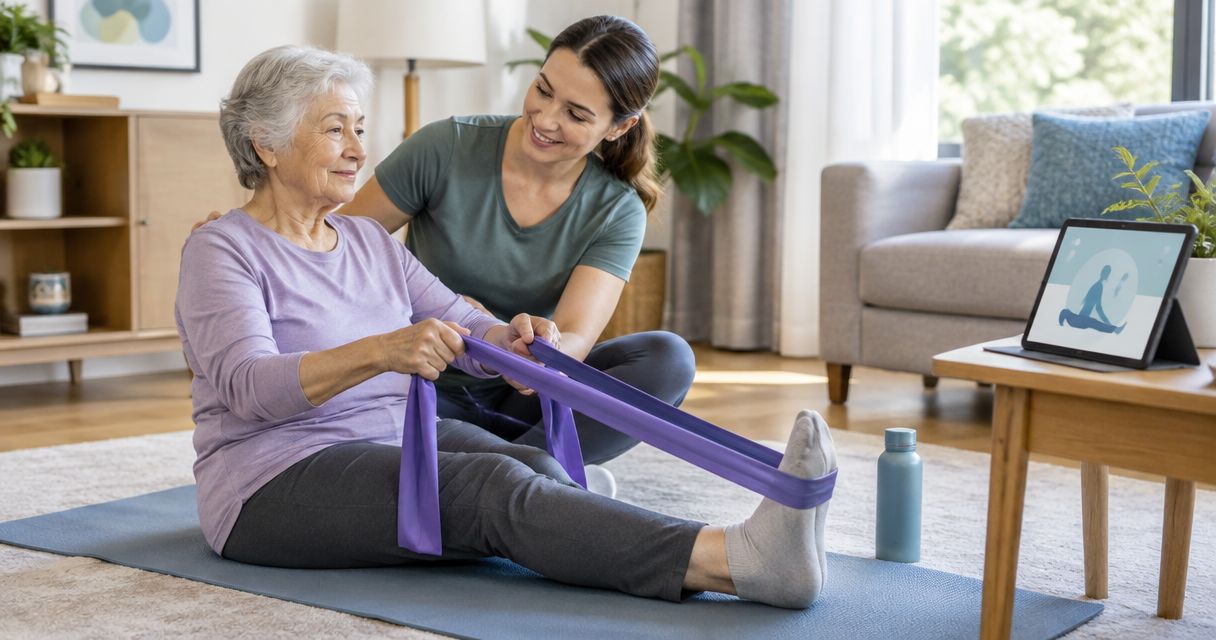

To prepare for your first physiotherapy at home visit, clear a comfortable space, gather relevant health information and write down what you want help with. Tell the practice about access needs, communication preferences and anyone you would like involved. You do not need to turn your home into a clinic: focus on making the visit easy to access and useful for your everyday goals.
- Prepare for physiotherapy at home by sharing your goals, relevant health information and home access details.
- Foveria Health offers mobile physiotherapy across Greater Sydney, with personal, goal-focused care at home with Simon.
- Gather existing documents and equipment; ask the practice before buying anything for your appointment.
- Choose whether a family member, carer or support coordinator should join, and explain the role you want them to have.
Why this matters
Your first appointment is an opportunity to explain what is difficult, what matters to you and what support you already have. Preparing those details helps keep the conversation centred on your life rather than a long list of symptoms.
For an appointment with Foveria Health, describe the everyday activity you want help with when you enquire. That might be moving around your home, returning to a familiar activity or discussing pain that is affecting your routine. You do not need clinical language to explain your concern.
If you are arranging a visit in 2026, check the appointment instructions directly with the practice. Use those instructions alongside the checklist below, particularly for paperwork, referrals and funding arrangements.
How do you prepare for your first physiotherapy visit at home?
Use these 5 preparation steps: share your goals, check access, gather information, prepare your space and confirm the arrangements. Start with what you already know. You can ask about anything you are unsure of before the appointment.
The order matters: tell the practice about your needs before making changes around the house. That gives you a chance to clarify what is relevant to your visit instead of preparing for an appointment you have imagined.
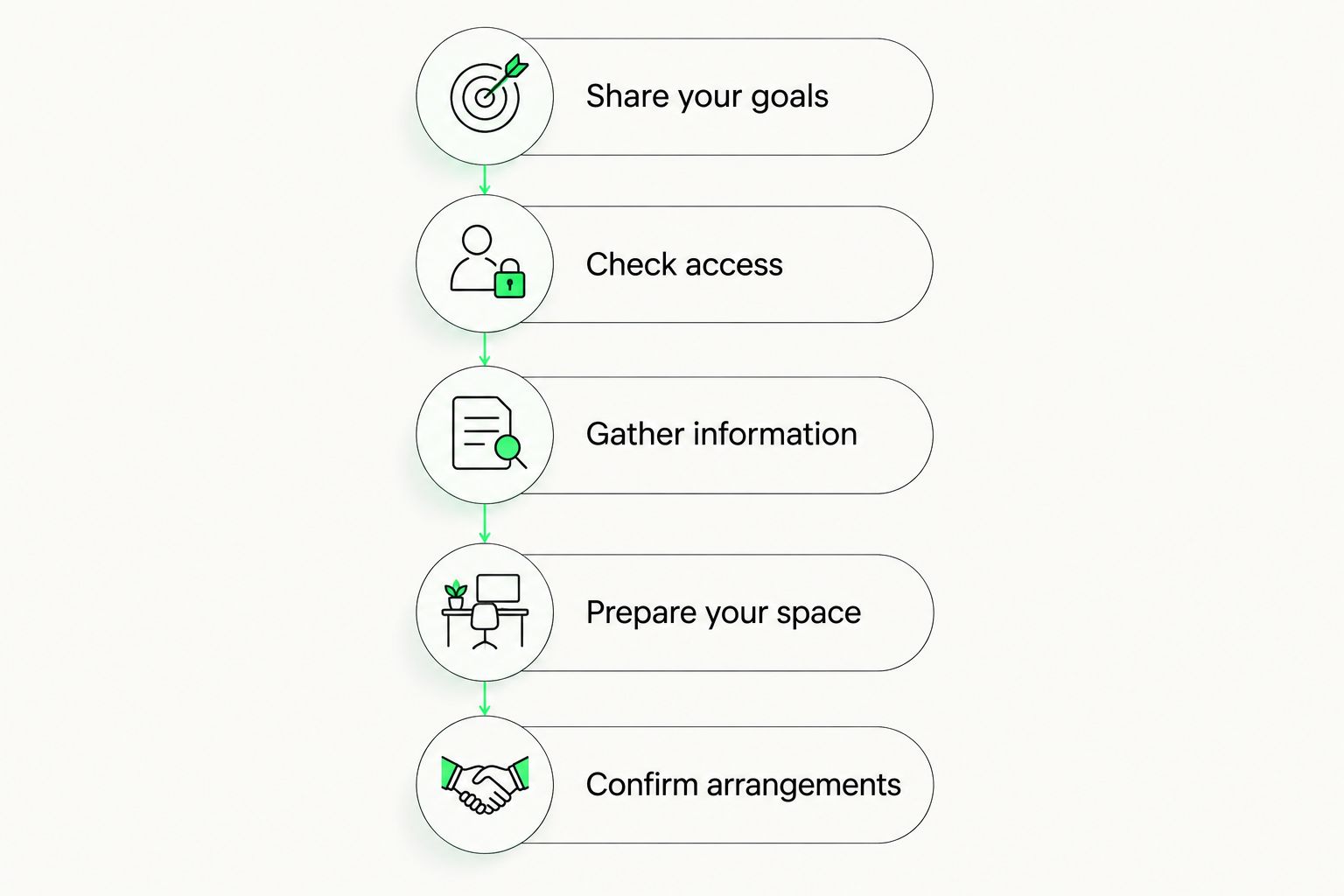
1. Share your goals
Write down 2 everyday goals you would like to discuss. These are conversation starters, not promises about what treatment will achieve. Keep them specific to your own routine.
For example, you might want to talk about getting up from your usual chair or feeling more confident moving between rooms. If pain is your main concern, explain which activities it interrupts and what you have stopped doing because of it.
You can also describe what a useful appointment would look like to you. Perhaps you want a clearer understanding of your difficulty, advice about an existing exercise plan or help deciding what to discuss with your wider care team.
Bring your priorities, not a perfect explanation. If you find it difficult to put your experience into words, a short note or a family member's observations can help start the conversation. Your own account should still lead it.
2. Check access
Give clear directions for reaching your home and entering it. Mention stairs, a lift, a locked gate, an intercom or any other detail that affects arrival. Include parking information if you know it.
For an apartment or shared building, explain where the entrance is and how the visitor should announce their arrival. If someone else needs to open the door, arrange that with them beforehand.
Keep the route from the entrance to your chosen room clear where you can do so safely. Put pets somewhere suitable for the visit, and mention any access difficulty you cannot change. Do not lift furniture or move heavy items just to prepare for an appointment.
Families arranging a visit in Punchbowl, nearby suburbs or elsewhere in Greater Sydney should give the actual address when enquiring. A suburb name alone does not explain building access or your household's needs.
3. Gather information
Keep relevant documents together so you can find them during the appointment. Useful items include an existing referral, relevant hospital discharge information, reports you already hold and your current medication list.
You do not need to chase every past record before asking for an appointment. Tell the practice what information you have and ask which documents it needs. If a report is held by another provider, ask how it should be shared rather than assuming access is automatic.
A 1-page note is a practical way to organise your own account. Include:
- Your main concern and how it affects everyday activities.
- Relevant recent treatment or changes in your health.
- Existing exercises, mobility aids or support arrangements.
- Questions you want answered before the visit ends.
For your 2026 appointment, check that the information reflects your current situation. An older discharge summary can be useful, but it does not replace explaining what has changed since you received it.
4. Prepare your space
Choose a room where you feel comfortable talking and where there is space to move around without clutter. Let the practice know if space is limited. Ask whether it needs anything specific rather than guessing.
Keep your usual chair and any mobility aid you already use accessible. Everyday items can help you explain your routine; they are not a reason to purchase new equipment before an assessment.
Wear comfortable clothing that allows you to move and discuss any privacy or clothing concerns ahead of time. You should feel able to ask why a particular movement or examination is being suggested.
Your home does not need to be spotless. Preparing means making the relevant area accessible and comfortable, not cleaning every room. If another person is helping, ask them to focus on the entrance, your chosen space and the information you want nearby.
5. Confirm arrangements
Check the appointment date, arrival arrangements and who will attend. Ask what paperwork is required and how to share it securely. Confirm the payment or funding arrangements directly before the visit rather than relying on a general article.
Tell the practice if you want a family member, carer, interpreter or support worker involved. Explain whether that person will help with communication, provide background information or take notes with your permission.
For an appointment with Simon, explain what helps you feel comfortable: a quieter room, written information or time to describe your concerns in your own words. Foveria Health's physiotherapy at home service is centred on personal, goal-focused care; sharing your preferences makes those priorities clear from the start.
If your situation changes before the visit, contact the practice. A change in your health, household access or support arrangements is relevant to planning the appointment.
Why preparation varies between home visits
There is no single setup that suits every person. The useful preparation depends on your own needs and the practical arrangements for your appointment.
- Your main concern: Explain whether the conversation is about pain, recovery, movement, breathing concerns or another difficulty. Let the practice determine the appropriate assessment.
- Your home access: Stairs, shared entrances and limited space call for clear arrival information, not assumptions.
- Your communication preferences: Say whether you prefer spoken explanations, written notes or help from someone you trust.
- Your existing care: Share relevant information about other providers, current exercises and support already in place.
- Your appointment arrangements: Ask which referral, consent or funding documents apply to your visit.
A checklist is useful for organising information, but it does not decide which treatment you need. Preparation should support an individual assessment, not replace it.
Should you attend alone or have someone with you?
Choose the arrangement that helps you communicate comfortably while keeping your preferences central. Having support is an option, not a requirement to bring an audience into your home.
| Arrangement | Best for | Useful contribution | Limitation to consider |
|---|---|---|---|
| Attending on your own | People who prefer a private conversation | You explain your concerns directly and choose what to share | You need to organise any notes or questions yourself |
| Family member or carer present | People who want help recalling information or describing daily routines | A trusted person can add observations with your permission | Their account should not replace your own priorities |
| Support worker or coordinator involved | People who need help coordinating existing care arrangements | They can clarify practical support and relevant documents | Their involvement needs a clear purpose and your consent |
Tell everyone beforehand what role you want them to have. A helpful supporter listens, adds relevant information when invited and checks that your questions have been addressed.
You can also ask for part of the conversation to be private. Having someone help arrange an appointment does not mean you have to share every personal detail with them during it.
What should families and professional referrers prepare?
If you are arranging a visit for someone else, start by asking what they want help with and whether they agree to the enquiry. Explain your relationship to them and how you are involved in their care.
A useful handover describes the reason for referral, relevant background and the practical support already available. Separate the person's own goals from observations made by family or staff. Both can matter, but they are not interchangeable.
For a 2026 referral, confirm the appropriate way to provide documents and contact details. Share information with the person's permission and through the method agreed with the practice.
Avoid sending a large collection of records without identifying the current concern. A brief explanation of what has changed and what the person wants help with gives the documents a clear purpose.
Do you need to buy equipment before home physiotherapy?
Ask before buying anything specifically for your first appointment. Start by telling the practice what you already use and whether any existing equipment is difficult to manage.
Keep your usual mobility aid or current exercise instructions nearby if they are relevant. Do not change prescribed settings, stop treatment or start unfamiliar exercises simply to prepare for the visit.
If you expect advice about equipment, add that to your questions. The first conversation should establish your needs rather than assume that a purchase is the next step.
What should you ask before the appointment ends?
Ask the physiotherapist to explain the next steps in language you understand. You should know what has been discussed, what has been agreed and which questions still need clarification.
Useful prompts include:
- What is the main priority we have agreed on?
- What should I do, or avoid doing, before our next discussion?
- Can you explain or write down the instructions again?
- Who should I contact if I have a question about the plan?
If a family member or worker will help afterwards, ask how to include them appropriately. Do not assume they know the plan simply because they attended part of the visit.
FAQ
How do I prepare for physiotherapy at home?
Prepare for physiotherapy at home by sharing your goals, checking access, gathering relevant information and making a comfortable space available. Confirm the practice's appointment instructions before the visit.
Does my house need to be tidy for a physiotherapy visit?
Your house does not need to be spotless for a physiotherapy visit. Focus on a clear entrance and a comfortable area, and tell the practice about space or access difficulties you cannot change.
What should I wear for physiotherapy at home?
Wear comfortable clothing that lets you move. Ask the practice whether your particular assessment needs anything different, and explain any privacy or clothing concerns beforehand.
Can a family member stay during my home physiotherapy appointment?
You can ask for a family member to be involved in your home physiotherapy appointment. Tell the practice what support you want and which information you are comfortable sharing.
Do I need a referral for my first home physiotherapy visit?
Ask the practice whether a referral is required for your particular appointment and arrangements. Confirm the documents needed before booking rather than assuming the same process applies to every client.
What should an NDIS participant prepare for a home physiotherapy enquiry?
Prepare your goals, relevant health information and questions about the documents required for your appointment. Confirm the proposed funding and payment arrangements directly; an enquiry does not establish eligibility or approval.
How do I arrange physiotherapy at home with Foveria Health in 2026?
Contact Foveria Health with your Greater Sydney address, main concern and preferred support arrangements. Ask about appointment availability, required documents and the arrangements relevant to your visit.
One last thing
Describe the task, not just the symptom. Saying that a particular chair is difficult to get out of gives the conversation a practical starting point; saying only that your legs feel weak leaves more to explain.
Foveria Health is a fit for Greater Sydney clients seeking personal, goal-focused physiotherapy at home with Simon. For your first visit in 2026, bring the everyday goal that matters most to you—not a polished medical explanation.