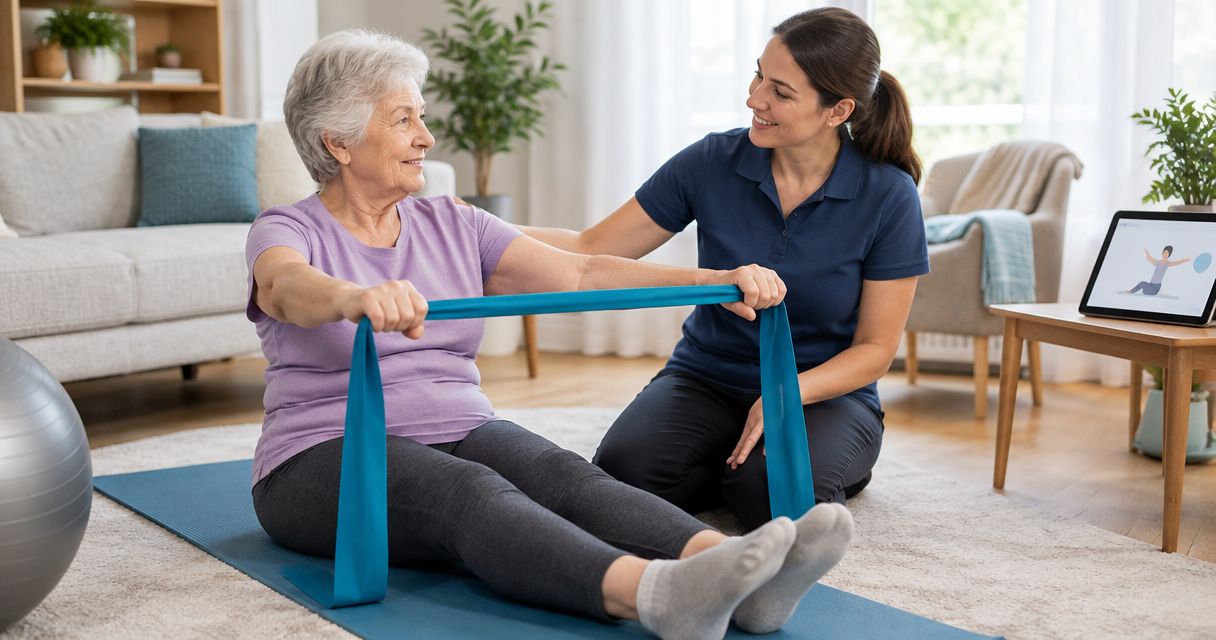
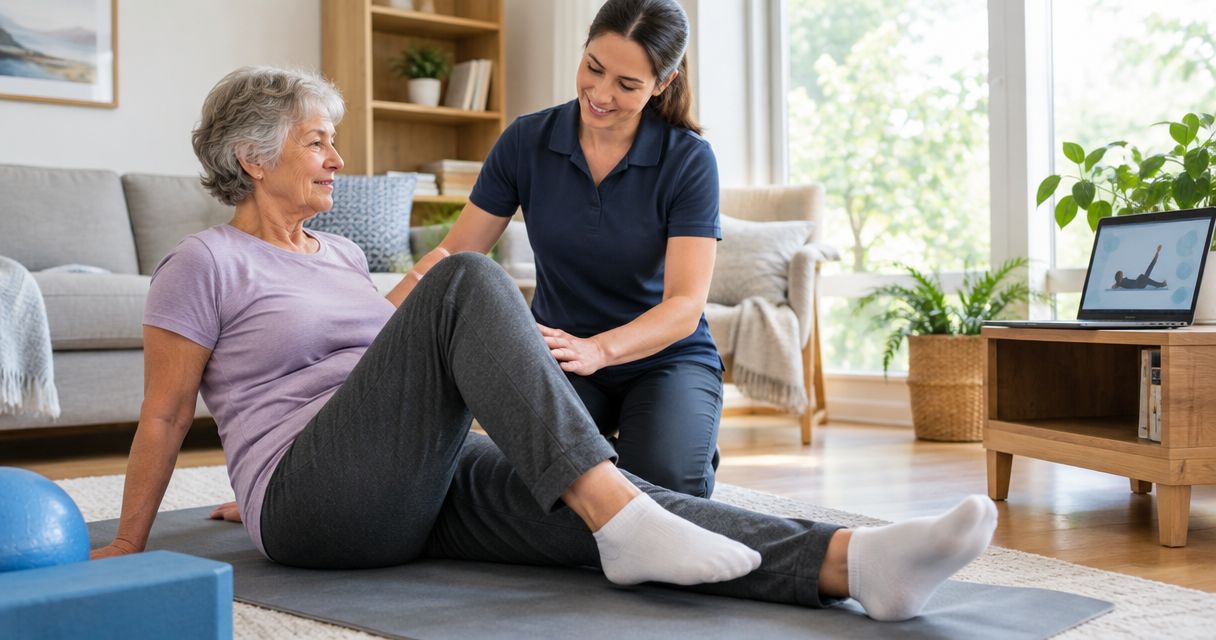
Knee replacement rehabilitation at home is physiotherapy that supports your recovery in your own surroundings, with the aim of improving movement and everyday independence after surgery. This 2026 family guide explains how to arrange physiotherapy after surgery at home, prepare for visits and support recovery without taking over the treating team’s role.
- Physiotherapy after surgery at home should follow your hospital discharge instructions and individual assessment.
- Foveria Health offers mobile physiotherapy for Greater Sydney clients seeking assessment and treatment at home.
- Confirm suitability for knee replacement rehabilitation before arranging a visit.
- Family support helps organise care; it does not replace professional assessment or surgical follow-up.
Why home physiotherapy matters after knee replacement
Returning home changes the setting for recovery. Instead of practising in a hospital environment, you need to manage your own chair, bathroom, doorway and usual walking routes. Getting to an appointment also requires a transport plan.
Home physiotherapy lets the clinician assess movement in the surroundings where you use it. Its limitation is equally important: a home visit does not replace wound care, surgical review or urgent medical assessment.
Foveria Health provides mobile physiotherapy across Greater Sydney. Ask whether Simon can support your particular post-operative needs, and share the hospital’s instructions before an appointment is arranged.
For families organising care in 2026, the useful question is not simply whether home visits are convenient. It is whether the proposed care fits the discharge plan, the person’s goals and the support available at home.
How to arrange physiotherapy after surgery at home
Gather your discharge instructions
Start with the paperwork provided by the hospital. Find the exercise instructions, mobility advice, follow-up arrangements and contact details for questions after discharge. If something is unclear, ask the hospital team rather than filling the gap yourself.
Keep these documents together in a folder or shareable file. Your home physiotherapist needs to understand any restrictions before assessing or changing activities. Tell the clinician about other health conditions and any difficulty following the discharge plan.
Families do not need to turn this into a medical report. Clear information about the operation, current concerns and existing advice is more useful than a long account assembled from memory.
- Discharge notes: keep the hospital summary and exercise instructions together.
- Surgical instructions: highlight restrictions or precautions given by the treating team.
- Care contacts: record who to contact about wounds, medicines and rehabilitation.
- Follow-up details: keep surgical appointments separate from physiotherapy bookings.
Choose a setting that fits your needs
Begin by asking the discharging team what rehabilitation arrangements are already planned. You might have follow-up physiotherapy organised, instructions for arranging it yourself, or questions that need clarification before choosing a service.
Home visits suit people who want their movement assessed in their own environment. Clinic appointments suit people who can attend and whose care is appropriately delivered there. Remote appointments remove travel, but the clinician cannot physically assist or examine you in the same way.
Choose the setting around clinical suitability, not convenience alone. Ask what each appointment can assess and what would require an in-person review. Do not cancel an existing rehabilitation arrangement until you understand how any new service will fit alongside it.
- Ask what follow-up is already arranged.
- Explain any difficulty travelling or leaving home.
- Identify whether hands-on assessment is needed.
- Check who will coordinate changes to the rehabilitation plan.
Confirm the clinician’s suitability before booking
You can start with a written enquiry using the discharge information you have gathered. Explain that the appointment concerns recovery after knee replacement, rather than requesting a general visit without context.
Foveria Health mobile physiotherapy is best suited to Greater Sydney clients seeking assessment and treatment at home. For knee replacement rehabilitation, confirm that Simon can meet the individual’s needs before booking; a general mobile service description does not establish suitability for every post-operative situation.
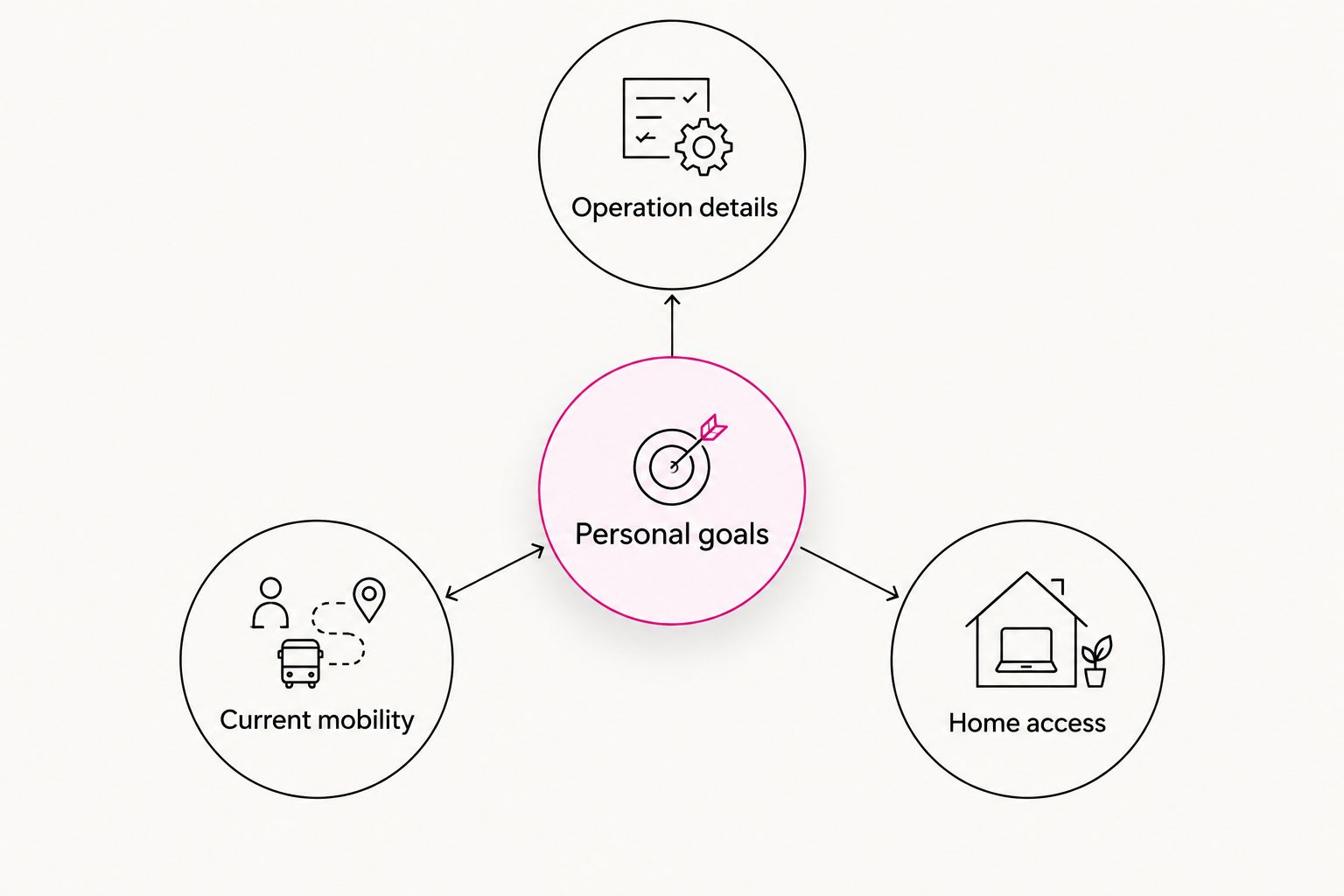
When enquiring in 2026, include the suburb, operation details, current mobility and any hospital instructions. Families in Punchbowl and nearby suburbs should also explain access arrangements. Ask about your address rather than assuming coverage or appointment timing.
- Operation details: provide the procedure and discharge information.
- Current mobility: describe walking aids and help currently needed.
- Home access: explain stairs, entry arrangements and parking constraints.
- Personal goals: name the everyday activities that matter most.
These details give the clinician a clearer starting point than a request for exercises alone.
Clarify referrals and payment arrangements
Ask the proposed provider what information is needed to arrange care. Keep the clinical referral question separate from the payment question: paperwork that helps a clinician understand your needs does not, by itself, confirm how an appointment will be paid for.
If you intend to use a funding arrangement, contact the relevant provider, plan manager or administrator before agreeing to visits. Ask them to confirm the process for your circumstances. Do not assume that a knee replacement, an existing plan or a previous appointment establishes coverage.
For professional referrers, the enquiry should state who is coordinating care and who needs appointment information. Obtain the person’s permission before sharing health details with family members or other services.
- Ask which referral and discharge documents are needed.
- Confirm the proposed payment arrangement directly.
- Identify who can authorise appointments where relevant.
- Agree who should receive care updates, with consent.
Prepare the home without buying equipment first
Use the discharge team’s advice as your starting point. Keep the walking aid you were given accessible, and avoid changing its setup without professional guidance. You do not need to create a treatment room before the clinician visits.
Tell the physiotherapist about narrow passages, steps, pets or other practical issues. Ask what space is needed for the planned assessment instead of moving furniture or purchasing equipment on assumption.
A family member can help collect documents and explain the household routine. The person receiving care should still lead the conversation wherever possible. Ask what support they want, including whether they would like someone present throughout the appointment.
- Keep discharge paperwork and the current exercise plan nearby.
- Make the agreed assessment area accessible.
- Put pets somewhere separate during the visit.
- Describe the routes used to reach the bathroom and bedroom.
- Ask before buying equipment or changing a walking aid.
Agree on goals and a manageable home plan
Start with ordinary activities that matter to you: getting out of your usual chair, reaching the bathroom or moving through the front doorway. These goals help the physiotherapist connect the assessment with daily life.
Exercise selection, repetitions and progression should come from the treating clinician. A family member should not add exercises from an online video or increase the workload because another person recovered differently. Ask what to do if an activity is difficult or symptoms change.
Keep your 2026 care notes in one place so instructions remain easy to find. A brief record of questions and difficulties is useful; turning every movement into a test is not.
- Choose meaningful daily activities to discuss.
- Ask for clear written exercise instructions.
- Clarify what family members should help with.
- Record questions to raise at the next review.
- Check who can change the rehabilitation plan.
Keep the wider care team informed
Home physiotherapy is part of recovery, not the whole of it. Continue surgical follow-up and use the medical contacts provided at discharge for concerns outside the physiotherapist’s role.
Ask the treating team how to respond to new symptoms. Sudden breathlessness or chest pain requires urgent medical attention; call 000. Do not wait for a routine home visit. New calf pain or swelling, fever, or increasing wound redness or drainage needs prompt medical advice.
For non-urgent questions, agree on a contact route rather than asking several people for conflicting instructions. The guide to arranging physiotherapy at home after surgery explains the practical booking conversation.
- Keep discharge contact details easy to find.
- Attend planned surgical reviews.
- Report changes rather than adjusting treatment yourself.
- Share relevant updates between clinicians, with consent.
- Seek urgent help for urgent symptoms.
Compare rehabilitation options
The best option is the one that matches your assessed needs and discharge plan. Different settings offer different kinds of support; none is automatically right for every knee replacement patient.
| Option | Best for | Main benefit | Key limitation |
|---|---|---|---|
| Home physiotherapy | People needing assessment in their home surroundings | Connects rehabilitation with household tasks and access | Does not replace surgical or urgent medical care |
| Clinic physiotherapy | People who can attend and receive suitable care there | Provides an in-person assessment outside the home | Requires travel and does not directly show the home environment |
| Telehealth physiotherapy | People whose clinician considers remote review appropriate | Allows discussion and observation without travel | Cannot provide hands-on examination or physical assistance |
| Discharge exercise plan | People following activities prescribed by their treating team | Gives instructions to use between reviews | Cannot reassess a new difficulty or independently adjust itself |
You can discuss how settings fit together rather than treating this as a permanent choice. A change in your circumstances is a reason to review the arrangement, not to abandon the discharge plan without advice.
Common mistakes families make
Using someone else’s recovery as a deadline
A neighbour’s progress does not set your timetable. Ask the treating clinician which changes matter for your situation and what should prompt a review. Avoid turning another person’s walking distance or exercise routine into a target.
Helping without checking what support is appropriate
Lifting, pulling or changing a walking aid can introduce problems when the method has not been assessed. Ask the physiotherapist to explain the family’s role. Support should respect the person’s preferences as well as the clinical instructions.
Assuming all follow-up is included in one service
A physiotherapy appointment, wound review and surgical follow-up serve different purposes. Keep each arrangement clear. If you are unsure who handles a concern, use the discharge contacts rather than waiting for the next routine visit.
Booking before sharing important details
An enquiry that only says someone needs physio after surgery leaves practical questions unanswered. Share restrictions, current mobility, access details and the person’s goals so the provider can consider suitability before the visit.
FAQ
Can I have physiotherapy after knee replacement at home?
Home physiotherapy is an option when it suits your assessed needs and discharge plan. Share your hospital instructions with the proposed physiotherapist and confirm suitability before arranging care.
When should I book physiotherapy after surgery at home?
Follow the timing and arrangements given by your hospital or treating team. If no appointment is organised, contact them to clarify the next step rather than choosing a start date from a general online guide.
Is home physiotherapy better than going to a clinic?
Neither setting is better for everyone. Home visits allow assessment in your everyday surroundings, while clinic appointments require travel; the choice should follow your needs and the rehabilitation plan.
Can Foveria Health help after a knee replacement?
Foveria Health provides mobile physiotherapy in Greater Sydney; confirm suitability for your knee replacement rehabilitation directly with Simon. Provide discharge instructions, current mobility, your suburb and any restrictions when enquiring.
Should a family member attend the home visit?
A family member can attend if the person receiving care wants them there. Agree on their role so they can help with information and understand support instructions without taking over the appointment.
Can we use exercises found online after knee surgery?
Use the exercise plan prescribed by your treating team rather than adding an online routine yourself. Ask your physiotherapist to assess any difficulty and explain appropriate changes.
What should I do if new symptoms develop between visits?
Use your discharge instructions and seek medical advice rather than waiting for the next physiotherapy visit. Sudden breathlessness or chest pain requires urgent medical attention: call 000.
One last thing
Before arranging rehabilitation in 2026, ask the person recovering this question: What would make being at home feel easier? Their answer might be getting to the bathroom with more confidence or managing a familiar chair.
Bring that answer to Simon alongside the discharge paperwork. A practical goal gives the appointment a personal starting point without promising a particular result.