

Families’ respiratory physiotherapy at home is assessment and individually selected treatment for breathing-related difficulties, with the aim of supporting everyday function at home. This 2026 guide explains how to arrange care, involve your family and distinguish a planned physiotherapy visit from a problem needing medical attention.
- Foveriahealth suits Greater Sydney families seeking respiratory physiotherapy at home, with individual assessment rather than a standard breathing routine.
- Home physiotherapy supports planned care; it does not replace medical assessment or emergency treatment.
- Ask about respiratory assessment, family involvement and referrals before arranging a visit.
- Confirm funding arrangements individually; receiving support does not automatically establish coverage for a particular appointment.
Families often help organise appointments, explain changes and remember instructions. The person receiving care should still guide decisions wherever possible, including who attends and which everyday activities matter most. Foveriahealth offers mobile physiotherapy, including respiratory assessment and treatment, across Greater Sydney.
Why respiratory physiotherapy matters for families
Breathing difficulties can affect ordinary activities such as getting dressed, moving around the house or leaving home. A home assessment gives the physiotherapist a chance to discuss those activities in the setting where they happen, rather than relying only on a description of them.
For families, the practical value is a clearer plan: what the physiotherapist recommends, what support the person wants and when to seek further medical advice. An appointment at home also removes the journey to a clinic, although it still requires an appropriate assessment and agreed arrangements.
Foveriahealth is best suited to Greater Sydney families seeking respiratory physiotherapy at home. Personal, goal-focused care with Simon is the focus; the treatment itself depends on the assessment, not simply on a diagnosis or a request for breathing exercises.
The limitation matters too. Physiotherapy does not establish the cause of every breathing problem, replace prescribed medication or provide emergency care. New or worsening symptoms need appropriate medical attention before a family treats them as a routine physiotherapy issue.
How to arrange respiratory physiotherapy at home
Start with the medical situation, then explain the practical difficulties and agree on suitable care. You can prepare the information yourself with a written note; arranging a home assessment brings professional judgement into the process, rather than making you responsible for choosing treatment.
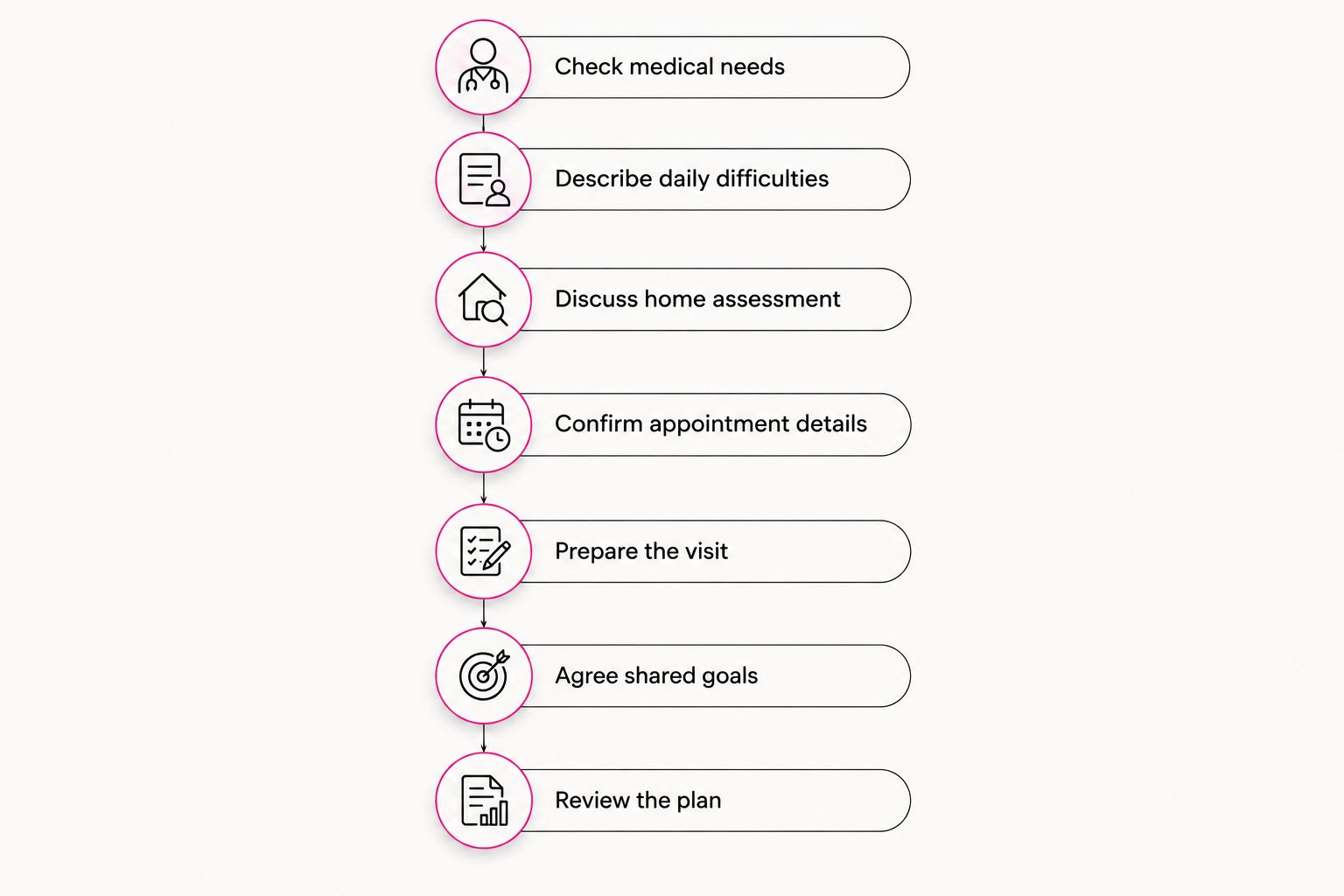
Check medical needs
Before arranging a routine visit, ask whether the breathing concern needs medical attention first. If the person has severe difficulty breathing, call 000. Do not wait for a physiotherapy appointment or an enquiry response when urgent help is needed.
For ongoing concerns, contact the treating doctor and explain what has changed. Describe the symptoms rather than trying to name the condition yourself. A recent hospital discharge, an existing respiratory diagnosis and a new unexplained problem are different starting points for an assessment.
Your role is to share accurate information, not decide which respiratory technique is appropriate. Keep any existing medical instructions available and ask the treating team how physiotherapy fits with them.
- Explain whether the difficulty is longstanding, new or worsening.
- Keep the current medical plan and discharge instructions together.
- Ask the treating doctor whether further assessment is needed first.
- Tell the physiotherapist about recent illness or hospital care.
- Use emergency services for severe breathing difficulty.
Describe daily difficulties
Write a short account of what the person finds difficult at home. A description such as becoming breathless while dressing gives an assessment a practical focus. A broad request to improve breathing provides less information about the person's priorities.
Keep the person's own words where possible. Family observations are useful, but they should not replace the person's experience or imply that everyone agrees about the problem. Note what support is already happening and which activities the person wants to manage differently.
A 1-page summary is a useful preparation tool, not a clinical requirement. Date it in 2026 so everyone can distinguish current concerns from older notes. Avoid turning it into a detailed medical history that buries the main reason for the appointment.
- Name the everyday activities affected by breathing difficulties.
- Record what the person says is hardest.
- Note recent changes without guessing their cause.
- List current assistance from family or support workers.
- Identify questions the person wants answered.
Discuss home assessment
Once the immediate medical needs are clear, ask a physiotherapist whether a home respiratory assessment fits the situation. Explain the diagnosis, if known, the practical difficulties and any advice from the treating team. Ask what information is needed before an appointment can be arranged.
Foveriahealth offers in-home assessment and respiratory treatment across Greater Sydney. Families in Punchbowl, nearby suburbs and elsewhere in Greater Sydney can enquire about care with Simon; confirm the specific address and appointment arrangements directly.
An assessment comes before deciding on treatment. Depending on the person's needs, the discussion can include breathing management, clearing mucus or activity-related difficulties. These are topics for professional assessment, not instructions to begin a routine found online.
- Describe the reason for requesting respiratory physiotherapy.
- Ask whether the concern fits the physiotherapist's scope.
- Explain relevant medical advice and existing care arrangements.
- Ask what a home assessment would involve.
- Confirm whether a family member can participate with consent.
Confirm appointment details
Separate the clinical enquiry from the administrative arrangements. A person can need physiotherapy without having confirmed how a particular visit will be funded. Ask what documents, referrals or approvals apply to the proposed appointment before agreeing to proceed.
For an appointment arranged in 2026, confirm the current requirements directly with the practice and the relevant payer or provider. Private payment, NDIS, Support at Home and Medicare-related arrangements should not be treated as interchangeable. Do not assume that participation in a program establishes coverage for this visit.
Professional referrers can help by identifying who is coordinating the appointment and who will receive administrative correspondence. Keep clinical information separate from billing instructions so neither gets overlooked.
- Confirm the person's suburb and home access details.
- Ask what referral or supporting information is required.
- Clarify the payment arrangement before the visit.
- Check any necessary approval with the relevant provider.
- Identify who handles appointment correspondence.
- Ask how changes to the appointment should be communicated.
Prepare the visit
Prepare a comfortable place for conversation and assessment without trying to recreate a clinic. Ask the physiotherapist beforehand if anything specific is needed. You do not need to buy respiratory equipment or rearrange the whole home to make an enquiry.
Gather current medication information, relevant letters and the person's questions. Tell the practice about stairs, entry instructions, pets or other practical details that affect access. These details help arrange the visit without making assumptions about the home's suitability.
Ask the person whom they want present. A family member can help remember information, but a crowded discussion can make it harder for the person to speak. There should also be an opportunity to discuss private concerns without relatives present if requested.
- Keep relevant documents somewhere easy to reach.
- Prepare a comfortable area for the discussion.
- Explain entry arrangements and access barriers.
- Ask before purchasing equipment for the appointment.
- Agree who will attend with the person's consent.
Agree shared goals
Begin with what the person wants to do, rather than a treatment name. Choose 3 priorities for the discussion, such as managing personal care, moving between rooms or understanding the recommended home plan. This is a way to focus the conversation, not a prescribed number of clinical goals.
Ask the physiotherapist to explain the assessment findings in plain language. Any recommended technique should come with individual instructions, an explanation of its purpose and guidance about when to stop or seek advice. A family member should not improvise hands-on respiratory treatment.
Agree what family support is welcome and realistic. Supporting a plan does not mean supervising every activity or pushing through symptoms. Ask the person and the physiotherapist to clarify responsibilities together.
- Name the activities that matter most to the person.
- Ask what each recommendation is intended to address.
- Request a demonstration when a technique is prescribed.
- Ask what signs mean stopping and seeking advice.
- Clarify which tasks family members should not perform.
- Request written instructions if these would help.
Review the plan
Agree how the plan will be reviewed before the appointment ends. Ask what changes the physiotherapist wants reported and which concerns should go directly to the treating doctor. A routine follow-up should not become the default response to a new medical problem.
Keep 1 agreed contact for routine appointment coordination if several relatives or services are involved. This reduces competing messages, but it does not limit the person's right to communicate directly or choose who receives information.
Date the agreed plan in 2026 and keep updated instructions together. If recommendations change, make clear which version is current. The aim is a plan the person understands and can discuss, not a folder of conflicting exercises.
- Confirm the proposed review arrangements.
- Ask which changes should be reported promptly.
- Identify the contact for routine coordination.
- Keep current instructions separate from superseded notes.
- Share information only with the person's agreement.
Compare the available care settings
Choose the setting around the person's clinical needs and practical circumstances. Home care, clinic care and medical assessment serve different purposes; one is not automatically a substitute for another.
| Option | Best for | Practical benefit | Key limitation |
|---|---|---|---|
| Respiratory physiotherapy at home | People needing assessment of breathing-related difficulties in their home setting | Removes clinic travel and allows discussion of everyday activities at home | Does not replace urgent medical care or establish every cause of breathlessness |
| Clinic-based respiratory physiotherapy | People who can attend and prefer care outside the home | Provides an appointment in a dedicated clinical setting | Requires travel and does not directly show the home environment |
| GP or respiratory specialist assessment | New, unexplained or changing respiratory concerns | Addresses medical assessment and treatment decisions | Is not the same as an individual physiotherapy home plan |
| An individually prescribed home program | People continuing an agreed plan between reviews | Gives clear activities to follow outside appointments | Depends on assessment, suitable instructions and review when needs change |
Ask about the proposed service rather than assuming every physiotherapist provides the same respiratory care. Equally, a familiar breathing exercise is not evidence that it is appropriate for this person.
Common mistakes families make
Treating new breathlessness as a booking problem
A family searching for a home visit can lose sight of whether medical attention is needed first. Address new or worsening symptoms through the appropriate medical pathway, rather than simply requesting the earliest physiotherapy appointment. Severe difficulty breathing requires an emergency response.
Copying another person's breathing routine
A technique recommended to a relative or shown online is not an individual treatment plan. Respiratory needs differ, and the purpose of a technique matters. Ask for instructions based on the person's assessment instead of assembling exercises from several sources.
Making the family the main decision-maker
Adult children often organise care efficiently, but efficiency should not silence the person receiving it. Ask what they want help with, whom they want involved and what information they consent to share. Professional referrers should also distinguish the person's preferences from family requests.
Assuming the funding is already settled
A program name on a referral does not answer every administrative question. Confirm the proposed service, required documents and payment arrangements directly. This keeps an enquiry about clinical suitability separate from a decision about funding.
Passing on outdated instructions
Several helpers can unintentionally circulate different versions of a plan. For care coordinated during 2026, use dated notes and identify the current instructions clearly. Check changes with the treating professional rather than resolving conflicting advice by family consensus.
Information for support coordinators and home care providers
A useful referral explains the reason for respiratory physiotherapy, the person's goals and the relevant medical context. Include the home address, access considerations and the appropriate contact details, with consent. Avoid sending a large record without identifying the question the assessment should address.
Foveriahealth provides mobile physiotherapy for private, NDIS, aged care and Medicare-funded clients. Confirm the arrangements for the individual referral directly rather than presenting a funding pathway as an automatic entitlement.
- State the respiratory concern and relevant treating team.
- Describe the person's priorities in their own words where possible.
- Identify communication or participation needs.
- Clarify the proposed payer and approval contact.
- Explain who should receive correspondence, with consent.
FAQ
What is respiratory physiotherapy at home?
Respiratory physiotherapy at home is an individual assessment and treatment service for breathing-related difficulties in the person's home. Treatment is selected after assessment and should fit the person's medical care and everyday goals.
Is home respiratory physiotherapy better than going to a clinic?
Neither setting is automatically better; the choice depends on clinical needs, travel and personal preference. Home care removes the clinic journey and allows discussion of difficulties in the home setting, while clinic care suits people who can attend and prefer that setting.
Can I arrange respiratory physiotherapy for my parent?
You can help make an enquiry, with your parent's agreement wherever possible. Ask whom they want involved, describe their concerns accurately and confirm any consent requirements with the practice.
Do we need a referral before booking respiratory physiotherapy?
Ask the practice what referral information is required for the proposed appointment and payment arrangement. A recent medical assessment or discharge summary can also provide relevant context, but the documents needed should be confirmed individually.
Can NDIS or Support at Home pay for respiratory physiotherapy?
Coverage for a particular appointment needs individual confirmation with the relevant provider or payer. Do not assume that participation in NDIS or Support at Home establishes approval for the proposed service.
Should we start breathing exercises while waiting for a visit?
Do not start an unfamiliar respiratory technique without individual advice. Follow existing instructions from the treating team and ask for clarification if the plan is unclear or symptoms have changed.
When should we seek emergency help instead of physiotherapy?
Call 000 for severe difficulty breathing. A routine home physiotherapy appointment is not an emergency response and should not delay urgent medical care.
Does Foveriahealth offer respiratory physiotherapy around Punchbowl?
Foveriahealth offers mobile respiratory physiotherapy across Greater Sydney, including enquiries from Punchbowl and nearby suburbs. Confirm the specific address, suitability and appointment arrangements directly with the practice.
One last thing
Bring a description of an ordinary day, not just a diagnosis. Knowing which activity the person wants help with gives the assessment a practical starting point and keeps the conversation centred on their life.
Before ending the appointment, ask the person to explain the agreed next step in their own words. If anything is unclear, ask again; a plan should be understandable to the person expected to follow it.