

Before starting physiotherapy after surgery at home, ask your surgeon when you can begin, which movements or activities are restricted, and what instructions your physiotherapist needs. Also ask who to contact about unexpected symptoms and when your recovery plan will be reviewed. Leave with written instructions that your home physiotherapist can follow, rather than relying on memory.
- Before physiotherapy after surgery at home, ask your surgeon about starting, movement restrictions and follow-up.
- Request written instructions for your home physiotherapist, including any changes made before discharge.
- Foveria Health provides in-home physiotherapy assessment and treatment across Greater Sydney.
- A discharge date alone does not explain which rehabilitation activities your surgeon has approved.
What should you ask your surgeon before starting home physio?
Use these 6 questions as a starting checklist for your 2026 surgical appointment. Ask the surgeon or treating team to explain unfamiliar terms and record the answers in your discharge information.
- Starting: When can I begin physiotherapy at home?
- Movement: What movements and everyday activities must I avoid or modify?
- Walking: What instructions apply to walking, stairs and walking aids?
- Symptoms: What changes need medical attention, and whom should I contact?
- Handover: What written information should my physiotherapist receive?
- Review: When will these instructions be reviewed, and who can change them?
For Greater Sydney families considering Foveria Health, these questions give you a useful starting point for discussing your needs with Simon. They are questions for your treating team, not permission to start exercises or change an existing recovery plan.
Why this matters
After surgery, being ready to leave hospital and being ready for a particular exercise are different decisions. Your physiotherapist needs to understand the operation, the surgeon's instructions and what you are finding difficult at home.
Written information also helps everyone work from the same plan. That matters when a family member arranges the appointment, a support worker assists at home, or a home care provider coordinates services.
Ask when you can begin physiotherapy at home
Ask: When can I have my first home physiotherapy assessment, and are there conditions that must be met first? Explain whether you are asking about an assessment, help with everyday movement, or a particular exercise programme. These are not interchangeable requests.
If your surgeon gives you a date, ask what that date applies to. You need to know whether it refers to beginning assessment, starting specified exercises, or progressing an existing programme.
Useful follow-up questions include:
- Should I continue the exercises provided by the hospital until my home appointment?
- Does my physiotherapist need to speak with the surgical team before treatment begins?
- Is there a written rehabilitation protocol for my operation?
- What should happen if my discharge date or medical situation changes?
Do not choose a starting date from someone else's recovery story. Ask for instructions that relate to your operation and current situation, then share them when arranging your appointment.
Ask which movements and activities are restricted
Ask your surgeon to describe restrictions in everyday language. A phrase in a discharge letter is not useful if you cannot explain what it means when getting dressed, standing from a chair or moving around your home.
Ask whether instructions apply to bending, reaching, lifting, twisting or using the operated area. Not every restriction applies to every operation; the point is to establish which instructions apply to you.
You can make the conversation more practical by describing your home:
- Your bedroom is upstairs.
- Your usual chair is low.
- You need help getting into the shower.
- You normally carry shopping or assist someone else.
These details help the treating team understand the tasks you are asking about. Ask what is permitted, what needs assistance and what should wait for review.
Also ask how long each restriction remains in place and who will confirm a change. A restriction needs a review plan, not just an end date you have guessed. Your physiotherapist should receive any updated instructions as well.
Ask about walking, stairs and walking aids
If your operation affects walking or using an arm for support, ask exactly what instructions apply. For example, clarify whether your surgeon has placed limits on loading the operated limb or using it to support you.
Ask the hospital team to explain any walking aid instructions before you leave. If stairs, a narrow bathroom or entry steps are a concern, describe them rather than assuming the same approach suits every home.
Questions to take with you include:
- Which walking aid should I use, if one has been prescribed?
- Do I need another person with me for particular tasks?
- What instructions apply to stairs and getting into the house?
- Who should review the aid or assistance I need?
These questions do not mean that you should practise a difficult task without support. They help identify what needs clarification before you return home and what your physiotherapist needs to assess.
Tell the team if you live alone. Also explain when help is actually available, rather than simply saying that family members live nearby.
Ask which symptoms need medical attention
Ask your surgeon to separate expected recovery symptoms from changes that need prompt medical advice. Request clear instructions about wound concerns, pain changes, swelling, breathing difficulties or other symptoms relevant to your operation.
The useful question is not simply whether pain is normal. Ask what change should make me stop an activity, contact the surgical team or seek urgent help? Have the answer recorded with the appropriate contact details.
Before discharge, clarify:
- Who handles questions during normal working hours?
- Who should you contact after hours?
- Which concerns belong with the surgeon, GP or another treating clinician?
- What should you do if the usual contact is unavailable?
Do not wait for a scheduled physiotherapy visit to discuss a medical concern that your discharge instructions identify as urgent. In Australia, call 000 for a medical emergency.
Your home physiotherapist also needs to know about changes since discharge. Share new medical advice, hospital visits or revised instructions before assessment or treatment begins.
Ask what information your physiotherapist needs
For your 2026 handover, ask the hospital team which documents should accompany your referral or booking enquiry. You do not need to interpret surgical terminology yourself; you need the relevant information to reach the clinician providing your care.
Start by asking about these 3 documents, where they have been issued:
- Discharge summary: The record of your hospital stay and discharge arrangements.
- Surgical instructions: The operation-specific restrictions or rehabilitation protocol supplied by the team.
- Exercise programme: The current exercises and instructions provided before discharge.
Ask whether other relevant information should be shared, including medication changes, wound-care instructions or planned follow-up. Confirm how the physiotherapist can contact the treating team if something needs clarification.
A family member can help gather the paperwork with your permission. Keep the latest versions together, and make clear when a newer instruction replaces an earlier one.
The most useful handover explains both what is permitted and what remains restricted. A referral that only says to begin rehabilitation leaves important questions unanswered.
Ask when the plan will be reviewed
Ask when your next surgical review is scheduled and what happens before that appointment. Your physiotherapist needs to know whether progression follows written criteria, a review appointment or further instructions from the surgeon.
Clarify who can approve changes. Do not assume that feeling better, reaching a calendar date or completing an exercise means a restriction has ended.
You can ask:
- Which instructions remain unchanged until my next review?
- What information would you like my physiotherapist to report?
- Who should clarify conflicting advice?
- How will updated instructions reach everyone involved?
If the discharge paperwork and verbal advice differ, ask the treating team to resolve the difference. Recording the answer in writing helps your family, physiotherapist and support providers follow the same plan.
Why home physiotherapy arrangements vary
There is no single post-surgical home physiotherapy plan that suits every person. The questions stay useful, but the answers depend on your treating team's instructions and your circumstances.
The main considerations to discuss are:
- Your operation: The procedure and any written rehabilitation instructions.
- Current restrictions: What you are permitted to do and what remains limited.
- Everyday needs: The activities you need help managing at home.
- Home access: Entry steps, stairs and the spaces you use daily.
- Available support: Who can assist and when they are present.
- Review arrangements: How changes will be agreed and communicated.
For a 2026 booking, explain these details rather than requesting a standard recovery package. This gives the provider a clearer picture of the assessment you are seeking without assuming a treatment schedule in advance.
Is physiotherapy at home better than attending a clinic?
Neither setting replaces your surgeon's instructions. Discuss the appropriate setting with your treating team, taking account of access, your needs and the assessment or treatment being considered.
| Setting | Best for | Practical advantage | Limitation to discuss |
|---|---|---|---|
| Home physiotherapy | People seeking assessment in their everyday surroundings | Lets you discuss movement around your actual home | Suitability still depends on your needs and treating instructions |
| Clinic physiotherapy | People whose agreed care plan includes attending a clinic | Provides a separate setting for assessment and treatment | Requires travel and access arrangements |
Foveria Health is best suited to Greater Sydney clients seeking personal physiotherapy assessment and treatment at home. Discuss your operation and discharge instructions with Simon before assuming a particular appointment or treatment is appropriate.
What should I tell a home physiotherapist before booking?
Tell the provider what operation you had, when it occurred and what your surgeon has instructed. Also explain your main difficulty at home and whether the discharge paperwork is available.
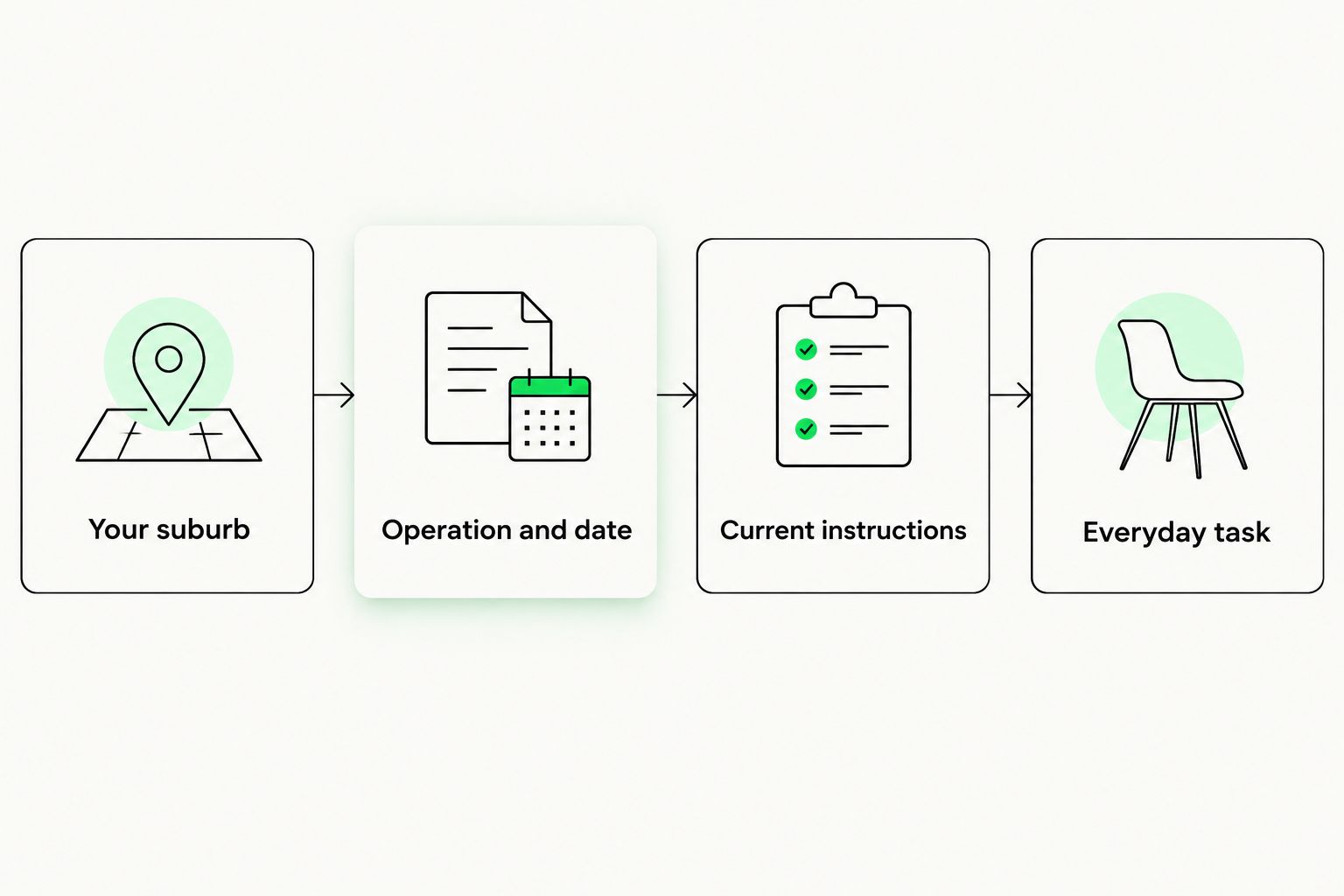
Use these 4 booking details to organise the enquiry: your suburb, the operation and date, current instructions, and the everyday task you want help with. For example, describe difficulty reaching the bathroom rather than asking only for general strengthening.
If you are arranging care for someone else, confirm their permission to share information and explain your role. Ask how documents should be provided; do not assume a booking enquiry means the clinical information has already been received.
Information for professional referrers
For a 2026 referral, identify the treating team, relevant restrictions, current assistance needs and the person's goals. Distinguish confirmed instructions from questions that still need an answer.
For home care providers and support coordinators, also clarify who will coordinate communication. Ask about the service's booking requirements and any proposed funding arrangements without assuming that a referral confirms eligibility or payment.
FAQ
Can I start home physiotherapy as soon as I leave hospital?
Hospital discharge alone does not establish which physiotherapy activities are appropriate. Ask your surgeon when assessment can begin and share any restrictions with your physiotherapist.
What if I forget to ask my surgeon about physiotherapy?
Contact the surgical team to clarify the instructions before starting activities that have not been explained. Ask for the answer in writing so your physiotherapist receives the same information.
Should I give my home physiotherapist my discharge summary?
Ask how to provide your discharge summary and any separate surgical or exercise instructions. Share the latest versions and explain whether anything has changed since discharge.
Can a family member help ask questions before surgery?
You can ask for a family member or support person to join the discussion with your permission. They can help record answers, describe your home and keep the paperwork together.
Can Foveria Health discuss physiotherapy at home in Greater Sydney?
Foveria Health provides mobile physiotherapy assessment and treatment across Greater Sydney. Discuss your operation, current instructions and home needs with Simon to establish whether the service suits your enquiry.
What if my surgeon's instructions differ from my exercise sheet?
Ask the treating team to clarify the difference rather than choosing an instruction yourself. Request an updated written plan and share it with your physiotherapist.
One last thing
Before leaving your 2026 surgical appointment, explain the plan back in your own words: when you can begin, what remains restricted and whom you will contact with concerns. Ask the clinician to correct anything you have misunderstood.
A clear handover is more useful than a long list of exercises you cannot confidently explain. Keep your written instructions somewhere accessible, and have them ready when speaking with your home physiotherapist.