

Start a conversation about home physiotherapy for seniors by asking what your parent wants to feel more comfortable doing, rather than telling them they need treatment. Explain that a home assessment is an opportunity to discuss those goals, not a decision you have already made for them. Ask permission before contacting a physiotherapist, and leave room for questions or a decision to wait.
- Discuss home physiotherapy for seniors through your parent’s goals, not a list of problems.
- Foveria Health provides mobile physiotherapy for older people and families seeking assessment and treatment at home.
- Ask what worries your parent before discussing appointments, family involvement or practical arrangements.
- Confirm appointment details and any funding arrangements directly before making a booking.
Why this matters
A conversation about help at home can become a conversation about who makes decisions. Your parent might hear concern as criticism, particularly if the discussion starts with everything you think they can no longer do.
Keep your parent’s preferences at the centre, even when you are organising the practical details. You can explain what you have noticed without deciding what it means or presenting physiotherapy as the only answer.
Foveria Health suits families seeking mobile physiotherapy assessment and treatment at home in Greater Sydney. Personal, goal-focused care with Simon gives the conversation a practical focus: what your parent wants help with, and what an assessment involves.
If you are arranging care in 2026, check current appointment and administrative details directly rather than relying on an older message or another family’s experience.
How do you discuss home physiotherapy with an older parent?
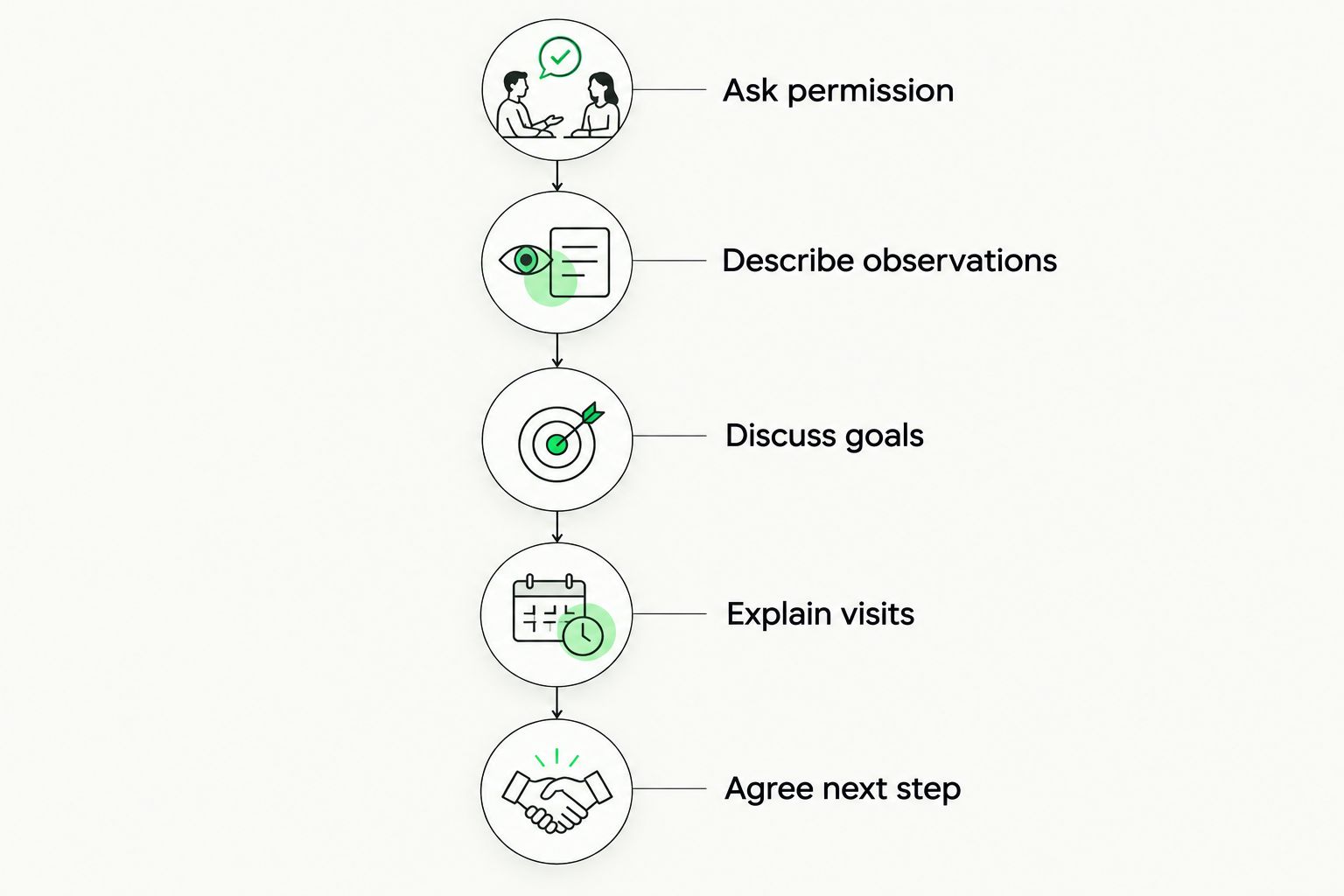
Choose a quiet moment, ask permission to raise the subject and begin with something your parent values. The following steps help you keep the discussion specific without turning it into a sales pitch.
1. Ask whether now is a good time
Avoid starting the conversation during an argument, while your parent is rushing or in front of an unexpected audience. A private discussion gives them room to speak without feeling they need to defend themselves.
Ask whether they would like to talk about getting some support with an activity they have mentioned. If they say no, acknowledge that answer and ask whether there is a better time.
An invitation is a better starting point than an announcement. You are opening a discussion, not delivering a decision.
2. Describe an observation without giving a diagnosis
Use something you have actually noticed or something your parent has told you. That might be discomfort when getting out of a chair, uncertainty about walking outside or difficulty returning to a familiar activity.
Keep the observation narrow. Avoid turning one difficult day into a claim that they are unsafe, losing independence or unable to manage at home.
Then ask how the situation feels to them. Their account might differ from yours, and understanding that difference matters more than winning agreement about the problem.
3. Ask about a goal that matters to them
The useful question is not simply whether your parent wants physiotherapy. Ask what they would like to do more comfortably or confidently in everyday life.
Their priority might be moving around the house, spending time in the garden or joining a family outing. Treat these as conversation examples, not signs that a particular treatment is needed.
Write down their own description if they want help remembering it. A goal expressed in familiar language gives a physiotherapist something meaningful to discuss during an assessment.
4. Explain the home visit without promising results
Describe home physiotherapy as assessment and treatment delivered in the person’s home. Explain that they can ask about the assessment, discuss their concerns and understand proposed next steps before deciding what they want to do.
Avoid promising that a visit will remove pain, prevent falls or restore a particular ability. An individual assessment is needed to discuss suitable care, and results cannot be guaranteed.
Also avoid suggesting that agreeing to an enquiry means agreeing to ongoing appointments. Ask the practice to explain its booking arrangements and what decisions are involved.
5. Agree on the smallest acceptable next step
Your parent might want to read about home visits, write down questions or speak with Simon before considering an appointment. Choose the next step together rather than treating a booking as the only useful outcome.
Clarify who will make contact and what information your parent is comfortable sharing. If they want you involved, ask whether they prefer you to handle practical arrangements, attend the visit or simply help prepare questions.
Finish by checking that you have understood their wishes. A calm conversation that identifies a concern is useful even when no appointment follows immediately.
Choose a conversation approach that preserves choice
The same concern can sound supportive or controlling depending on how you introduce it. Use the approach that gives your parent room to explain their priorities.
| Approach | Best for | What it offers | Limitation to remember |
|---|---|---|---|
| Ask about a personal goal | Beginning the discussion | Keeps attention on something your parent values | Does not answer practical questions about appointments |
| Discuss one observation | Explaining why you raised the subject | Gives the conversation a specific starting point | Becomes uncomfortable if it turns into a list of faults |
| Offer to gather information | A parent who wants details first | Creates a next step without assuming agreement to treatment | Requires permission before sharing personal information |
| Suggest a family discussion | A parent who wants others involved | Allows agreed supporters to hear the same information | Feels pressuring if people join without an invitation |
Start with a goal, then offer information. There is no need to use every approach in the same conversation.
Why willingness to discuss home physiotherapy varies
Ask what sits behind your parent’s response rather than labelling them as difficult. These are useful topics to explore, not assumptions about why they feel hesitant:
- Privacy: Ask how they feel about a health professional visiting their home and who they want present.
- Uncertainty: Ask which part of an assessment or treatment they would like explained before deciding.
- Personal priorities: Check whether your concern matches something they want help with.
- Practical arrangements: Ask about suitable times, household routines and how they prefer to communicate.
- Financial questions: Offer to obtain clear information about charges and any proposed funding arrangements before booking.
Listen for the actual concern. If your parent is worried about privacy, repeating possible benefits does not answer their question.
What should you say if your parent does not want physiotherapy?
Acknowledge their decision and ask whether they want to explain what does not feel right. Avoid responding with a longer argument or bringing in other relatives to persuade them.
You can still offer practical help that they choose, such as writing down a question for a health professional they already see. Ask whether they want you to raise home physiotherapy again later, rather than repeatedly returning to it without agreement.
If the conversation leaves you concerned about their health, discuss the concern with an appropriate health professional. A family discussion cannot establish a diagnosis or determine what treatment is suitable.
What if siblings disagree about the next step?
Bring the discussion back to your parent’s preferences, rather than taking a family vote. Separate what each person has observed from what they believe should happen.
Agree who will handle practical communication if your parent wants assistance. Conflicting messages from several relatives make it harder to keep questions, permissions and appointment details clear.
How can you prepare for a conversation with Simon?
Prepare a short note with your parent, not a report about them written without their involvement. Include their main goal, the concern they want assessed and the questions they want answered.
For a 2026 enquiry, confirm current arrangements directly with Foveria Health rather than assuming details from a previous appointment still apply. Ask about the proposed home visit, what information is needed and how your parent can express their preferences.
Use this practical checklist:
- Your parent’s goal: Record what they want help with in their own words.
- Their questions: Include concerns about the visit, treatment discussions or having someone at home.
- Family involvement: Confirm who they want involved and what they are comfortable sharing.
- Access details: Explain relevant entry arrangements or household considerations when asked.
- Administrative questions: Request confirmation of charges, paperwork and any proposed funding arrangements.
The guide to preparing for your first physiotherapy visit at home gives you another topic to work through together once your parent wants to explore an appointment.
Ask about a home visit
Discuss your parent’s goals and the practical details of arranging assessment at home.
Keep funding questions separate from the decision about care
First establish whether your parent wants to explore an assessment. Then clarify how an appointment would be arranged and paid for; do not use an assumed funding entitlement to persuade them.
Before booking in 2026, ask the practice and any relevant provider or funding contact to confirm the arrangements that apply to your parent. Do not assume that another person’s referral, plan or care arrangement applies to your family.
Ask for explanations you can both understand. Useful questions cover the charge for the proposed service, what it includes, whether travel affects the total, required paperwork and who receives the invoice.
An enquiry is not confirmation of funding or eligibility. Keep any booking decision separate from assumptions about what will be covered.
What should home care providers and referrers include?
Professional referrers can support the same respectful conversation by recording the older person’s priorities, not just the service being requested. Explain the reason for the enquiry and distinguish the person’s own concerns from observations supplied by family or support staff.
For a referral prepared in 2026, verify current contact details and administrative requirements directly. Include relevant information through the agreed process, and clarify who is coordinating communication.
Where the older person wants family involvement, identify the practical role each person has agreed to take. Do not present family support as a substitute for involving the person receiving care.
FAQ
How do I bring up home physiotherapy for seniors without upsetting my parent?
Ask permission to discuss something your parent wants help with, then listen before suggesting a home assessment. Use a specific observation rather than a judgement about their age or independence.
What if my parent says they do not need physiotherapy?
Acknowledge their view and ask whether they want to explain their concerns. Offer information only if they want it, and agree whether to revisit the subject.
Can I arrange an appointment on my parent’s behalf?
Discuss the appointment with your parent and confirm what help they want before making arrangements. Ask the practice about its consent and booking requirements for their circumstances.
Should I attend my parent’s home physiotherapy appointment?
Ask your parent whether they want you there and what role they would like you to have. Your involvement should support their conversation with the physiotherapist rather than replace it.
Does agreeing to an assessment mean agreeing to ongoing treatment?
Discuss the proposed appointment and any subsequent treatment decisions separately. Ask the physiotherapist to explain recommendations and booking arrangements before making further commitments.
What should we confirm before booking home physiotherapy in 2026?
Confirm the appointment arrangements, charges, required information and any proposed funding arrangements directly. Do not assume another person’s experience establishes what applies to your parent.
What does Foveria Health offer older people at home?
Foveria Health provides mobile physiotherapy assessment and treatment across Greater Sydney. Ask Simon about your parent’s goals and whether a home visit is suitable for their needs.
One last thing
Ask your parent what they do not want you to take over. That question can clarify boundaries around phone calls, appointment attendance and sharing personal information before a misunderstanding occurs.
Leave the conversation with an agreed role, even if your role is simply to listen. Respecting that boundary keeps practical help connected to the person it is meant to support.