

To discuss Support at Home physiotherapy with your provider, explain what you want to manage more confidently at home, ask whether physiotherapy can be included in your care arrangements, and confirm the approval and booking process. Before arranging a visit, ask your provider to explain any documents, payment arrangements and personal contributions that apply to you; an enquiry alone does not confirm funding or an appointment.
- Discuss Support at Home physiotherapy through your everyday goals, then ask your provider to confirm the next step.
- Foveria Health offers mobile physiotherapy assessment and treatment at home across Greater Sydney.
- Ask who approves the service, who arranges the appointment and how payment will be handled.
- Keep a written record of the agreed action before booking home physiotherapy.
How do you discuss physiotherapy with your Support at Home provider?
Start with the activity you want help with, rather than a treatment you think you need. Your provider needs to understand your request, while a physiotherapist assesses your needs and discusses appropriate care with you.
For example, describe difficulty getting out of your usual chair, walking around your home or managing a step at the entrance. Explain what happens and how it affects your day, without trying to diagnose the cause yourself.
If you are exploring a local service, Foveria Health provides mobile physiotherapy assessment and treatment across Greater Sydney. Keep the service enquiry separate from the funding decision: your provider should explain your individual arrangements before you commit to a booking.
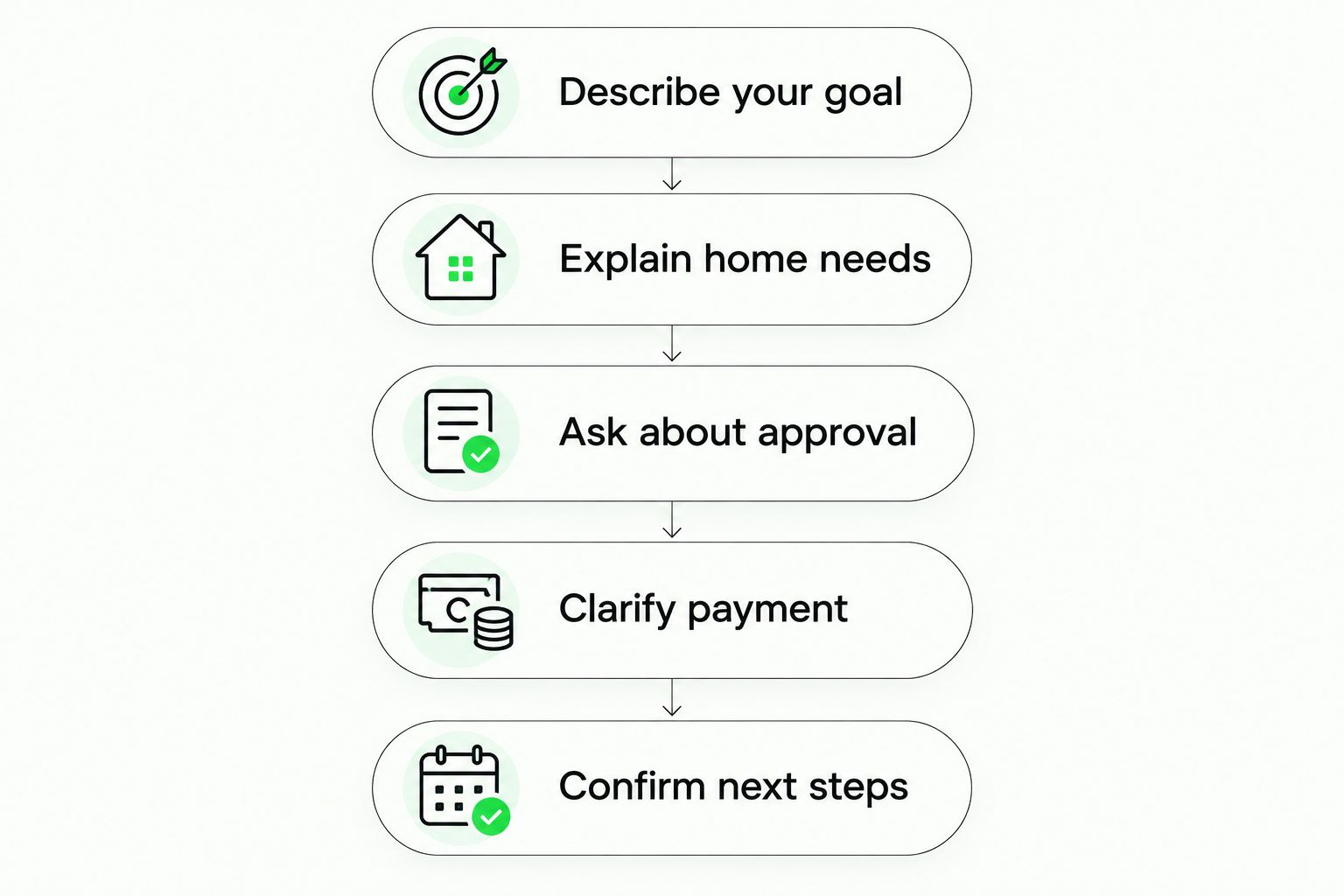
Use these 5 steps to organise the conversation in 2026:
- Describe your goal. Name the everyday task you want to discuss and why it matters to you.
- Explain home needs. Say why you are asking about an appointment at home, including relevant access or support needs.
- Ask about approval. Find out how your provider considers a physiotherapy request and what information they need.
- Clarify payment. Ask what would be paid through your arrangements and whether you would pay anything personally.
- Confirm next steps. Agree who will act, what they will do and how you will hear back.
Why this matters
Asking about physiotherapy involves more than finding someone who visits homes. You also need to understand how the proposed service fits your care arrangements and who is responsible for getting it organised.
A clear conversation helps you avoid leaving with a general answer but no practical next step. It also gives family members, home care staff and professional referrers a shared understanding of what you have requested.
For a 2026 enquiry, ask about your current arrangements rather than relying on an older conversation or another person's experience. Keep the discussion specific to your goals, your provider and the service you are considering.
Describe what you want help with at home
You do not need clinical language to explain your concern. Start with something you do in daily life, then describe what makes it difficult or what you want assessed.
Useful details include where the difficulty occurs, what you currently do to manage it and whether someone helps you. If your main concern is pain or stiffness, describe how it affects an activity rather than asking for a particular technique.
You can organise your notes under these headings:
- The activity: What are you trying to do at home?
- The difficulty: What gets in the way of doing it comfortably or confidently?
- Your current support: Who helps, and what equipment do you already use?
- Your preference: What would you like to discuss with a physiotherapist?
Keep your goal personal. Being able to move between rooms, manage an entrance step or participate in a usual activity gives the conversation a clear purpose.
If you are arranging care for a parent or another adult, ask what matters to them before making the enquiry. Describe their preferences alongside your observations, and avoid making decisions on their behalf without involving them.
Ask how physiotherapy would fit your care arrangements
Ask your provider to explain the process for considering Support at Home physiotherapy in your circumstances. Do not assume that a service being offered to aged care clients means your particular request has already been approved.
A useful opening question is whether your provider needs further information before discussing the request. Then ask who makes the decision and how you will receive confirmation.
For your 2026 discussion, keep these points separate:
- Service suitability: What needs assessment, and what would the proposed visit involve?
- Care arrangements: How would the request be considered within your existing support?
- Provider requirements: What information or paperwork does your provider want?
- Payment responsibility: Who would receive an invoice, and who would pay it?
- Booking permission: What must be confirmed before an appointment is arranged?
These are questions to resolve, not assumptions about eligibility. Ask your provider to put the answer in plain language if a term or process is unclear.
A family member can help take notes, but the person receiving care should remain central to the conversation. If you want someone else involved, ask how the provider records your permission to speak with them.
Confirm payment before arranging the appointment
Ask about the whole payment arrangement, not just whether physiotherapy is included. You need to know what the proposed service involves, what your provider has agreed to and whether any part would be your responsibility.
Ask for written information about the proposed visit and any associated charges before you decide. Do not treat a general statement about funding as confirmation of a specific appointment.
Useful questions include:
- What service has been proposed or approved?
- Does the agreement cover an assessment, treatment, or both?
- Are there any associated charges I need to understand?
- Would I need to make a personal contribution?
- Who receives the invoice, and what happens if the arrangements change?
You do not need to make a decision during the first conversation. If the explanation is unclear, ask for a written summary and time to read it with someone you trust.
For a 2026 booking, keep the current service information together with your provider's written response. That gives you something specific to refer to if the appointment details or payment arrangements need clarification.
Choose a practical way to contact your provider
You can start with a conversation or a written request. Choose the approach that makes it easiest for you to explain your goal and keep track of the response.
| Approach | Best for | Advantage | Limitation to manage |
|---|---|---|---|
| Phone or in-person discussion | People who want to ask follow-up questions as they arise | You can ask for unclear terms to be explained immediately | Ask for a written summary so you have a record |
| Written enquiry | People who prefer time to organise their thoughts | You can set out your goals and questions together | Ask how to follow up if the response does not answer your questions |
Whichever approach you choose, keep 1 written summary of the agreed next action. Include the person you spoke with, the action they agreed to take and how you will receive an update.
You can use this short enquiry outline without needing to know the funding terminology:
- I would like to discuss physiotherapy at home because of this everyday difficulty.
- My goal is to have this activity or concern assessed.
- Please explain how you would consider the request under my current care arrangements.
- Please tell me what information is needed, how payment would work and who would arrange the visit.
What makes the next step different for each person?
The useful question is not whether everyone follows the same process. It is what your provider needs to resolve for your request.
Keep the conversation focused on these practical details:
- Your goal: State the activity or concern you want assessed.
- Your address: Give the suburb and any relevant access information.
- Your care arrangements: Ask how the proposed service would be considered.
- Your support preferences: Explain whether you want a family member or support person involved.
- The provider's response: Clarify any information they request and who should supply it.
For people in Punchbowl, nearby suburbs or elsewhere in Greater Sydney, give the actual appointment address rather than assuming a location enquiry is enough. Ask the physiotherapy practice to confirm whether it can arrange a visit for that address and your needs.
Foveria Health is a fit for Greater Sydney residents seeking physiotherapy assessment and treatment at home. If you enquire about care with Simon, describe your goal and ask what information is needed to consider an appropriate appointment; confirm your Support at Home arrangements separately with your provider.
What should I ask before I book home physiotherapy?
Before booking home physiotherapy, ask 3 questions: has the proposed service been agreed, how will payment work, and who is arranging the appointment? If an answer is unclear, identify who will clarify it before treating the visit as confirmed.
Keep the provider's response and the practice's appointment information together. They address different parts of the arrangement, and neither should be assumed to answer the other.
Can my family help me discuss physiotherapy?
Your family can help you prepare notes and ask questions, while keeping your preferences at the centre of the discussion. Tell the provider who you want involved and ask what permission they need to communicate with that person.
A useful role for a family member is to record the next step. They can also help describe practical details, such as entry access, without deciding what treatment you need.
What should a home care provider or support coordinator include?
A professional enquiry should explain the person's stated goal, suburb, relevant access needs and preferred contact arrangements. Include only information appropriate to share, and clarify who is coordinating approval, booking and payment.
For a 2026 referral enquiry, distinguish between requesting information and confirming an appointment. If approval is still being discussed, say so clearly rather than presenting the service as already arranged.
FAQ
How do I ask my provider about Support at Home physiotherapy?
Explain the everyday activity you want help with, then ask how your provider would consider a physiotherapy request under your current arrangements. Confirm what information they need and who will take the next step.
Is Support at Home physiotherapy automatically approved when I ask?
Treat your request as an enquiry until your provider confirms the arrangements for the proposed service. Ask for the decision and any conditions in writing before booking.
Do I need a referral before discussing physiotherapy at home?
Ask your provider and the physiotherapy practice what documents they require for your particular enquiry. You can prepare your goals and practical questions before that requirement is clarified.
Can I ask for physiotherapy at home rather than attending a clinic?
Yes, you can explain that you are seeking an appointment at home and why that setting matters to you. Ask the practice to confirm whether a suitable visit can be arranged, and ask your provider about the care arrangements.
How do I find out what I would personally pay?
Ask your provider to explain any personal contribution and ask for written information about the proposed service and associated charges. Clarify who will receive and pay the invoice before committing to an appointment.
What should I tell a mobile physiotherapist when I enquire?
Describe your goal, suburb, relevant home access details and who you want involved in the appointment. Foveria Health offers mobile physiotherapy in Greater Sydney; ask about care with Simon and confirm the arrangements for your address and needs.
What should I do if I leave the conversation without a clear answer?
Ask who will resolve the unanswered question and how you will receive an update. Keep a written record rather than treating an unclear response as approval or a confirmed booking.
One last thing
The most useful outcome of your first conversation is a clear next action, not a treatment name. Before you finish, check that you know who is doing what and how you will hear back.
You do not need to solve every detail yourself. A short note about your goal, the unanswered question and the person responsible for the next step makes it easier to continue the discussion without starting again.