

Seek an aged care physiotherapy assessment when an older person finds walking, getting out of a chair or other everyday movements harder, loses confidence after a fall, or has pain that limits activity. You do not need to wait for another fall, but sudden weakness, serious injury or an abrupt change in health needs medical attention rather than a routine physiotherapy appointment.
- Seek aged care physiotherapy when mobility, balance or everyday movement changes; do not wait for another fall.
- Foveria Health offers in-home assessment across Greater Sydney, allowing families to discuss difficulties in their everyday setting.
- Sudden weakness or serious injury needs medical attention, not a routine home physiotherapy booking.
- Choose assessment goals with the older person, and confirm referral and funding arrangements before booking.
Aged care physiotherapy: when should families seek an assessment?
Arrange an assessment when movement difficulties start affecting the older person's daily life, safety or confidence. The useful question is not whether they have reached a particular age. It is whether something they need or want to do has become harder.
For example, getting to the bathroom might now require help, or walking to the letterbox might feel less manageable. Those changes give a physiotherapist something specific to assess, rather than a general request to improve fitness.
Foveria Health provides aged care physiotherapy at home for older people across Greater Sydney. This 2026 guide helps families distinguish an assessment enquiry from a medical concern and prepare information that makes the first conversation useful.
Changes that warrant a conversation
Look for a change from the person's usual abilities, rather than comparing them with someone else. Everyday observations are often more useful than broad descriptions such as being frail or slowing down.
- Walking changes: they hesitate, need more support or avoid familiar distances.
- Transfers become harder: getting out of bed, standing from a chair or sitting down takes more effort.
- Falls or near falls: they have fallen, stumbled repeatedly or become frightened of moving.
- Pain limits activity: discomfort interferes with movement, sleep or ordinary tasks.
- Activity reduces: they stop doing things because movement feels difficult or uncertain.
- Recovery changes mobility: their usual routine is harder after illness, hospital treatment or injury.
These observations are reasons to ask for advice, not diagnoses. New symptoms, unexplained deterioration or concerns about an injury also warrant discussion with a GP.
Which type of help should you seek?
Physiotherapy and medical care serve different purposes. Choose the urgency of care before choosing where the appointment happens.
| Option | Best for | What it contributes | Limit or caution |
|---|---|---|---|
| Physiotherapy assessment | Ongoing difficulties with movement and everyday tasks | Assessment of movement, functional goals and suitable next steps | Does not replace medical investigation of new or unexplained symptoms |
| GP assessment | New symptoms, unexplained decline or questions about an underlying health problem | Medical assessment and decisions about investigation or referral | Movement difficulties can still need a separate physiotherapy assessment |
| Emergency care | Sudden stroke symptoms, severe breathing difficulty or serious injury | Urgent assessment and treatment | Do not delay emergency care while arranging a home visit |
In Australia, call 000 for a medical emergency. Sudden facial drooping, arm weakness or speech difficulty are stroke warning signs; do not wait to see whether they settle.
Why this matters
A family often notices small practical changes before an older person describes a mobility problem. A chair becomes difficult to leave, the front steps go unused, or trips outside become less frequent. Asking about those changes creates a clearer starting point than insisting someone needs exercise.
Assessment also gives the older person a chance to explain what matters to them. Their priority might be moving around the kitchen comfortably, reaching the garden or feeling less worried when standing up.
For families making decisions in 2026, the aim is an appropriate assessment, not a promise of recovery. The plan needs to reflect the person's health, preferences and everyday circumstances.
When walking or standing becomes harder
Ask what has changed and where the difficulty happens. Walking across a bedroom is different from managing a sloping driveway, and rising from a low sofa is different from leaving a dining chair.
Describe the task rather than assuming its cause. Instead of saying someone has weak legs, explain that they now push heavily through their arms to stand or ask for help at a particular doorway.
A physiotherapist can assess movement and discuss whether exercises, advice or another referral are appropriate. An in-home appointment also allows you to explain the actual setting in which the difficulty occurs.
Do not introduce a new walking aid or change an existing aid's settings without appropriate advice. Bring questions about equipment to the assessment, including whether the person uses it comfortably and where it feels difficult to manage.
When a fall changes confidence
A fall matters even when the person's main concern afterwards is fear. They might avoid the shower, stop walking outside or ask someone to stay nearby whenever they stand.
Tell the clinician what happened, whether there was an injury and whether medical assessment took place. Include near falls and situations that repeatedly feel unsteady; they help explain the concern without requiring the family to identify a cause.
Physiotherapy assessment can examine movement and discuss suitable steps towards the person's goals. It cannot guarantee that another fall will not happen, and falls can involve health or environmental concerns beyond physiotherapy alone.
If a fall involves a head injury, significant pain, inability to get up or other concerning symptoms, seek medical advice promptly. Do not use a routine physiotherapy booking as a substitute for assessing a possible injury.
When pain or recovery interrupts everyday life
Pain becomes a practical reason to seek advice when it changes what the person can comfortably do. Useful examples include difficulty turning in bed, standing long enough to prepare food or walking to a familiar destination.
Describe where the pain occurs, when it started and which activities bring it on. Mention any recent injury or medical assessment without trying to decide whether a particular treatment is needed.
After a hospital stay or illness, share discharge instructions and any restrictions with the physiotherapist. Assessment should take account of that information rather than assume the older person can immediately return to their usual activity.
The appropriate treatment depends on assessment. Avoid choosing exercises from someone else's programme, even when their symptoms sound similar; the person's medical history and movement difficulties still need individual consideration.
Why assessment needs vary between older people
Two people of the same age can have different needs. The relevant differences are the difficulties they experience, the circumstances around them and the goals they choose.
- The task affected: walking outdoors, standing from a chair and moving in bed present different questions.
- The pattern of change: a longstanding difficulty differs from a sudden loss of function.
- Recent health events: illness, injury and hospital treatment provide important context.
- Pain and confidence: discomfort and fear can both affect participation in everyday movement.
- The home setting: stairs, access and available space help explain where movement becomes difficult.
- The person's priorities: treatment discussions should connect with activities they actually want to manage.
Families do not need to work out the diagnosis before enquiring. Give a clear account of the change and let the appropriate clinician decide what needs assessment.
How do you arrange an appropriate home assessment?
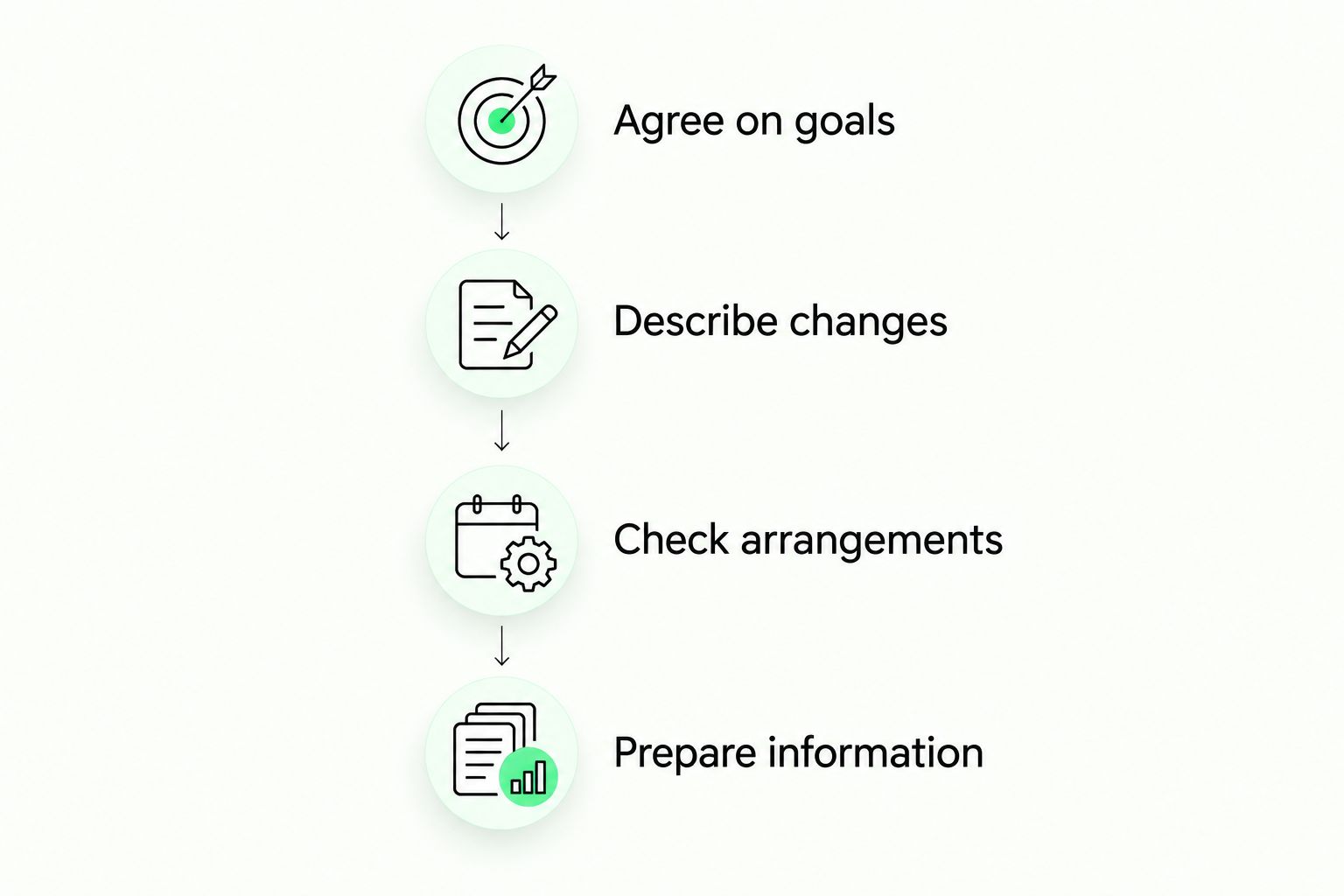
Use this 2026 booking checklist to prepare a focused enquiry. Start with the older person's concern, then explain the practical details that affect an appointment.
- Agree on goals. Ask what feels harder and what the person wants help with. Record their own words where possible, rather than replacing them with the family's priorities.
- Describe changes. Explain the affected tasks, when the change began and any falls, pain or recent hospital treatment. Include medical advice already received.
- Check arrangements. Confirm the suburb, home access, referral requirements and intended funding arrangement directly with the practice and relevant provider.
- Prepare information. Gather relevant referral or discharge documents and questions. Ask whether a family member, carer or support worker should attend with the person's consent.
The family member making the enquiry does not have to attend every appointment. Discuss what involvement the older person wants and what support is useful, rather than assuming everyone needs to be present.
You do not need to rearrange the whole home before enquiring. Explain any access difficulties and ask what preparation is needed; avoid asking the older person to demonstrate a movement that feels unsafe just to help you describe it.
Discuss an assessment at home
Explain the movement changes, your suburb and the older person's goals before arranging an appointment.
What should families ask about referrals and funding?
Separate the clinical question from the administrative one. Needing physiotherapy assessment does not, by itself, establish eligibility for a particular funding arrangement.
For a 2026 enquiry, explain whether you intend to arrange private care or use an existing funding pathway. Ask the practice and relevant provider to confirm what applies to the person before committing to an appointment.
Useful questions include:
- Is a referral or other documentation required for this appointment?
- Who needs to approve the service under the intended arrangement?
- What information does the practice need before booking?
- Who receives the invoice, and who is responsible for payment?
- Are there reporting requirements for the referrer or care provider?
Do not assume that one person's arrangements apply to another. Families, home care providers and support coordinators should confirm responsibilities directly rather than relying on a general article as funding advice.
What should professional referrers include?
A useful referral describes the reason for assessment and the person's current difficulty. An instruction to improve mobility gives less direction than an explanation that standing from the usual chair has become difficult.
Include relevant medical information, recent events, existing recommendations and any precautions already identified by the treating team. Explain who coordinates care and how information should be shared, with the person's consent.
State the person's goals separately from the provider's reporting needs. This helps keep the appointment focused on meaningful activities while making administrative expectations clear.
For referrals in 2026, confirm the intended funding pathway and required documentation directly. Do not treat an enquiry, referral or general service description as confirmation of acceptance or authorisation.
Is in-home physiotherapy better than a clinic appointment?
In-home physiotherapy suits people who need assessment in their everyday setting or find travel difficult. It allows discussion of the chair, steps or walking route involved in a particular problem, without describing them entirely from memory.
A clinic appointment is another setting for assessment, and the appropriate choice depends on the person's needs and the service required. Home care is not automatically better, and it does not replace urgent medical care or investigations.
Discuss the setting before booking. Explain the problem you want assessed and ask whether the proposed service can address it appropriately.
How can you suggest an assessment without making someone feel pressured?
Start with the person's experience rather than a judgement about their age or independence. Ask whether getting out of the chair feels harder, or whether they would like advice about walking to the garden.
Offer to help with the enquiry while leaving room for their preferences. A calm conversation about one meaningful task is more useful than presenting a list of everything the family thinks has gone wrong.
Foveria Health offers personal, goal-focused care at home with Simon. When enquiring, share what the older person wants to discuss, not just what others want them to achieve.
FAQ
When should I ask about aged care physiotherapy for my parent?
Ask about aged care physiotherapy when walking, standing, pain or confidence changes affect your parent's everyday activities. Sudden deterioration or possible injury needs medical advice rather than waiting for a routine appointment.
Does my parent need to have a fall before seeing a physiotherapist?
No, a fall is not required before seeking a physiotherapy assessment. Difficulty with movement, near falls or reduced confidence are also reasons to discuss assessment.
Can physiotherapy guarantee that an older person will not fall?
No, physiotherapy cannot guarantee that an older person will not fall. Assessment can examine movement difficulties and inform a plan, while other health concerns can require medical input.
Do we need a referral for a home physiotherapy appointment?
Confirm referral requirements directly with the practice before booking. The intended funding arrangement and the person's circumstances determine which documentation needs checking.
Can a family member be present during a home assessment?
Ask about having a family member present and obtain the older person's consent. A family member can help explain changes or remember advice, while the person's own goals remain central.
Does Foveria Health provide aged care physiotherapy in Greater Sydney?
Foveria Health provides in-home assessment and mobile physiotherapy across Greater Sydney, including aged care clients. Confirm arrangements for the person's suburb, needs and intended funding pathway when enquiring.
When should we call an ambulance rather than book physiotherapy?
Call 000 in Australia for a medical emergency, including sudden stroke symptoms or severe breathing difficulty. A routine physiotherapy appointment is not an alternative to urgent medical assessment.
One last thing
Before making the enquiry, write down one activity the older person wants to manage more comfortably or confidently. Use their words: reaching the garden, standing from the lounge or moving around the kitchen.
That specific goal gives the assessment a useful starting point. It also keeps the conversation about the person's life, rather than age alone.