

Choose mobile physiotherapy in Sydney by checking whether the physiotherapist understands your goals, can assess you at home, and clearly explains the appointment, costs and any funding arrangements before you book. For your 2026 search, prioritise a suitable clinician and a practical care plan over the convenience of a home visit alone.
- Choose mobile physiotherapy Sydney services by clinical fit, clear communication and confirmed arrangements—not convenience alone.
- Foveria Health suits Greater Sydney clients seeking personal, goal-focused physiotherapy at home with Simon.
- Home physiotherapy avoids the trip to a clinic, but suitability still depends on your assessment and treatment needs.
- Confirm fees, referrals and funding requirements before booking; a funding category does not establish your individual eligibility.
How do you choose mobile physiotherapy in Sydney?
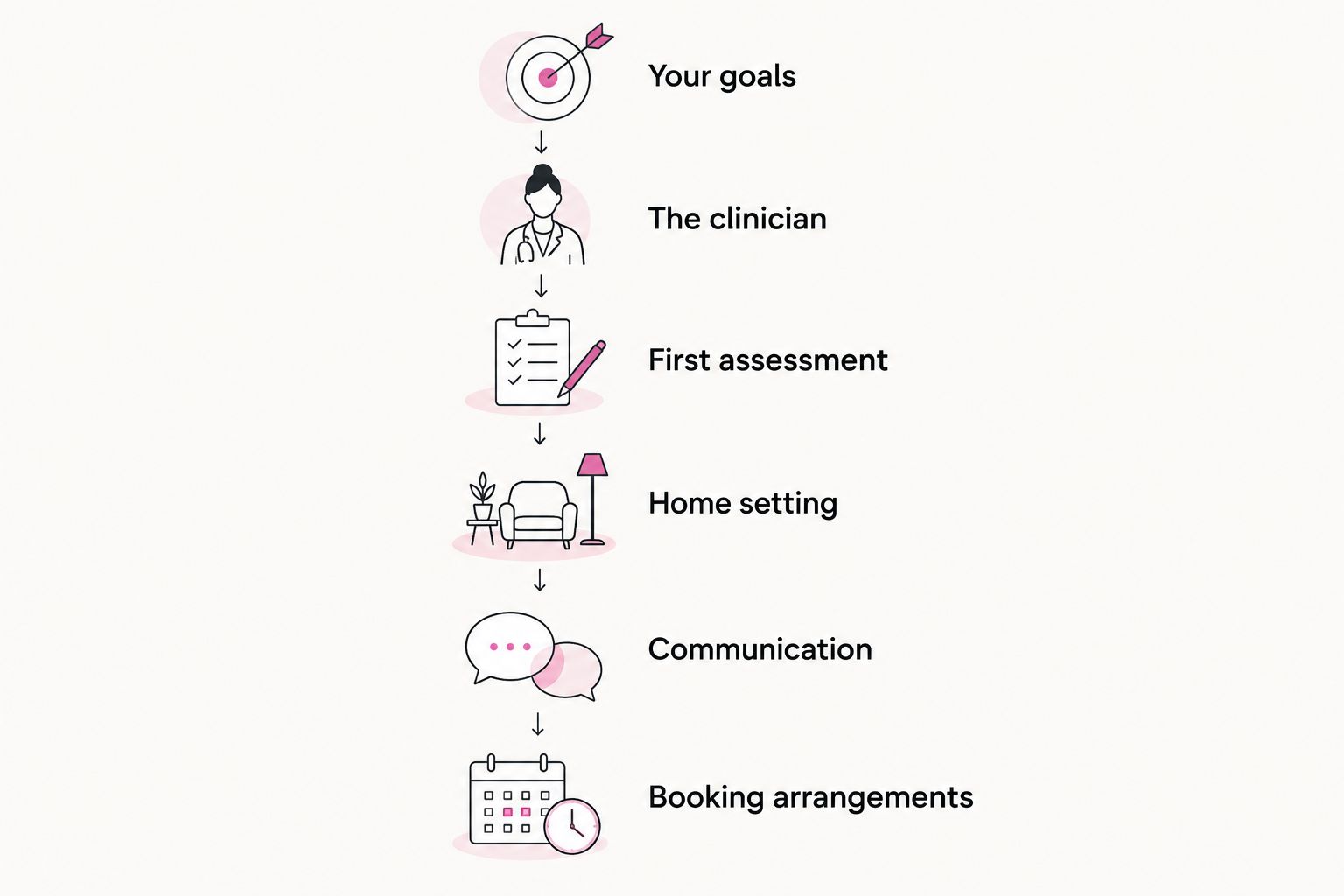
Use 6 checks to compare providers: your goals, the clinician, the assessment, the home setting, communication and booking arrangements. These checks help you move beyond a service description and understand what care would involve for you.
You can use Foveria Health as a starting point when looking for in-home assessment and physiotherapy across Greater Sydney. The practice offers musculoskeletal, respiratory and manual therapy treatment; ask how the proposed assessment relates to your particular needs rather than selecting a treatment name yourself.
1. Start with your goals
Explain what you want help with in everyday language. That might mean getting around your home more confidently, discussing pain that interrupts your routine, or understanding what support you need during recovery.
Write down 3 priorities before contacting a provider: the activity that matters to you, what currently makes it difficult, and what you want to understand from the appointment. You do not need to arrive with a diagnosis or know which treatment to request.
For families arranging care, include the person's own preferences. A useful enquiry describes their goals, not just the concerns of everyone supporting them.
2. Ask who will assess and treat you
Ask who will attend, how they assess needs like yours, and whether you can request continuity with the same clinician. Check the physiotherapist's registration through the Australian Health Practitioner Regulation Agency, commonly called Ahpra.
A clear answer should help you understand who is responsible for your care. If a family member, support coordinator or home care provider makes the booking, make sure the person receiving treatment also knows who is coming.
3. Understand the first assessment
Ask what the first appointment involves and what information the physiotherapist wants beforehand. Explain relevant health concerns, current support and any instructions you have received from your treating team.
Choose a provider who explains the assessment before asking you to commit to an ongoing schedule. Treatment choices and appointment frequency should follow an understanding of your needs, rather than a promise made during an initial enquiry.
4. Check the home setting
Describe anything that affects entry or movement around your home, including stairs, access arrangements and the space where you would feel comfortable being assessed. Ask whether you need to prepare anything or have another person present.
You do not need to guess what equipment is required. Let the provider explain what they bring, what they need from you, and whether your home setting suits the planned appointment.
5. Agree on communication
Ask how the physiotherapist will explain the plan and what information you will receive afterwards. Tell them if you prefer written instructions, plain-language explanations or a support person involved in the discussion.
For professional referrers, clarify consent before requesting updates. Agree on who needs information and how it should be shared, rather than assuming everyone involved in organising the visit can receive clinical details.
6. Confirm the booking arrangements
Before booking in 2026, confirm your address, the proposed appointment arrangements, fees, cancellation terms and any required paperwork. If you intend to use funding, ask what must be checked before the appointment proceeds.
Keep this to 2 steps: request the details, then confirm that you understand and accept them. A service listing for NDIS, aged care or Medicare-funded clients does not confirm your own eligibility or the payment arrangements for a particular visit.
These checks follow a simple order: establish your goals, understand the care, then confirm the practical details. You can use the same sequence whether you are booking for yourself or helping someone else.
Why this matters
A home appointment changes where care happens; it does not remove the need for a suitable assessment. You still need to understand what the physiotherapist is assessing, how decisions will be made and what the next step involves.
A clear conversation before booking gives you room to raise concerns without feeling rushed. For an older person or someone receiving support, that includes who will be present, how consent will be handled and whether the proposed arrangements feel comfortable.
The right choice is the provider whose assessment and communication fit your needs—not simply the provider who visits your suburb.
Is home physiotherapy better than a clinic appointment?
Home physiotherapy avoids the journey to a clinic and lets you discuss daily activities in the setting where they happen. A clinic appointment offers a different setting, so ask which option fits the assessment and treatment you need.
Neither setting is automatically better. Use this comparison to identify questions to ask, rather than treating it as a recommendation for a particular condition.
| Setting | Best for | Practical advantage | Limitation to check |
|---|---|---|---|
| Home physiotherapy | People who want an assessment in their everyday environment or find clinic travel difficult | You do not need to travel to the clinic for that appointment | Whether the home space and visit arrangements suit the planned care |
| Clinic physiotherapy | People who can attend a clinic and prefer that setting | Assessment takes place in the provider's treatment space | Whether travel, access and attendance fit your circumstances |
If you are comparing home and clinic care in 2026, describe the same goals to each provider. Ask how each would approach the assessment and explain any limits of their setting.
Do not assume that equipment makes a clinic the better choice, or that familiar surroundings make home care suitable for every need. Ask what your assessment requires and why the provider recommends that setting.
Why the right mobile physiotherapy service varies
Your choice depends on more than location. These factors help explain why a service that suits someone else is not necessarily the right fit for you:
- Your main concern: Ask whether the clinician can assess the issue you want help with and explain when other care is needed.
- Your everyday goals: Explain the activities you want to discuss, rather than relying only on a condition name.
- Your home environment: Entry, stairs, privacy and usable space affect how a visit is arranged.
- Your communication preferences: Tell the provider how you want information explained and who you want involved.
- Your care arrangements: Existing clinicians, support workers and family involvement need clear roles and consent.
- Your payment pathway: Private payment and funded care require different conversations; confirm your own arrangements directly.
Use these factors to ask specific questions. A provider's answer should connect to your circumstances, not simply repeat the same description of home physiotherapy.
What should you ask about funding and referrals in 2026?
Start by telling the provider how you intend to pay and asking what they need to confirm. Do not assume that naming a funding program establishes eligibility, covers the visit or removes the need for paperwork.
If you are paying privately
Request the current fee and a clear explanation of what the appointment includes. Ask about any other applicable charges and cancellation terms before agreeing to the booking.
If you want to claim through an insurer, confirm the requirements with that insurer as well as the provider. Avoid treating a general service description as confirmation of a rebate.
If you are an NDIS participant
Explain whether your plan is self-managed or plan-managed and ask what information is needed to discuss the proposed service. If a plan manager or support coordinator is involved, clarify who will confirm the arrangements and receive the invoice.
Keep the discussion specific to your plan and goals. Do not assume that another participant's arrangements apply to you.
If you receive aged care support
If you are discussing Support at Home, involve your home care provider in confirming the proposed service and payment arrangements. Ask who needs to authorise the appointment and what information should be shared.
The person receiving care should remain part of the conversation. Administrative approval and personal consent are separate matters.
If you intend to use Medicare
Ask your GP and the physiotherapy provider what referral and administrative requirements apply to your circumstances. Confirm payment and any applicable rebate arrangements before attending.
For any funding pathway in 2026, get individual confirmation rather than relying on a general statement about funded services. Keep the agreed details somewhere you can refer to later.
What should families and professional referrers include?
A useful referral or enquiry describes the person, their goals and the practical arrangements without sharing unnecessary private information. Ask how to send relevant documents securely before forwarding them.
Include the main reason for seeking physiotherapy, relevant instructions from the treating team and any communication or access needs. Identify the contact person for scheduling, but distinguish that role from the person authorised to discuss care.
For support coordinators and home care providers, clarify:
- Who has consented to the enquiry and proposed appointment.
- What the person wants help with at home.
- Who will confirm payment or funding arrangements.
- Whether a support person is expected to attend.
- What updates are requested and who can receive them.
Avoid promising a treatment outcome on the provider's behalf. Describe the reason for referral and let the physiotherapist explain the assessment and proposed care.
Does your Sydney suburb affect your choice?
Give your full suburb and address when enquiring, whether you live in Punchbowl, a nearby suburb or elsewhere in Greater Sydney. Confirm that a visit can be arranged for your address rather than assuming coverage from a broad Sydney service description.
Ask about practical access details at the same time. Building entry, parking instructions and stairs are useful information for arranging the visit, but they do not replace the conversation about your care needs.
If you are organising appointments for someone else, check their preferred contact method and suitable arrangements before offering times on their behalf. This keeps the booking centred on the person receiving care.
How do you recognise a useful response to your enquiry?
A useful response answers your questions plainly, explains what still needs assessment and sets out the next step. It does not need to promise fast recovery or recommend a long course of treatment before meeting you.
Look for an explanation of who will attend, what information is needed and how the first appointment will be arranged. If an answer leaves you unsure, ask for clarification before booking.
Foveria Health mobile physiotherapy is best suited to Greater Sydney clients seeking personal, goal-focused care at home with Simon. Confirm that your needs, address and appointment arrangements fit before proceeding; choosing home care still requires an individual assessment.
Discuss your home physiotherapy needs
Explain your goals and ask about assessment, your suburb and booking arrangements.
What should I have ready before making contact?
Have your goals, suburb and preferred contact details ready, along with questions about assessment and payment. You can start with a short explanation; ask what further health information is needed before sending documents.
Can someone help me arrange the appointment?
A family member, support coordinator or home care provider can help you make enquiries. Make your preferences clear and agree on what information the provider can discuss with them.
Should I choose a treatment before booking?
You do not need to choose manual therapy or another treatment before booking. Explain what is troubling you and let the physiotherapist assess your needs and discuss suitable options.
FAQ
What's the best way to choose mobile physiotherapy in Sydney?
Choose by your goals, the clinician's suitability and clear appointment arrangements. Ask how the first assessment works, then confirm your address, fees and any funding requirements before booking.
Is mobile physiotherapy better than going to a clinic?
Neither setting is automatically better. Home care avoids clinic travel, while the right setting depends on your assessment, treatment needs and preferences.
Can I arrange home physiotherapy for my parent?
You can help your parent make enquiries and organise the practical details. Include their preferences and clarify consent before discussing or sharing their health information.
Do I need a referral for mobile physiotherapy?
Ask the provider whether a referral is required for your intended care and payment pathway. If you plan to use funding, confirm the requirements with the relevant clinician or funding contact before booking.
How much does mobile physiotherapy in Sydney cost in 2026?
Request a current fee explanation from the provider before booking. Confirm what the appointment includes, any other applicable charges and cancellation terms; do not assume a funding arrangement covers the visit.
Does Foveria Health offer home physiotherapy across Greater Sydney?
Foveria Health offers mobile physiotherapy across Greater Sydney. Confirm your specific address and appointment arrangements directly rather than assuming a visit is available at your preferred time.
One last thing
Before your first appointment, write down the everyday task you most want to discuss. A sentence such as wanting to feel more confident moving around your home gives the conversation a personal starting point without prescribing the treatment.
For your 2026 search, keep returning to that goal. A suitable provider should explain how the assessment will explore your needs, what remains uncertain and how you will decide the next step together.