

Back pain physiotherapy at home is assessment and treatment in your own home, aimed at helping you understand your symptoms and work towards everyday movement goals. This 2026 appointment guide explains how to arrange a visit, prepare useful information and decide whether home-based care suits you.
- Foveria Health offers physiotherapy at home for Greater Sydney clients, including people seeking assessment for back pain.
- Choose home physiotherapy when assessing everyday movement at home matters; confirm suitability before booking.
- Prepare your symptom history, relevant health information and the daily activities you want help with.
- New bladder or bowel changes, saddle numbness or rapidly worsening leg weakness need urgent medical assessment.
Why home physiotherapy matters for back pain
Back pain can make the journey to an appointment an extra task to manage. A home visit removes that journey and lets you discuss difficulties where they happen: getting out of your own chair, reaching the kitchen bench or moving around your bedroom.
Foveria Health suits Greater Sydney clients seeking physiotherapy assessment at home. Foveria Health provides mobile assessment and treatment, with personal, goal-focused care at home with Simon. Ask whether a home appointment is appropriate for your symptoms before arranging a visit.
The setting has limits. A home visit is not emergency care, and it does not provide every facility available in a clinic or medical centre. The right starting point depends on your symptoms, health history and what you need assessed—not simply on which appointment is easiest to arrange.
For older people, families and support workers, the home setting also offers a chance to explain everyday concerns together. Your preferences still come first. You decide who joins the appointment, what information is shared and which activities matter most to you.
How to arrange physiotherapy at home for back pain
Check whether you need urgent medical care first
Do not wait for a routine physiotherapy visit if you have new bladder or bowel control changes, numbness around your groin or bottom, or rapidly worsening leg weakness. Seek urgent medical assessment. Call 000 if you need emergency assistance.
Back pain after a serious accident also needs urgent medical attention. Fever, feeling generally unwell, unexplained weight loss or a history of cancer are reasons to discuss back pain promptly with a doctor rather than assuming it is an ordinary muscle problem.
You do not need to diagnose the cause yourself. Explain what has changed and ask the health professional arranging your care which service you should use. If symptoms change while you are waiting, reassess the situation rather than keeping the original booking plan unchanged.
- Describe any new weakness, altered sensation or bladder and bowel changes.
- Mention recent falls, accidents, fever and relevant medical history.
- Tell the clinician whether symptoms are changing quickly.
- Use emergency services when urgent help is needed; do not rely on a booking enquiry.
Describe the activities you want help with
Start with a handwritten note or a note on your phone. Describe what you find difficult in ordinary language, rather than trying to identify a particular joint, disc or muscle.
For example, explain whether discomfort interrupts getting dressed, standing to prepare food or settling into bed. If you are arranging care for someone else, ask what matters to them before writing the enquiry. Their goal might differ from the concern that first prompted your call.
Choose 3 everyday priorities to discuss. This is a preparation suggestion, not a treatment target. A short list helps keep the conversation focused without expecting you to remember every detail during the assessment.
- Record when the pain began and whether anything happened beforehand.
- Describe where you feel symptoms and whether they travel into a leg.
- Note activities that feel easier or harder, without deliberately provoking pain.
- List your main goals in your own words.
- Explain any help you currently need from family or support workers.
Ask whether a home visit fits your needs
You can compare care settings yourself by listing your travel difficulties, home-based goals and questions for the clinician. A phone enquiry then helps establish whether the service is a suitable next step.
Foveria Health offers mobile physiotherapy across Greater Sydney. If you live in Punchbowl, a nearby suburb or elsewhere in the region, provide your actual address and ask about arrangements for that location. A general service area does not confirm an appointment at a particular address or time.
Explain access details early. Stairs, a locked building entrance or difficulty answering the door affect how a visit is organised. You can also ask Simon how an assessment would address your main concern, rather than requesting a particular treatment before assessment.
- Give your suburb and relevant building access details.
- Explain why travelling to a clinic is difficult or why home assessment matters.
- Ask whether your symptoms and goals suit a home appointment.
- Discuss communication, interpreter or support-person needs.
- Confirm appointment arrangements directly before making plans around the visit.
Clarify referral and payment arrangements before booking
Keep clinical suitability separate from payment arrangements. A service being appropriate for your back pain does not, by itself, establish whether a particular funding pathway will cover it.
For a 2026 booking, ask the practice what documents and payment arrangements apply to your circumstances. If a plan manager, home care provider or other organisation is involved, ask that organisation what it needs as well. Do not assume an earlier approval applies to a new episode of care.
The guide to referrals for physiotherapy at home helps you organise the questions to raise. Confirm your own requirements directly rather than treating general information as an individual funding decision.
- Explain whether you are enquiring privately or through a funding arrangement.
- Ask what referral or supporting information is required for your circumstances.
- Confirm who will receive invoices and who authorises the service.
- Request the current service terms before agreeing to an appointment.
- Identify the person responsible for resolving administrative questions.
Prepare your information and a comfortable space
You do not need to turn your home into a treatment room. Ask what space is needed, then make the agreed area accessible without moving heavy furniture or doing anything that strains your back.
Gather relevant health information that you already have. Bring together your medicine list, previous reports and any instructions from your doctor or surgical team. This is about sharing existing information, not arranging scans or tests yourself to prepare for physiotherapy.
Prepare 2 examples of difficult daily activities to explain during the visit. You can describe them verbally; do not practise a painful movement beforehand just to demonstrate it more clearly. Ask before the appointment if you need assistance to participate comfortably.
- Keep relevant reports, medicine information and existing care instructions nearby.
- Choose clothing that feels comfortable for discussion and assessment.
- Clear an accessible area without lifting or rearranging heavy items.
- Arrange pets and household interruptions in a way that suits you.
- Tell the clinician about hearing, vision, memory or communication needs.
Agree on a plan you understand
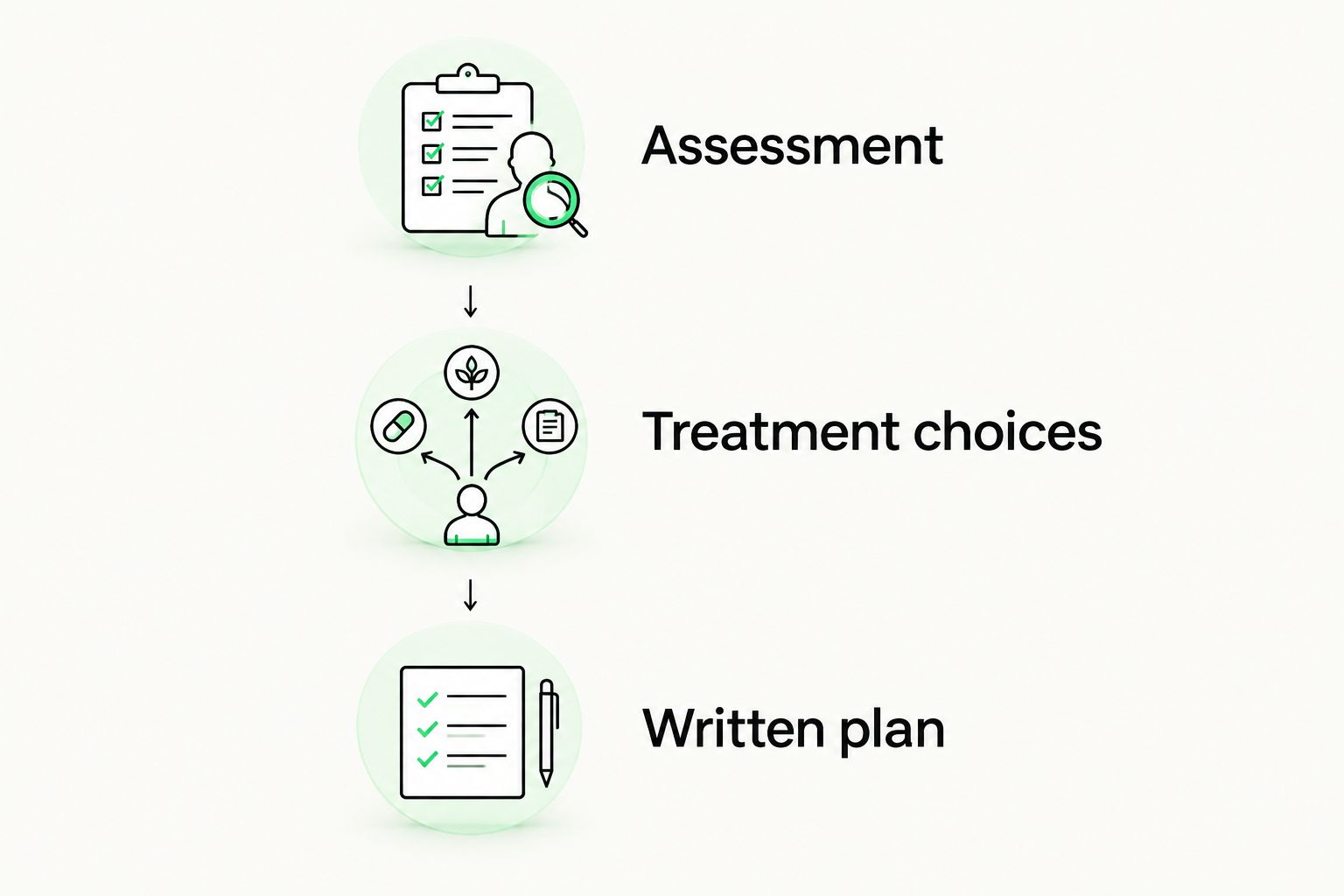
A home appointment should give you space to explain your concerns and ask questions. The assessment can include discussion of your symptoms and health history, followed by movement assessment appropriate to your situation and consent.
Treatment choices should follow that assessment. Exercises, education or hands-on treatment are not interchangeable answers to every episode of back pain, and a technique you have heard about is not automatically the right choice for you.
Ask for 1 written plan that records the agreed next steps in a format you can use. For your 2026 care records, keep the current version with any relevant instructions from other treating professionals. A plan should make sense outside the appointment, not only while someone is explaining it.
- Ask what the assessment findings mean in plain language.
- Discuss the purpose and limits of each proposed treatment.
- Confirm any agreed activity or exercise instructions before trying them alone.
- Ask what changes mean you should stop and seek advice.
- Agree how progress and the need for another appointment will be reviewed.
Compare your care options
Choose the setting that matches the assessment you need. Convenience matters, but it does not replace medical assessment when symptoms require it. You can ask a health professional to help you choose rather than making that decision alone.
| Option | Best for | Main benefit | Key limitation |
|---|---|---|---|
| Home physiotherapy | People who need assessment of daily movement at home or find clinic travel difficult | Brings assessment into the setting where everyday tasks happen | Home space and equipment differ from a clinic; it is not emergency care |
| Clinic physiotherapy | People who can attend and want assessment in a clinic setting | Provides a dedicated assessment and treatment environment | Requires travel and does not directly show the home setup |
| GP assessment | People needing medical review, help with concerning symptoms or coordination of care | Reviews back pain alongside broader health needs | Does not replace a physiotherapy movement assessment when that is indicated |
| Emergency care | People with emergency symptoms or serious injury | Provides urgent assessment | Is not the setting for a planned course of routine physiotherapy |
For back pain in 2026, there is no single care setting that suits everyone. Home physiotherapy is a practical option when your needs fit the service; medical or clinic-based care has a different role. The options can also form parts of the same care pathway rather than competing alternatives.
Common mistakes when arranging home care for back pain
Booking a treatment before describing the problem
Asking only for massage or dry needling skips the more useful conversation about your symptoms and goals. Explain what is happening first, then discuss treatment options after assessment. You can share a preference without committing to a technique.
Waiting for a home visit despite new warning signs
An existing booking does not make new symptoms safe to leave until appointment day. Seek urgent advice for the warning signs described above, and tell the practice if your circumstances change. A routine enquiry is not an emergency response service.
Letting family goals replace your own
A relative might focus on walking farther while you are most concerned about getting dressed comfortably. Both concerns can be discussed, but the person receiving care should guide the priorities. Ask before inviting relatives or sharing assessment information with them.
Treating a past plan as current instructions
Exercises or advice from an earlier episode of back pain were given in a particular context. Bring the old plan for discussion rather than assuming it applies unchanged. Explain any new surgery, diagnosis, symptoms or restrictions that have arisen since then.
Assuming everyone involved has the same information
A support coordinator, home care provider and family member can each hold different pieces of the story. With your consent, identify a main contact and clarify what needs sharing. Avoid relying on messages passed through several people when an instruction needs direct clarification.
Information for families and professional referrers
A useful referral describes the person's concern, their own goals and the practical arrangements for a home visit. It does not need a guessed diagnosis. Include relevant existing clinical information and explain who can clarify questions before an appointment.
For a 2026 referral, check that contact details, consent and current care instructions are up to date. If another professional has set restrictions, provide the actual instructions rather than paraphrasing them from memory. Confirm the intended recipient before sending sensitive documents.
- Record the person's preferred contact method and communication needs.
- Explain the back pain concern and its effect on daily activities.
- Include relevant existing reports and treating-team instructions.
- Identify the authorised contact for administrative arrangements.
- Confirm consent for referral and information sharing.
FAQ
Can I have physiotherapy at home for back pain?
Physiotherapy at home is an option for back pain when a home assessment is appropriate for your symptoms and needs. Describe your concerns before booking so the clinician can advise whether to start with home physiotherapy or another service.
What happens at the first home physiotherapy appointment?
The first appointment involves discussing your symptoms, health history and goals, with assessment appropriate to your situation and consent. Ask what the findings mean and what next steps are recommended.
Should I see a doctor before arranging home physio?
Seek medical assessment first if you have warning signs, a serious injury or concerns about an underlying illness. New bladder or bowel changes, saddle numbness or rapidly worsening leg weakness need urgent medical assessment rather than a routine home appointment.
Do I need scans before physiotherapy at home?
Do not arrange scans solely to prepare for a home physiotherapy visit. Share any existing reports and ask your treating clinician whether further investigation is appropriate for your symptoms.
Can my family member stay during the appointment?
Ask to have a family member or support person present if that helps you participate. Confirm the arrangement beforehand and tell the clinician what information you consent to share.
Is home physiotherapy better than visiting a clinic?
Neither setting is better for every person with back pain. Home physiotherapy lets the clinician assess relevant everyday tasks in your surroundings, while a clinic offers a dedicated environment with different space and equipment.
What should I confirm before booking in 2026?
Confirm clinical suitability, location arrangements, required documents and payment responsibilities before booking. Foveria Health can discuss the service enquiry, while any organisation involved in payment needs to confirm its own requirements.
One last thing
Describe the task, not just the pain. Saying that getting out of your usual chair is difficult gives the clinician a concrete starting point for questions and assessment. You do not need medical vocabulary or a perfectly organised history to ask for help.