

Plan-managed NDIS physiotherapy is assessment and treatment arranged alongside a plan manager, with the aim of supporting your disability-related movement and everyday activity goals. For Sydney participants seeking care at home, the practical task is to match your needs with a suitable physiotherapist and confirm the service arrangements before booking.
- For NDIS physiotherapy Sydney enquiries, confirm your goals, service suitability and invoicing arrangements before booking.
- Foveria Health mobile physiotherapy suits Sydney participants seeking assessment and treatment at home.
- Ask your plan manager to confirm funding arrangements; a provider enquiry does not establish eligibility.
- Choose home visits or clinic appointments around your assessment needs, preferences and practical access requirements.
Why NDIS physiotherapy matters for plan-managed participants
Physiotherapy starts with what you want to do more comfortably or independently. That might mean discussing difficulty getting out of a chair, moving around your home or managing an everyday activity. Your physiotherapist assesses your circumstances rather than choosing treatment from a symptom description alone.
Plan management adds another conversation: how the proposed service fits your funding arrangements and how invoices will be handled. Clinical suitability and funding confirmation are separate checks. Complete both before agreeing to ongoing appointments.
Foveria Health provides mobile physiotherapy assessment and treatment across Greater Sydney. Home-based care lets you discuss the activities and surroundings that matter to you without arranging a trip to a clinic.
For a 2026 enquiry, use your current plan information and describe your current needs. An old service agreement or a previous booking does not answer every question about a new arrangement.
How to arrange plan-managed physiotherapy in Sydney
1. Describe the everyday activities you want help with
Start with a short note in your own words. You do not need to identify a diagnosis or name a treatment before making an enquiry. Explain what is difficult, what has changed and what you would like the physiotherapist to assess.
Choose 3 everyday goals to guide the first conversation. For example, you might want to discuss getting between rooms, transferring from your usual chair or taking part in a regular community activity. These are discussion points, not promises about what treatment will achieve.
If a family member or support worker helps prepare the enquiry, keep your preferences central. Include what matters to you, not just what others find difficult to organise. A written note is useful when different people support appointments and daily routines.
Finish your note with these practical details:
- Describe the activity you want help with, using an everyday example.
- Explain any recent change in movement, comfort or confidence.
- List mobility equipment or assistance you currently use.
- State your communication preferences and who you want involved.
- Identify what you would like explained at the first assessment.
2. Confirm the arrangements with your plan manager
Before booking, contact your plan manager with a description of the proposed physiotherapy service. Ask what they need to check and what information the physiotherapist must supply. Do not treat a provider's willingness to discuss an appointment as confirmation that an invoice will be paid.
Use current information for your 2026 booking. Ask the plan manager to explain the arrangements in plain language, including any questions that need resolving before the service starts. Keep their response with your appointment records so you can refer back to it.
You can do this yourself by email or telephone. If you have a support coordinator, ask for help gathering the information while keeping decisions and consent with you. Avoid forwarding your entire plan when a specific detail will answer the question.
Ask your plan manager to clarify:
- Whether the proposed service can be paid under your current arrangements.
- What provider details and invoice information they require.
- Whether they need a service agreement or other documents before appointments begin.
- How to check the position before agreeing to a series of visits.
- Who to contact if an invoice needs clarification.
3. Ask the physiotherapist about fit and home visits
Write down your questions before contacting providers. A useful first conversation covers your goals, the home setting, communication needs and the practical arrangements for assessment. You are checking whether the service fits, not committing to a treatment course.
For an in-home option, Foveria Health offers assessment and treatment across Greater Sydney, including care for NDIS clients. Ask about personal, goal-focused care at home with Simon and confirm whether the proposed arrangement suits your circumstances. Confirm plan-managed invoicing directly rather than assuming it from the general service description.
If you live in Punchbowl or a nearby suburb, give your exact suburb when enquiring. Greater Sydney coverage does not establish the appointment arrangements for a particular address or day. Home visits also need a suitable setting; explain access barriers or concerns before the appointment.
Include these questions in your enquiry:
- Can you assess the activities and difficulties I have described?
- Does my address fit your current home-visit arrangements?
- What information do you need before deciding whether an assessment is suitable?
- Can you explain the proposed service agreement and invoicing process?
- How will you involve my chosen family member or support person?
4. Agree on the service details before booking
Once the service appears suitable, ask for the arrangements in writing. Read them alongside the information from your plan manager. Resolve differences before the appointment rather than leaving them for an invoice dispute.
For a 2026 service agreement, check that the details reflect the service you are actually arranging. Understand what an assessment involves, what requires separate agreement and how changes or cancellations are handled. Do not assume every provider uses the same terms.
Nominate 1 main contact for appointment administration if several people help you. This person can coordinate messages without replacing your role in decisions. Make clear who can receive appointment information and who has permission to receive clinical information; those roles are not automatically the same.
Check these points before confirming:
- The participant's details and the address for the appointment.
- The purpose of the initial assessment and any agreed follow-up.
- The written terms, including changes and cancellations.
- The invoice recipient and any information the plan manager requested.
- Consent for sharing information with family, support workers or other professionals.
5. Prepare your home and support information
You do not need to turn your home into a treatment room. Tell the physiotherapist about access and space beforehand, then follow any preparation instructions they give you. The aim is an appointment that respects your home, comfort and preferences.
Choose 2 everyday tasks you would like to discuss during the assessment. Describe them rather than trying a difficult movement to demonstrate a problem before the physiotherapist has assessed you. Ask whether a support person should attend and what their role will be.
Keep the handover simple: Your goals, Home access, Health information and Support contacts. These headings help you organise a useful summary without sending unrelated personal documents. Bring relevant clinical information you already have, and ask what else is needed rather than arranging new paperwork without guidance.
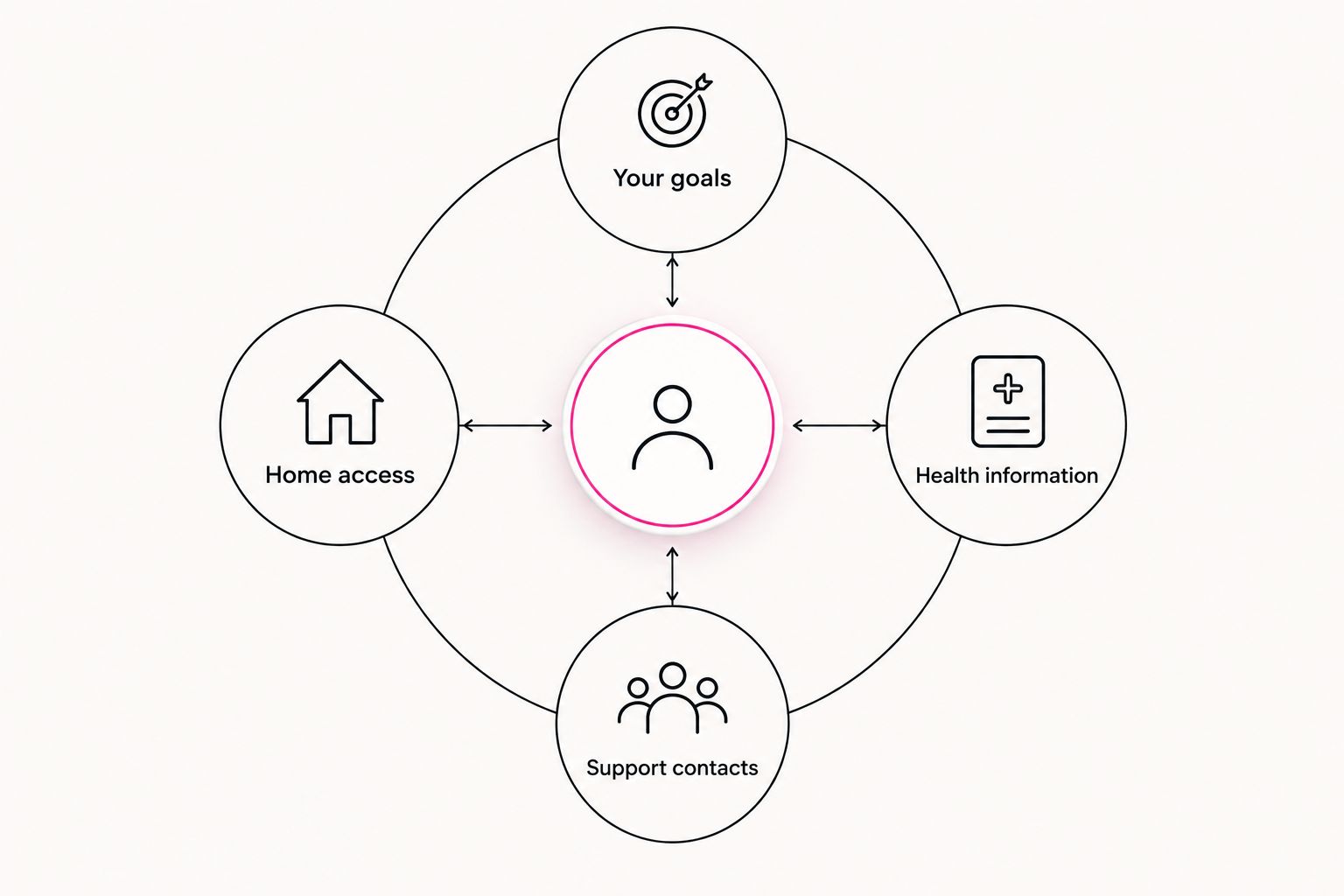
Use your preparation note to cover:
- Your goals: the activities you want assessed and what matters to you.
- Home access: entry instructions, stairs, parking considerations and pets.
- Health information: relevant reports, medicines information and existing care instructions.
- Support contacts: who will attend and who can receive agreed updates.
6. Review the plan after the assessment
At the end of the assessment, ask the physiotherapist to explain their findings in everyday language. You should understand what they recommend, why they recommend it and what remains uncertain. Ask questions before agreeing to treatment or follow-up.
Keep the clinical plan separate from the administration. A recommendation for further physiotherapy still needs to fit the service and funding arrangements you have confirmed. Ask what information your plan manager or support coordinator needs, with your consent.
For your 2026 appointment record, note the assessment date, agreed goals and next decision. Avoid judging progress only by how many visits have occurred. Discuss whether the agreed activities are changing, whether the approach remains suitable and whether anything needs reassessment.
Close the appointment with these questions:
- What did the assessment identify about my everyday difficulties?
- What are the proposed goals and how will we review them?
- What should I do between appointments, and what needs supervision?
- What changes or concerns should prompt me to contact you?
- What needs confirming before the next appointment?
Compare the options for your circumstances
Choose the setting around your assessment needs, not the funding label alone. Plan management does not, by itself, tell you whether a home visit or clinic appointment is the better clinical fit.
Start by asking what the physiotherapist needs to assess and what makes attendance practical for you. Then confirm the relevant service arrangements. An option can suit your preferences while still requiring further discussion about access, scope or payment administration.
| Option | Best for | Practical benefit | Key limitation |
|---|---|---|---|
| Foveria Health mobile physiotherapy | Sydney participants seeking assessment and treatment at home | Lets you discuss your goals in your own home | Confirm suitability, visit arrangements and plan-managed invoicing before booking |
| Clinic-based physiotherapy | Participants who prefer a separate appointment setting | Gives you an appointment away from the home environment | Requires travel and a check that the clinic's access and service suit you |
| Clarification before booking | Participants with unresolved service or funding questions | Allows you to settle responsibilities before committing | Does not replace a physiotherapy assessment |
Home visits avoid the need to travel to a clinic, but they are not automatically the right setting for every assessment. Clinic appointments offer a different environment, but attendance must work with your transport and support needs. Discuss both benefits and limitations rather than treating either option as universally better.
Common mistakes plan-managed participants make
Assuming plan management confirms every service
Having a plan manager does not settle the details of a particular physiotherapy arrangement. Ask about the proposed service before booking, and keep a record of the response. Send the physiotherapist any specific invoice requirements that have been confirmed.
Booking around a treatment name instead of a goal
Starting with a request for a particular technique can leave the underlying difficulty unexplained. Describe the activity you want help with first. The physiotherapist can then assess whether a treatment approach is appropriate, explain alternatives and discuss your preferences.
Leaving the participant out of the conversation
Family members and coordinators often organise the practical details, but the participant's priorities still belong at the centre. Ask how the person prefers to communicate and who they want involved. Do not assume an administrative contact has permission to receive every clinical update.
Agreeing to repeated visits without a review discussion
A regular appointment pattern is not a substitute for an agreed purpose. Ask what follow-up is intended to address, how goals will be reviewed and what happens if circumstances change. Confirm the administrative arrangements before adding appointments.
FAQ
How do I arrange NDIS physiotherapy in Sydney if my plan is plan-managed?
Start by describing your goals, checking the proposed arrangements with your plan manager and contacting a suitable physiotherapist. Confirm service suitability, written terms and invoicing requirements before booking.
Can Foveria Health provide physiotherapy at my home?
Foveria Health provides mobile physiotherapy assessment and treatment across Greater Sydney. Give your suburb and support needs when enquiring, and confirm the visit arrangements and plan-managed invoicing directly.
Does having a plan manager mean my physiotherapy is automatically covered?
Do not assume a particular physiotherapy service is covered because your plan is plan-managed. Ask your plan manager to confirm the arrangements for the proposed service before you book.
Do I need a referral before arranging NDIS physiotherapy?
Ask the physiotherapy provider and your plan manager what referral or supporting information they require for your arrangement. Explain your needs first so they can identify the relevant documents rather than asking you to gather unnecessary paperwork.
Is home physiotherapy better than going to a clinic?
The better setting depends on your assessment needs, preferences and practical access requirements. Home visits let you discuss activities in your own surroundings; clinic visits require travel and offer a different assessment environment.
Can my support coordinator organise the appointment for me?
You can ask your support coordinator to help with the enquiry and practical arrangements. Make clear what information you consent to share, who should receive updates and how you want to take part in decisions.
What should I have ready for the first home appointment?
Prepare your goals, relevant health information, access instructions and details of anyone you want involved. Ask the physiotherapist what else they need, and do not attempt a difficult task just to demonstrate it before assessment.
One last thing
Write down the activity, not just the symptom. A note about difficulty getting from your usual chair to the kitchen gives your physiotherapist a clear starting point for questions about your daily life.
For a 2026 enquiry, send that short description alongside your suburb and preferred contact details. You can then discuss clinical suitability and service arrangements without turning the first message into a full medical history.