

Yes, a family member can generally attend your physiotherapy at home appointment if you want them there and agree to their involvement. They can help you explain your concerns, remember advice and ask questions about supporting you between visits. Let the physiotherapist know beforehand, and remember that you can ask for private time or change your mind during the appointment.
- Physiotherapy at home can include a family member, with your agreement and clear boundaries.
- Foveria Health suits Greater Sydney clients seeking personal, goal-focused physiotherapy at home with Simon.
- Family members can listen, take notes and explain everyday concerns without taking over the conversation.
- Agree beforehand who can attend, what can be discussed and whether you want private time.
Foveria Health provides mobile physiotherapy across Greater Sydney. When arranging a visit with Simon, explain who you would like present and what support you want from them.
Can a family member attend your home physiotherapy appointment?
A family member can usually join your home physiotherapy appointment, but your preferences come first. Being related to you does not automatically give someone permission to hear every detail of your health or make decisions for you.
There is no single arrangement that suits every household. Choose the level of involvement that helps you feel comfortable and able to speak openly.
| Arrangement | Best for | What it offers | What to consider |
|---|---|---|---|
| Family stays throughout | People who want ongoing support during the visit | Someone can listen, take notes and ask agreed questions | Sensitive topics can be harder to raise with someone else present |
| Family joins partway | People who want both privacy and shared discussion | You can speak privately before inviting your family member into the conversation | Agree when the person should join or leave |
| You attend alone | People who prefer an independent conversation | You can discuss your concerns without a relative listening | You will need another agreed way to share advice if you want help afterwards |
For a visit arranged in 2026, explain your preferred arrangement when you enquire rather than leaving it until the physiotherapist arrives. Attendance and permission to receive information are separate matters, so discuss both.
Why this matters
Home is a personal space. Having someone familiar beside you can make an appointment feel less daunting, but their presence should support your voice rather than replace it.
A daughter might notice that getting out of a favourite chair has become difficult. A partner might remember a question you wanted to ask. Those observations are useful starting points, but the physiotherapist still needs to understand what matters to you.
The same principle applies whether you are an older person, an NDIS participant or a private client. Receiving help does not mean giving up your say in the appointment.
If your family member stays throughout
Having a relative present can be useful when they already help with everyday activities or when you want another person to hear the discussion. Tell the physiotherapist what role you would like that person to have.
For example, you might want your family member to:
- Write down questions and agreed next steps.
- Describe changes they have noticed at home.
- Help explain your usual routine.
- Ask for clarification when advice is unclear.
- Listen to guidance you have agreed can be shared.
The limitation is that a familiar person can unintentionally answer for you. Agree beforehand that you will have the first opportunity to respond, with your relative adding information afterwards.
A family member should not attempt hands-on assistance simply because they watched part of an appointment. If you want them involved in helping you move, ask the physiotherapist what is appropriate for your circumstances.
If your family member joins only part of the visit
Partial attendance gives you space for a private conversation while still including someone who supports you. You can ask for your relative to join the opening discussion, the closing explanation, or another agreed part of the appointment.
This arrangement is useful when you want to discuss personal concerns without an audience. It also lets you choose which advice you want shared afterwards.
Its practical limitation is coordination. If your family member needs to leave the room or arrive later, explain the plan before the appointment starts so everyone knows what to expect.
You do not need to justify wanting privacy. A simple request to speak with the physiotherapist alone is enough to start that conversation.
If you prefer to attend alone
You can prefer a private appointment even when a family member arranged it. Making the booking does not, by itself, give someone permission to remain in the room or receive an update afterwards.
Attending alone gives you room to describe your concerns in your own words. The trade-off is that someone helping you later will not have heard the discussion directly.
If you want support afterwards, ask how agreed information can be shared. That might mean inviting your relative into the closing conversation or asking whether written instructions would be appropriate.
Choose the arrangement because it suits you, not because you feel obliged to include or exclude someone.
Why family involvement varies between appointments
The right level of involvement depends on the person and the purpose of the visit, not simply on the family relationship. These factors help explain why arrangements differ:
- Your preference: You decide whether a relative's presence feels supportive or uncomfortable.
- The topics discussed: Personal care, symptoms or family concerns can call for a private conversation.
- Communication needs: You might want help remembering information or explaining your routine.
- Everyday support: Someone who regularly helps you at home can contribute relevant observations.
- Space and safety: The physiotherapist needs room to assess movement without people crowding the area.
- Decision-making arrangements: Where someone has a formal role, the practice needs to understand that role rather than assume it from their relationship to you.
These considerations apply to 2026 appointments whether the visit is in Punchbowl, a nearby suburb or elsewhere in Greater Sydney. Tell the practice about your needs instead of assuming every household uses the same arrangement.
How to arrange a visit with a family member present
A little preparation helps keep the appointment focused on you. Use the following sequence when making the enquiry and discussing the visit with your relative.
1. Share preferences
Tell the practice that you would like a family member present. Explain whether you want them there throughout or only for part of the visit, and mention any communication support you need.
2. Agree roles
Talk with your family member about how they can help. Listening and taking notes are different from answering questions on your behalf, so make your preference clear before the appointment.
3. Plan privacy
Decide whether you would like time alone with the physiotherapist. You can also ask the practice to raise this with you discreetly rather than having to negotiate it in front of your relative.
4. Confirm next steps
Before the visit ends, check who will receive any agreed information and what you want shared. Ask questions about anything you or your family member do not understand.
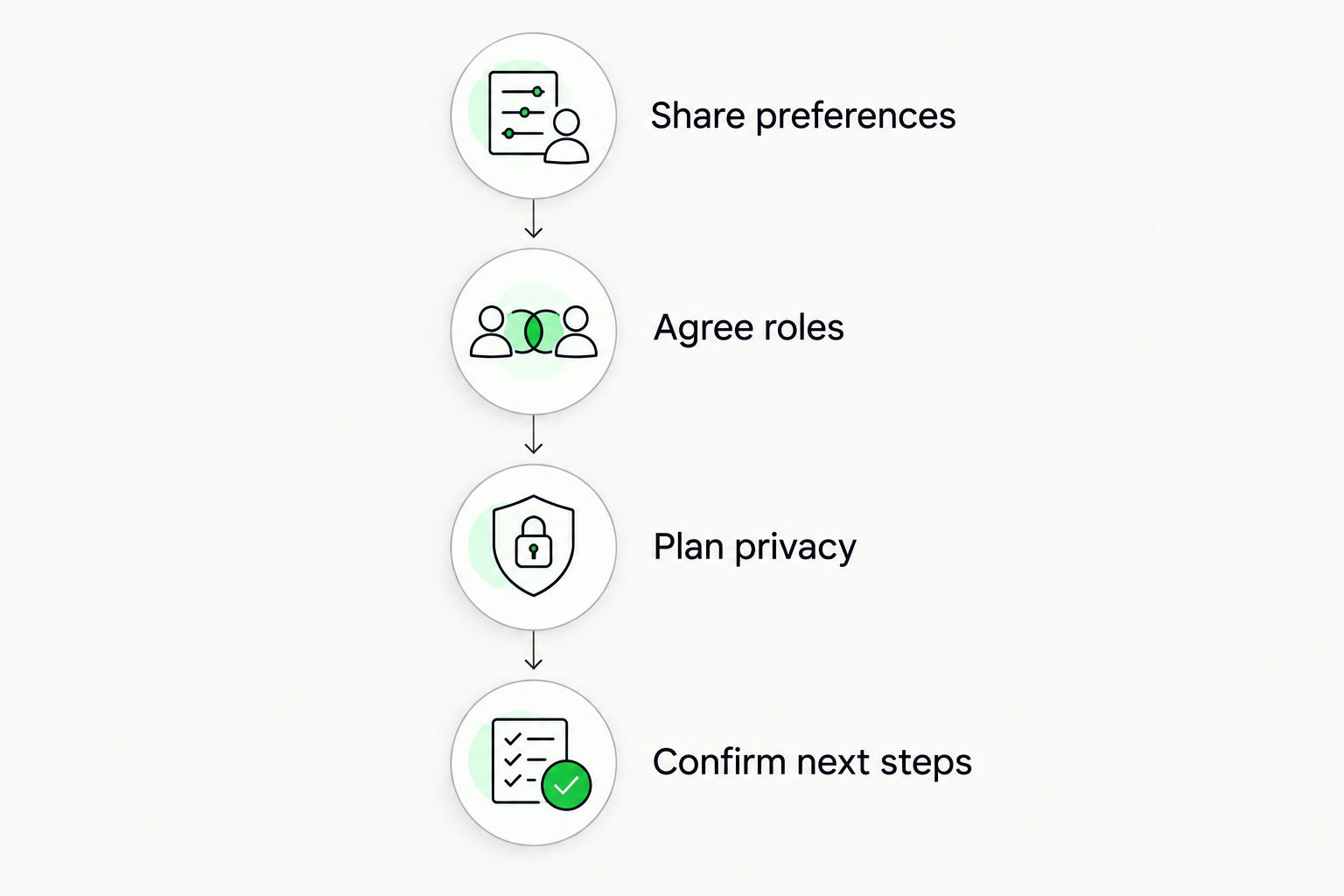
You can revisit these arrangements during the appointment. Agreeing to someone's presence at the start does not mean you have to keep the same arrangement throughout.
What should families bring to the conversation?
Bring observations rather than conclusions. Describing what has changed gives the physiotherapist useful context without asking your family member to diagnose the problem.
Helpful observations include difficulty using a particular chair, avoiding an activity previously enjoyed, or needing more help with an everyday task. Explain what you have noticed and let the person receiving care describe their experience too.
Ask the client what they want to achieve before adding family priorities. Being able to spend time in the garden might matter more to them than a goal someone else has chosen.
The most useful family contribution is specific, respectful and connected to the person's own goals. If you disagree about priorities, raise the difference calmly rather than expecting the physiotherapist to choose sides.
What should referrers and support coordinators include?
A referral or enquiry should make the proposed support arrangement clear without assuming consent. Include relevant information through the practice's agreed process and distinguish the client's wishes from the referrer's request.
Useful details include:
- Who is receiving physiotherapy and their preferred contact person.
- Who hopes to attend and their relationship or support role.
- Whether the client has agreed to that involvement.
- Communication preferences or assistance requested by the client.
- Any request for a private discussion.
- Who is seeking an update after the visit.
When referring to Foveria Health in 2026, describe the client's goals and the support they want from Simon. A request from a provider or relative does not replace a discussion with the client about participation and information sharing.
Avoid adding unnecessary personal information to a general enquiry. Ask the practice how to provide sensitive documents securely.
Can my adult child speak for me during the appointment?
Your adult child can help explain your concerns with your agreement, but being your child does not automatically authorise them to make decisions for you. Ask the physiotherapist to direct questions to you first and invite your child to add information afterwards.
If someone has a formal decision-making role, tell the practice before the visit so the relevant arrangements can be clarified.
Can I ask my family member to leave halfway through?
You can ask for private time during your home physiotherapy appointment, even if your family member joined at the start. Tell the physiotherapist that you would like to continue the discussion alone.
You can then decide whether to invite your relative back and what, if anything, you want discussed together.
Can a family member receive an update if they cannot attend?
A family member can request an update, but the practice needs appropriate permission or another lawful basis before sharing your health information. Explain who you want involved, what can be shared and how you would like communication handled.
Do not assume that an emergency contact, booking contact or person paying for the visit automatically receives clinical updates.
FAQ
Can my partner sit in on physiotherapy at home?
Your partner can generally sit in on physiotherapy at home with your agreement. Tell the physiotherapist whether you want them present throughout or only for part of the visit.
Do I have to have a family member at my home physio appointment?
You do not need to include a family member simply because the appointment happens at home. Discuss any individual support or safety needs with the practice beforehand.
Can my parent come to my home physiotherapy appointment in 2026?
Your parent can generally attend your home physiotherapy appointment in 2026 if you want their support. Agree on whether they will listen, take notes or contribute to the discussion.
Can a family member tell the physiotherapist something privately?
A family member can ask how to share a concern privately, but the physiotherapist cannot promise to keep every concern separate from the client's care. Sharing an observation also does not give the relative permission to receive information in return.
Can I change who attends future appointments in 2026?
You can ask to change who attends future appointments in 2026. Let the practice know your current preference, especially if previous visits involved a relative or support person.
Can my family help me with exercises after the visit?
Ask the physiotherapist whether family help is appropriate before involving someone in exercises or hands-on assistance. Have any agreed support explained clearly rather than relying on what your relative remembers seeing.
What should I tell Simon before a Foveria Health home visit?
Tell Simon who you would like present, how they will support you and whether you want private time. Mention relevant communication needs and ask how any agreed information will be shared afterwards.
One last thing
Someone being in your home is not the same as you inviting them into your healthcare conversation. Decide who belongs in the room before the appointment, including relatives who happen to be visiting.
If saying this aloud feels uncomfortable, contact the practice beforehand. A clear request for private time helps keep your appointment centred on your comfort, your questions and your goals.