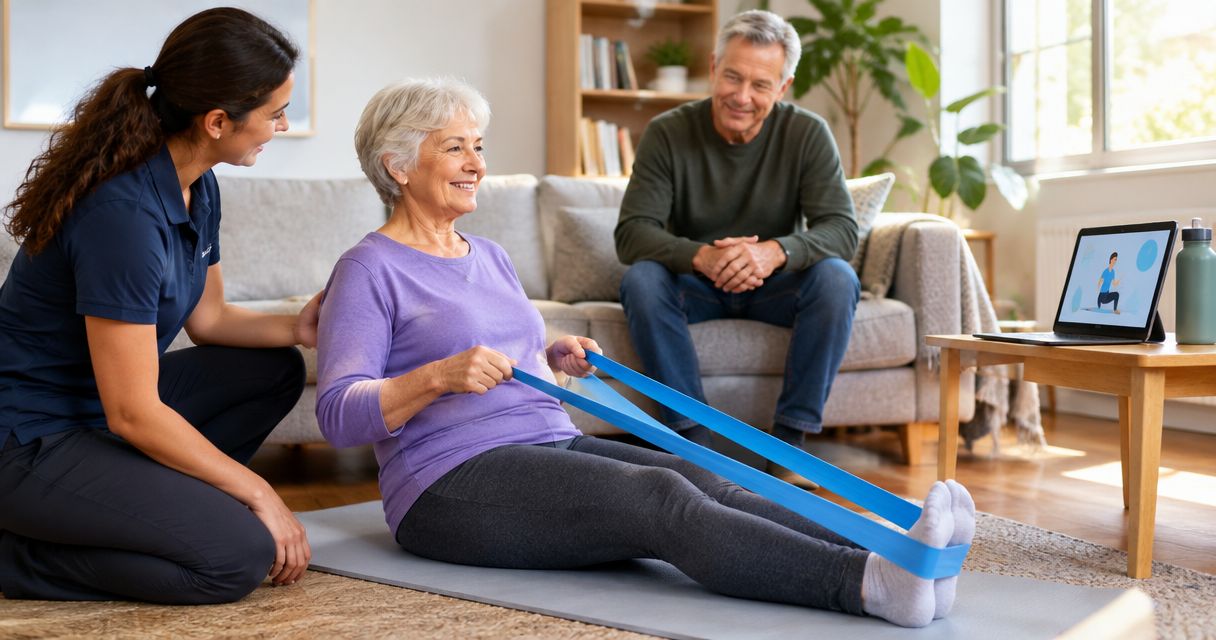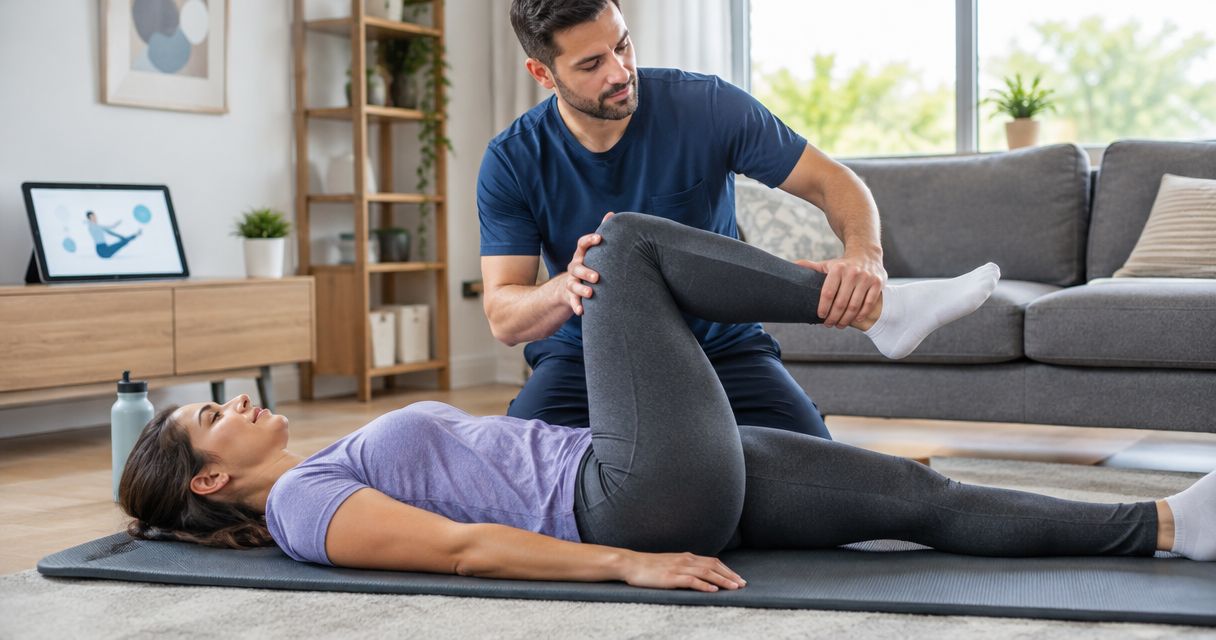
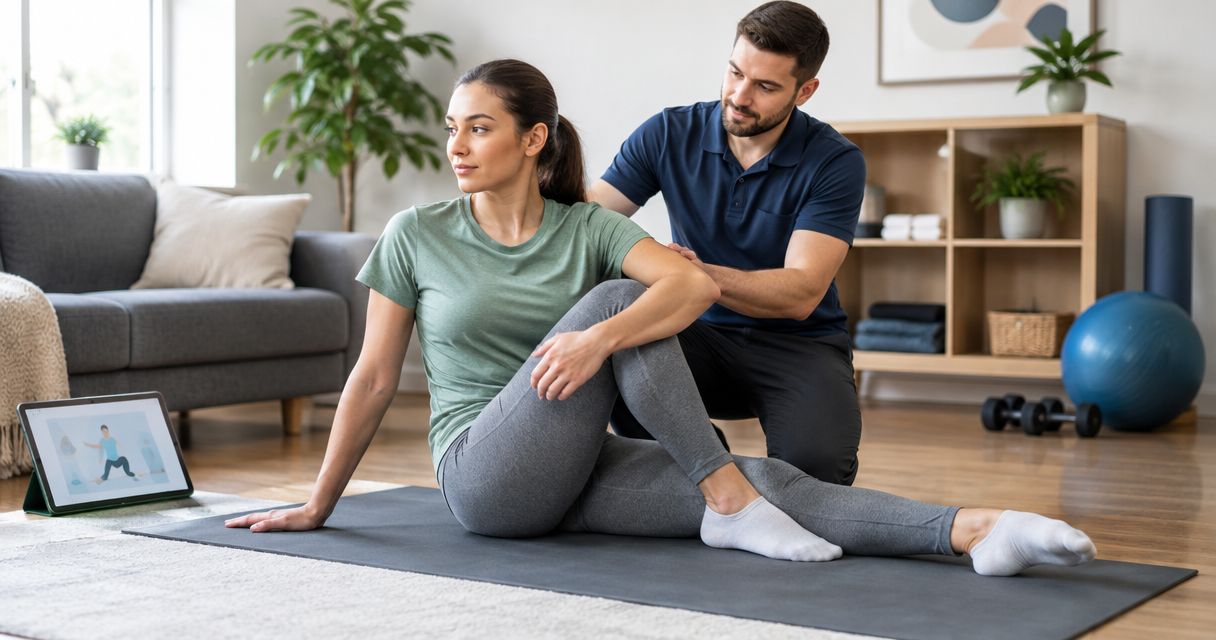
Physiotherapy at home needs enough clear space for your assessment, the movements being assessed and any equipment agreed for the visit—not necessarily a separate room. The space beside your chair or bed, and the route through your home, matter as much as the room’s overall size. Before moving furniture, describe your layout and access needs to your physiotherapist so you can agree on a suitable setup.
- Physiotherapy at home needs space matched to your assessment, not an assumed room size.
- Foveria Health provides in-home assessment and treatment across Greater Sydney; discuss your layout before arranging a visit.
- A clear entrance does not replace enough room around your chair, bed or walking aid.
- Ask about equipment before moving furniture or buying anything for mobile physiotherapy.
Why this matters
Preparing for a home visit should not mean rearranging your entire home. The useful question is whether your physiotherapist can reach you, assess the activities relevant to your goals and work without avoidable obstacles.
Foveria Health is suited to Greater Sydney clients seeking physiotherapy assessment and treatment in their own homes. You can use the Foveria Health website to learn about the practice, then explain any concerns about your space before arranging a visit.
A small flat, shared living area or bedroom deserves a practical discussion—not an automatic assumption that it will or will not work. Your needs and the proposed assessment determine which parts of the home matter.
How much space do you need for physiotherapy at home?
There is no single room measurement that answers this question for every assessment. A conversation and seated assessment use space differently from observing walking or assessing movement beside a bed. Ask what the planned appointment requires rather than clearing a room to an arbitrary size.
Usable space matters more than an empty room. A large lounge with narrow furniture gaps can present different access problems from a smaller room with a clear approach to a chair.
The following comparison is a planning guide, not a prescription for where your assessment must happen. Your physiotherapist should confirm the setting that suits the appointment.
| Possible setting | Best for discussing | Practical advantage | Limitation to check |
|---|---|---|---|
| Space around your usual chair | Sitting and getting up as assessment goals | Shows the chair you use every day | Nearby furniture can restrict access |
| A clear walking route | Walking around the home as an assessment goal | Shows everyday surfaces and obstacles | Turns, doorways and clutter affect usable space |
| Space beside your bed | Bed access and movement as assessment goals | Shows the actual bedroom arrangement | A wall or bedside furniture can limit access |
| A shared living area | A visit where privacy needs planning | Keeps the appointment in a familiar room | Other people and household activity can interrupt |
You do not need to decide which assessment is appropriate yourself. Explain what you want help with, describe the available areas and ask what needs to be accessible.
Space around your usual chair
If sitting or getting up is something you want assessed, tell the physiotherapist which chair you normally use. Describe whether it has arms, whether nearby furniture restricts access and whether you use a walking aid beside it.
Do not swap to an unfamiliar chair simply because it looks more suitable for an appointment. The everyday arrangement is useful information, and any change should have a clear purpose.
You can clear loose belongings without changing the furniture layout. Leave decisions about which chair to use, and where someone should stand to assist you, for discussion with your physiotherapist.
Space for walking around your home
If walking is one of your concerns, describe the route you use between everyday destinations, such as your bedroom and living area. Mention narrow doorways, changes in floor surface and any walking aid you normally use.
A route does not have to look like a clinic corridor to be worth discussing. Its turns and obstacles help explain the setting in which you want to move more confidently, but they also affect what can be assessed safely.
Do not practise an unfamiliar walking task just to check whether the space works. Describe the route first. Your physiotherapist can decide what is appropriate to assess during the visit.
Space beside your bed
If getting into bed, getting out of bed or moving in bed is a concern, explain how the bed sits within the room. Mention which side you normally use and whether a wall, bedside table or other furniture limits access.
There is no reason to move a heavy bed before anyone has discussed the appointment with you. A description of the layout helps identify questions that need answering before a visit.
Tell the physiotherapist about any equipment or assistance already involved in your usual routine. Do not disconnect equipment or change an established arrangement simply to create a larger empty area.
Why space needs vary
The amount of useful space depends on what the appointment involves. These factors are more helpful than a room’s total floor area:
- Your assessment goals. Discussing pain, looking at movement and assessing everyday activities involve different arrangements.
- The activity being assessed. Sitting, bed access and walking each draw attention to a different part of the home.
- Furniture placement. The approach to your chair or bed matters, not just the space elsewhere in the room.
- Equipment involved. Your usual equipment and anything planned for the visit need to be considered together.
- People present. A support person, interpreter or family member also needs an appropriate place during the appointment.
- Access through the property. Steps, doors and shared entrances affect reaching the assessment area, even when the room itself is spacious.
A description that covers these points is more useful than saying your home is small. It gives the physiotherapist specific questions to resolve with you.
How to prepare your space without rearranging your home
Start with information, then make only the changes agreed for your visit. This keeps preparation manageable, particularly if you live alone or rely on someone else for household tasks.
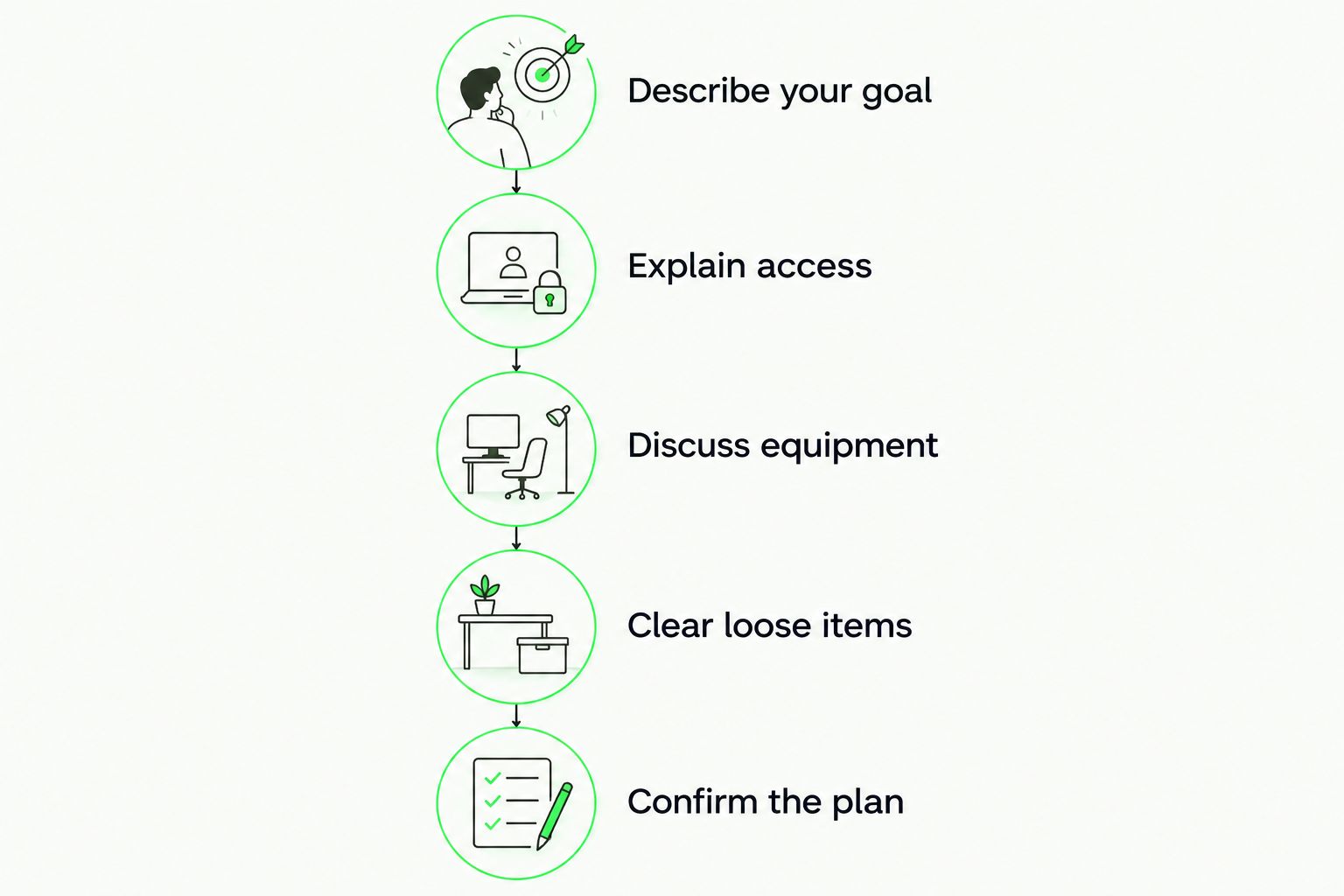
Describe your goal
Explain what you want help with in everyday language. For example, you might want to discuss pain when sitting, difficulty reaching the bedroom or concerns about getting out of bed.
You do not need to choose a treatment in advance. A clear description of the problem helps the physiotherapist identify what information about your home is relevant.
Explain access
Describe the entrance, any stairs or lift, and the route to the room you expect to use. If there is a locked shared entrance or someone needs to let the physiotherapist in, explain that when arranging the visit.
Mention access difficulties early rather than assuming they are unimportant because you manage them every day. Familiarity can make a narrow turn or awkward doorway easy to overlook when describing your home.
Discuss equipment
Ask whether anything is needed for the proposed appointment and who is responsible for arranging it. Do not assume that every home visit requires a portable treatment table, or that one will be brought.
Describe equipment you already use, including anything that takes up floor space. Do not buy equipment just to make your home look ready for physiotherapy. First establish what is relevant to your assessment.
Clear loose items
Where you can do so safely, put away loose belongings from the agreed access route and assessment area. Ask someone else for help if preparing the space would involve lifting or movement you cannot comfortably manage.
Do not remove a support you rely on or move heavy furniture without discussion. The aim is a workable appointment space, not a newly arranged home.
Confirm the plan
Check which area should be accessible, whether a support person should attend and what information to have ready. If something about the arrangement changes before the visit, let the practice know.
For a broader appointment checklist, read how to prepare for your first physiotherapy visit at home. Space is only one part of preparing; explaining your goals and usual assistance is just as useful.
What if you live in a small flat or shared home?
A small home calls for a conversation about the proposed visit, not a promise that every assessment will fit. Describe the room you usually use, the approach to it and anything that cannot reasonably be moved.
In a shared home, consider privacy as well as floor space. Tell the physiotherapist if you want a family member present, need an interpreter or prefer part of the conversation without others in the room.
You do not need to apologise for a lived-in home. Focus on practical access and the activities you need help with, rather than making the room look like a treatment clinic.
If the intended setup is unsuitable, discuss what needs to change before confirming arrangements. Do not assume that squeezing furniture together or using another room resolves the issue without checking.
Do you need a spare room for home physiotherapy?
A spare room is not the deciding requirement for physiotherapy at home. The relevant question is whether the available setting suits the planned assessment and gives appropriate access to you and any equipment involved.
A spare room also has limits: it might not contain the chair, bed or route connected with your concern. Explain your everyday setup before choosing the room that looks most spacious.
Do you need to move furniture before the physiotherapist arrives?
Do not move heavy furniture simply to prepare for a home physiotherapy appointment. Ask which area needs to be accessible and whether a layout change is actually required.
Clearing loose belongings is different from shifting a bed, sofa or dining table. If a furniture change is agreed, arrange appropriate help rather than attempting it yourself when lifting is difficult.
What should families and professional referrers pass on?
Families, home care providers and support coordinators can help by sharing a short, accurate description of the person's usual environment. Ask the person what they want help with and what they are comfortable sharing.
Useful details include:
- The everyday activity the person wants assessed.
- The room or route connected with that activity.
- Access arrangements at the entrance and inside the home.
- Equipment and assistance already used.
- Who will attend and any communication or privacy needs.
Avoid promising that a particular treatment will happen or that the available space will definitely suit it. Those decisions belong with the treating physiotherapist after the relevant discussion and assessment.
For a person in Punchbowl or elsewhere in Greater Sydney, clear access information is more useful than a suburb name alone. Describe the individual property and needs rather than assuming homes in the same area have similar arrangements.
FAQ
How much floor space do I need for physiotherapy at home?
The floor space needed depends on your planned assessment, your usual equipment and access around the relevant chair, bed or walking route. Describe your layout before the visit rather than relying on a single room measurement.
Can I have home physiotherapy in my lounge room?
Discuss your lounge room as a possible setting with your physiotherapist. Explain the seating, nearby furniture, access route and privacy arrangements so the space can be considered for the planned visit.
Do I need to buy a treatment table for a home visit?
Do not buy a treatment table just to prepare for a home visit. Ask what equipment the appointment requires and how it will be arranged.
Should I move my bed away from the wall before physiotherapy?
Do not move your bed before discussing whether a change is needed. Explain which side you use and what limits access, then agree on any preparation.
Can a family member stay during physiotherapy at home?
Discuss having a family member present when arranging your appointment. Explain whether you want help with communication, remembering information or describing your usual routine, and mention any privacy preferences.
What should I do if I cannot clear the room myself?
Tell the practice that you need help preparing the space before making changes. Do not attempt heavy lifting or difficult movements to get the room ready.
Can I discuss my home layout with Foveria Health before arranging a visit?
Include your home layout and access concerns when enquiring about Foveria Health's mobile physiotherapy. Describe your goals, the relevant room and any equipment or assistance you normally use.
One last thing
The room that looks easiest to prepare is not always the room most relevant to your concern. If the difficulty happens beside your bed or at your usual chair, describe that setting first—even if another room has more open floor space.
Prepare a description before preparing the room. It is a useful first step that does not require you to lift furniture, buy equipment or guess what the appointment will involve.