

For injured workers, physiotherapy after workplace injury is assessment and treatment aimed at restoring movement and supporting a return to everyday activities and work. This 2026 guide explains how to choose between home and clinic appointments, prepare useful information and keep rehabilitation connected to your actual job demands.
- Physiotherapy after workplace injury should connect your assessment, daily activities and actual job demands.
- Foveria Health suits Sydney clients seeking physiotherapy assessment and treatment at home.
- Confirm workplace-injury arrangements before booking; an in-home service does not establish insurer approval.
- Choose home, clinic or telehealth appointments according to your assessment needs, not convenience alone.
Why physiotherapy matters for injured workers
A workplace injury affects more than the task that caused it. Getting dressed, travelling, sleeping comfortably and managing responsibilities at home can become part of the conversation about recovery.
Work adds another layer: your job might involve lifting, driving, prolonged sitting or repeated movements. A useful rehabilitation plan connects what you need to do at home with what your role requires, rather than treating a sore body part in isolation.
Home appointments bring the assessment into your everyday surroundings. However, a home assessment does not reproduce every workplace demand, and convenience alone does not determine the right treatment setting.
Foveria Health provides mobile physiotherapy assessment and treatment across Greater Sydney. For a workplace injury enquiry in 2026, describe your circumstances and ask whether Simon can provide the assessment and any documentation your situation requires.
How to arrange physiotherapy after a workplace injury
1. Describe your injury and the tasks it affects
Start with a plain-language account of what happened and what has changed. You do not need to arrive with a diagnosis; the purpose is to give the clinician a clear starting point.
Write down 3 tasks that now cause difficulty. Choose real examples, such as getting into the car, reaching a shelf or sitting through a meeting, rather than simply writing that movement hurts.
Separate what you have noticed from what someone has diagnosed. If another clinician has assessed you, bring their written advice instead of trying to remember every detail.
Be clear about whether you are currently working, away from work or doing different duties. These circumstances help frame the discussion without determining your treatment in advance.
- Record when and how the injury happened.
- List the daily and work tasks affected.
- Describe changes in symptoms or movement.
- Gather existing clinical advice and restrictions.
- Note your current work arrangements.
2. Clarify who needs to approve or coordinate care
Before booking, distinguish the clinical question from the administrative one. You need to know whether physiotherapy is appropriate, but also who is arranging the appointment and what information they require.
If an insurer or employer is involved, ask that organisation about its requirements. Do not assume that a practice accepting private clients also accepts your workplace-injury arrangements. A service description is not confirmation of claim acceptance, payment or reporting responsibilities.
For a 2026 enquiry, use current written instructions rather than relying on a colleague's previous experience. Keep relevant correspondence together so you can explain the arrangements accurately.
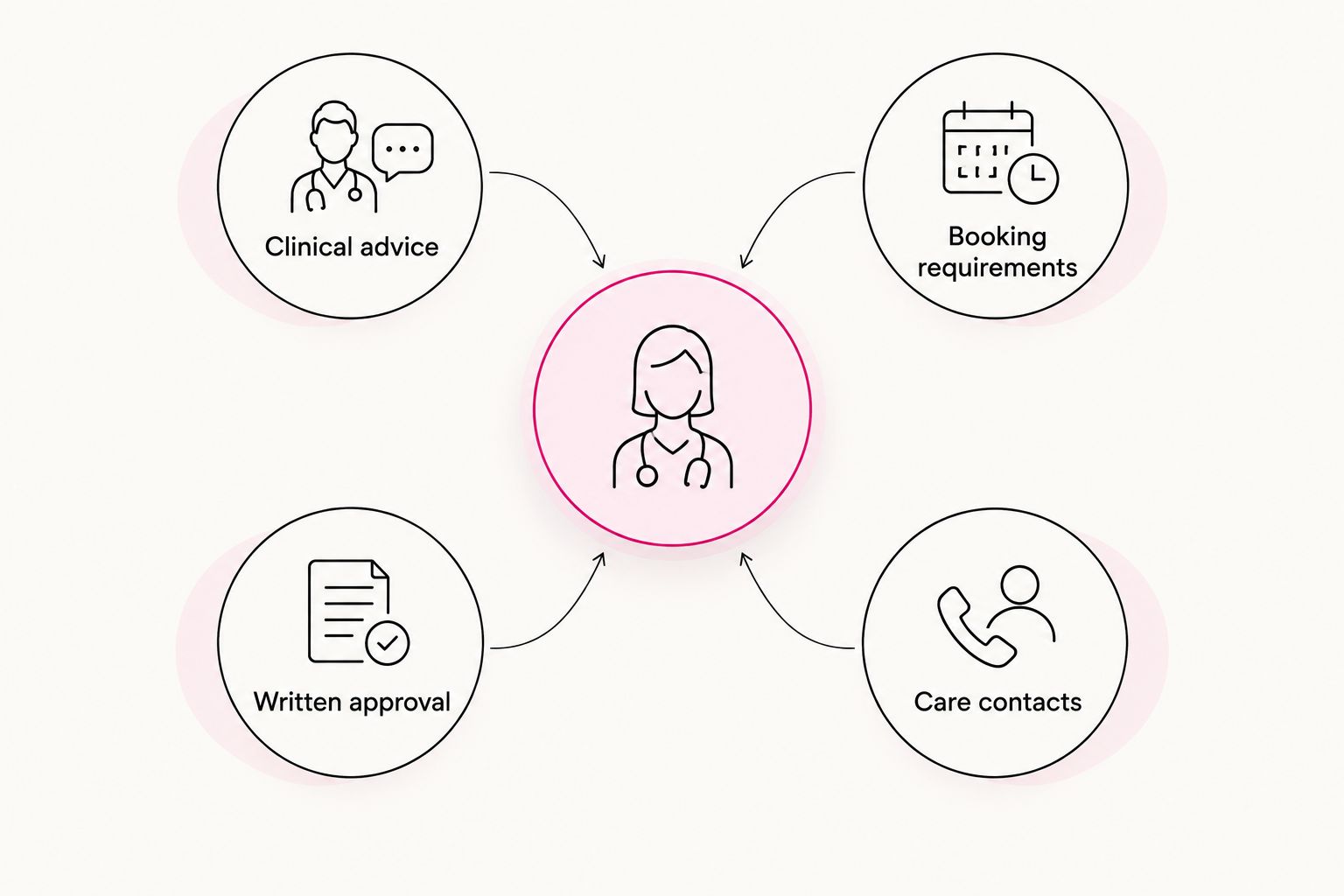
Use these headings for your notes:
- Clinical advice: what your treating clinician has recommended.
- Booking requirements: what the practice needs before arranging care.
- Written approval: what the relevant organisation has confirmed.
- Care contacts: who should receive agreed updates.
3. Choose a setting that fits your assessment needs
Start by asking your treating clinician what needs assessment. Then consider whether travelling, your home environment or access to particular facilities affects the appointment choice.
Home physiotherapy allows discussion of the spaces and activities you manage every day. Clinic appointments offer a different environment, while telehealth relies on conversation and observation through a screen. None is automatically the best choice for every workplace injury.
For clients seeking physiotherapy at home in Greater Sydney, Foveria Health offers in-home assessment and treatment with Simon. Confirm suitability for your workplace injury before arranging an appointment, including any insurer-related requirements.
The guide to choosing mobile physiotherapy in Sydney provides further questions for comparing providers.
- Ask which assessment activities are needed.
- Explain any difficulties travelling to appointments.
- Discuss privacy and space at home.
- Check whether workplace-specific assessment is required.
- Confirm whether another setting or professional is needed.
4. Prepare your home and relevant information
You do not need to turn your living room into a treatment room. Ask the practice what space is needed, and describe anything that affects access, such as stairs or a shared entrance.
Choose somewhere you feel comfortable discussing your health. If family members, housemates or colleagues are nearby, decide what you want to share and whether you would prefer a private conversation.
Gather relevant documents in one place. Include information you already have, but do not delay seeking appropriate care just to create a perfect folder.
If a family member or support person will attend, agree on their role beforehand. They can help you remember questions without taking over the conversation.
- Confirm entry instructions and access barriers.
- Ask what clothing or space is suitable.
- Keep relevant reports and correspondence accessible.
- Prepare your current medicines information, if requested.
- Tell the practice who will attend with you.
5. Agree on goals linked to daily life and work
Begin with 1 priority activity that matters to you. It might be managing the steps at home, tolerating a necessary journey or completing a particular work task within existing restrictions.
A goal is more useful when it describes an activity rather than a promise to eliminate pain. Ask how the physiotherapist will assess that activity, what you should practise and when the plan should be reviewed.
Keep workplace decisions within the appropriate clinical and workplace process. An exercise programme is not, by itself, permission to resume unrestricted duties or change documented restrictions.
For your 2026 plan, request instructions you can understand and refer back to. You should know what to do between appointments and who to contact with questions.
- Name the activity you most want to improve.
- Explain the demands of your actual role.
- Ask for clear instructions between appointments.
- Clarify what changes need a clinical review.
- Agree on how progress will be discussed.
6. Review progress and share information with consent
Keep a short record of how agreed activities are going. Describe what you did and what you noticed, rather than testing your limits to produce a better result for the next appointment.
Bring 2 questions to each review: what has changed, and what should happen next? This keeps the discussion focused without turning recovery into a pass-or-fail exercise.
If several people are involved, clarify who coordinates communication. Your physiotherapist, treating doctor, workplace contact and insurer do not necessarily need identical information for identical purposes.
Professional referrers should explain the reason for referral and provide relevant information through an agreed process. Families can support communication while keeping the injured person's preferences central.
- Record changes in agreed daily activities.
- Mention difficulties following the plan.
- Ask whether the assessment or goals need updating.
- Confirm consent before sharing clinical information.
- Keep current advice accessible to the relevant people.
Compare appointment options for workplace injury rehabilitation
Choose the setting that supports the assessment you need. The options below describe practical differences, not a ranking of treatment quality or a prediction of recovery.
| Option | Best for | Main benefit | Key limitation |
|---|---|---|---|
| Mobile physiotherapy | People who need assessment in their home surroundings or find travel difficult | Allows discussion and observation of relevant home activities | A home visit does not reproduce every workplace task or clinic facility |
| Clinic physiotherapy | People whose assessment or treatment needs fit a clinic setting | Provides a dedicated treatment environment | Requires travel and does not directly show the home environment |
| Telehealth physiotherapy | People whose needs suit remote discussion, observation and follow-up | Removes the journey to an appointment | Does not allow hands-on assessment and depends on a suitable connection and setup |
Foveria Health mobile physiotherapy is an option for Sydney clients seeking assessment and treatment at home. Its home-based service does not establish that workplace-injury claims, insurer reporting or workplace visits are included; ask about those requirements directly.
You do not need to commit to one setting for every stage of care. Ask the treating clinician whether your needs have changed before assuming the original arrangement remains the right fit.
Common mistakes injured workers make
Assuming a home visit includes workplace-injury administration
Mobile physiotherapy describes where care happens, not which claims or administrative arrangements a practice accepts. Before your first appointment, confirm the practice's role and any requirements from the organisation coordinating your care.
Describing symptoms without explaining the job
Saying your shoulder hurts leaves out whether your role involves overhead work, carrying, driving or desk tasks. Give concrete examples and share existing restrictions so the assessment discussion reflects your responsibilities.
Treating an exercise article as a personal programme
An online movement guide cannot assess your injury, medical history or current restrictions. Bring questions about exercises to your clinician instead of copying a routine because it mentions the same painful area.
Measuring recovery only by pain
Pain matters, but so do the activities you can manage and the difficulties that remain. Discuss changes in daily function alongside symptoms, without assuming that less pain means unrestricted work is appropriate.
Letting other people speak for you
Family members and workplace contacts can provide useful context, but your goals and consent remain central. If someone else arranges the appointment, ask for time to explain your own concerns directly.
What professional referrers should include
A useful referral explains why home assessment is being considered and what question the physiotherapist is being asked to address. Avoid requesting a predetermined treatment before the person's needs have been assessed.
For 2026 referrals, include current contact details and relevant, current instructions. If information is uncertain, identify the question that needs answering rather than presenting an assumption as an established fact.
- The person's goals and relevant daily difficulties.
- A description of the role and affected work tasks.
- Existing clinical restrictions or treating-team advice.
- Relevant documents shared with appropriate consent.
- The contact responsible for clarifying administrative arrangements.
FAQ
Is mobile physiotherapy suitable after a workplace injury?
Mobile physiotherapy is an option when assessment and treatment at home suit your clinical needs. Ask the practice whether it can address your injury and any workplace-related requirements before booking.
Is home physiotherapy better than going to a clinic?
Neither setting is better for every workplace injury. Home appointments show your everyday surroundings, while a clinic provides a dedicated treatment environment; the assessment needs should guide the choice.
Does Foveria Health accept workers compensation appointments?
Confirm workplace-injury appointment arrangements directly with Foveria Health before booking. Ask specifically about your circumstances, required documentation and any organisation involved in approving care.
Do I need a referral for physiotherapy after a workplace injury?
Check referral requirements with both the practice and any organisation coordinating your workplace-injury care. Do not assume that the arrangements for a private appointment apply to an insurer-managed appointment.
What should I tell the physiotherapist about my job?
Describe the tasks your job actually involves and the activities affected by your injury. Bring any existing written restrictions or treating-team advice so the discussion reflects your current circumstances.
Can a home physiotherapist clear me to return to work?
A home appointment alone does not establish clearance to return to work. Ask your treating clinician who is responsible for work-capacity advice and how rehabilitation information should inform that process.
Can my partner or support person attend the appointment?
Ask the practice about having a support person present and explain how you would like them involved. You can also request private time to discuss health information or personal concerns.
One last thing
Bring a description of an ordinary workday, not just the moment the injury happened. The repeated tasks, journeys and breaks in that day give your physiotherapist useful questions to explore—and help keep your goals connected to the life you want to get back to.