
Best for supported reaching: table slides. Best for relaxed movement: pendulums. Best for shoulder-blade awareness: gentle shoulder-blade setting. This 2026 guide compares 5 options for the best exercises for shoulder pain at home, explains their limits, and helps you decide when an assessment should come first.
- The best exercises for shoulder pain at home depend on your symptoms, movement limits and medical history.
- Table slides suit supported reaching; pendulums suit relaxed movement. Neither replaces an assessment.
- Foveria Health provides mobile physiotherapy for people seeking assessment and treatment at home in Greater Sydney.
- Stop exercises that cause sharp pain, new tingling or worsening symptoms. Seek urgent help for warning signs.
Why choosing the right movement matters
Shoulder pain can make dressing, washing your hair and reaching into a cupboard difficult. Exercises that look similar online serve different purposes: some explore movement, while others introduce muscle effort.
Foveria Health offers in-home assessment and treatment across Greater Sydney. Foveria Health mobile physiotherapy suits people who want their shoulder assessed in the setting where everyday tasks happen.
This guide is general information, not a diagnosis or an individual exercise prescription. Follow your treating clinician’s advice, especially after surgery, a fracture or a shoulder dislocation.
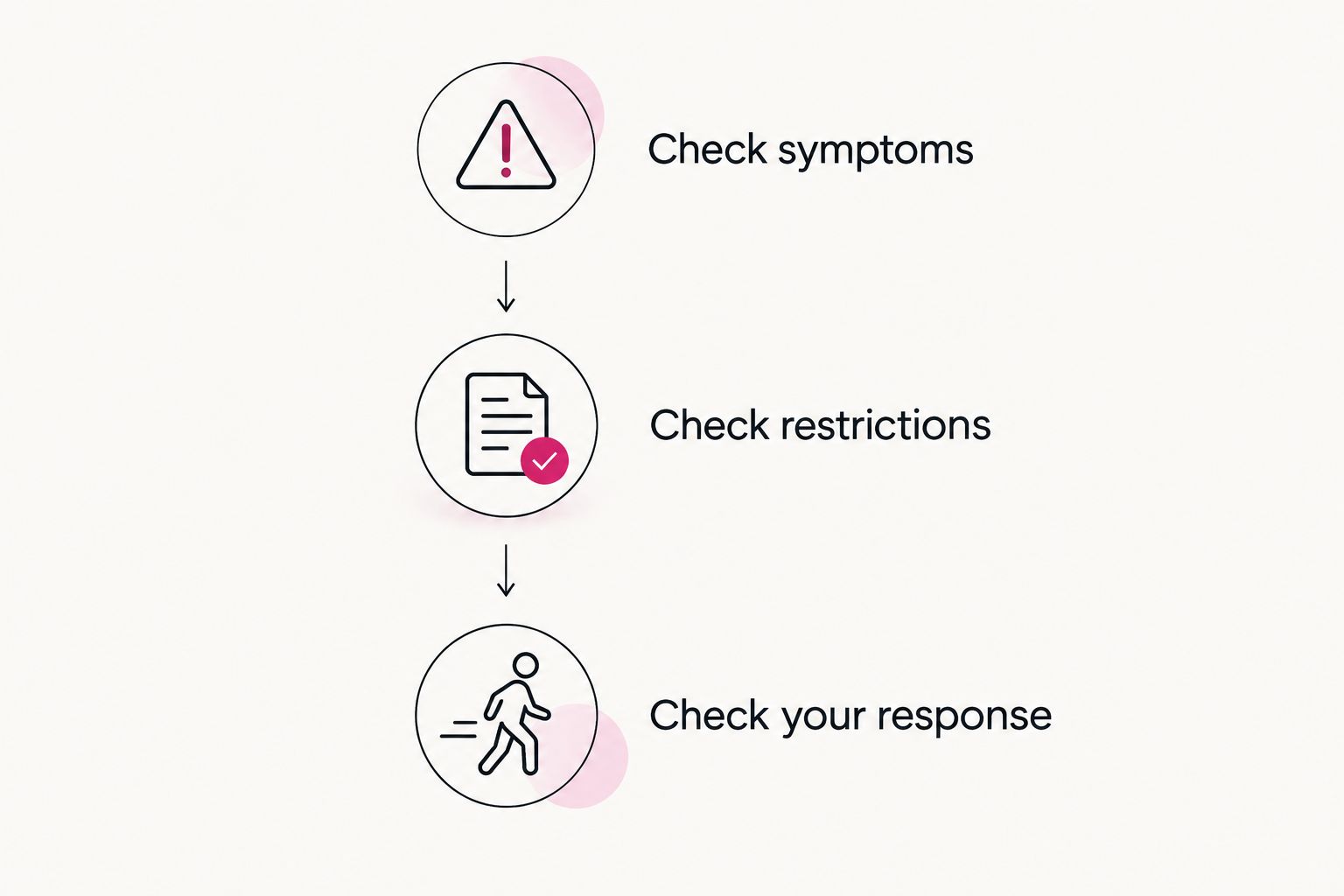
Before exercising: 3 checks
Check symptoms
Seek urgent medical help if shoulder or arm pain comes with chest pressure, breathlessness, sweating or feeling faint. Call 000 if you suspect a medical emergency; do not try exercises to establish whether the pain is muscular.
Arrange prompt medical assessment after a significant injury, with an obvious change in shoulder shape, or if you suddenly cannot move your arm. A hot, swollen shoulder with fever also needs medical attention.
Check restrictions
Recent surgery, fractures and dislocations can involve specific movement restrictions. Your surgeon’s or physiotherapist’s instructions take priority over any exercise in this 2026 guide.
New numbness, persistent tingling or marked weakness also deserves assessment rather than repeated stretching. Tell the clinician whether symptoms extend below your elbow or change when you move your neck.
Check your response
Movement should feel controlled, not forced. Stop if an exercise causes sharp pain, catching, new tingling or symptoms that keep worsening afterwards.
Do not use a fixed pain score from an online article as permission to continue. The right amount of movement depends on your condition and how your shoulder responds during the activity and later.
What makes the best shoulder exercise for you?
Use these criteria to judge a home exercise, rather than choosing the movement that looks most demanding.
- Relevant purpose: Know whether the exercise is for movement, muscle awareness or strengthening.
- Comfortable control: You can perform it without forcing the joint or holding your breath.
- Suitable support: Your position feels steady, with appropriate support for your arm or body.
- Appropriate restrictions: The movement respects any instructions following injury or surgery.
- Useful daily goal: The exercise relates to something you want to do, such as dressing or reaching.
An exercise does not need a large range to be useful within an individual plan. Equally, a gentle-looking movement is not automatically suitable for every painful shoulder.
Shoulder exercises at a glance
These rankings separate practical uses, not proven winners for every shoulder condition. The limitations matter as much as the benefits.
| Exercise | Best for | Main feature | Key limitation |
|---|---|---|---|
| Table slide | Supported forward reaching | A table supports your forearm during movement | Needs a suitable surface and comfortable sitting position |
| Pendulum | Relaxed arm movement | Your body gently moves a hanging arm | Bending forwards can be unsuitable for balance or back problems |
| Shoulder-blade setting | Awareness of shoulder-blade position | Small movement without lifting your arm overhead | Does not replace shoulder movement or strengthening |
| Stick-assisted outward rotation | Assisted outward rotation | Your other arm helps guide the movement | Must respect rotation restrictions and avoid force |
| Isometric outward rotation | Introducing muscle effort without visible movement | Gentle pressure against a fixed surface | Needs an appropriate loading plan; not a default for acute injury |
1. Table slides: best for supported forward reaching
A table slide lets you explore forward movement while the surface supports your forearm. It is an option to discuss when unsupported reaching feels difficult, provided the position and movement are comfortable.
Sit facing a stable table and rest your forearm on a towel. Gently slide your hand forwards as your body follows slightly, then return without pushing into pain.
Keep the movement smaller if you begin to shrug, lean heavily or strain. There is no requirement to reach a particular point on the table.
Table slide pros:
- Supports the weight of your forearm.
- Makes the movement range easy to adjust.
- Uses an ordinary table and towel.
Table slide cons:
- Table height can make the position awkward.
- Forward reaching is not suitable under every post-operative restriction.
Best for: Exploring supported forward movement after suitability has been checked.
Verdict: Try if comfortable and permitted; skip if it causes sharp pain or conflicts with your instructions.
2. Pendulums: best for relaxed arm movement
A pendulum uses gentle body movement to move a relaxed, hanging arm. It is not a strength exercise and should not become an active arm swing.
Support yourself with your unaffected hand on a stable surface, lean forwards only as far as comfortable, and let the affected arm hang. Gently shift your body so the arm moves a little, without deliberately swinging it from the shoulder.
If bending makes you unsteady or uncomfortable, choose a different position with your physiotherapist. A family member should not pull or swing your arm for you.
Pendulum pros:
- Does not require overhead reaching.
- Lets you explore small, relaxed movements.
- Needs no exercise weights or bands.
Pendulum cons:
- The bent position can challenge balance or irritate your back.
- Actively swinging the arm changes the exercise.
Best for: Relaxed movement when standing and leaning are safe.
Verdict: Try only with steady support; skip if the position makes you dizzy or unsteady.
3. Shoulder-blade setting: best for movement awareness
Shoulder-blade setting focuses on noticing and gently changing the position of your shoulder blades. It is not a way to diagnose the cause of shoulder pain or to hold a supposedly perfect posture all day.
Choose between 2 position options: supported sitting or comfortable standing. With your arms relaxed, gently draw your shoulder blades a little towards each other, then release fully.
Avoid a hard squeeze or deliberately pulling your shoulders down. Keep breathing normally, and leave out the exercise if it increases symptoms.
Shoulder-blade setting pros:
- Requires no equipment.
- Does not require lifting your arm overhead.
- Offers a simple way to notice unnecessary tension.
Shoulder-blade setting cons:
- Excessive squeezing can create neck or shoulder discomfort.
- It does not address every movement or strength limitation.
Best for: Learning a small, controlled shoulder-blade movement.
Verdict: Try gently; skip rigid posture-holding or forceful squeezing.
4. Stick-assisted rotation: best for assisted outward movement
Stick-assisted outward rotation uses your other arm to help guide the affected shoulder. The aim is controlled movement, not using the stick as a lever to force a stretch.
Hold a light stick with both hands and keep the affected elbow bent beside your body. Use your other hand to gently guide the affected forearm outwards while the elbow stays close to your side.
Check this movement with your clinician after surgery or dislocation. Outward rotation is specifically restricted in some recovery plans, and a general guide cannot tell you your safe range.
Stick-assisted rotation pros:
- Allows assistance from your other arm.
- Keeps the movement below shoulder height.
- Makes a small movement easier to guide.
Stick-assisted rotation cons:
- It is easy to push further than intended.
- It can conflict with injury or surgical precautions.
Best for: An assessed limitation in outward rotation where assisted movement is permitted.
Verdict: Hold until restrictions and technique are clear, particularly after injury or surgery.
5. Isometric rotation: best for introducing muscle effort
An isometric exercise involves muscle effort without visible joint movement. For the shoulder, outward-rotation pressure is one option a physiotherapist can include in an individual strengthening plan.
With your elbow bent beside your body, place the back of your hand against a stable surface. Gently press outwards without letting the arm move, then relax; avoid leaning your body into the pressure.
Do not copy a generic hold time or effort level from someone else’s programme. Ask your physiotherapist to set the pressure, duration and progression for your shoulder.
Isometric rotation pros:
- Introduces muscle effort without a large movement.
- Does not require a resistance band.
- Allows effort to be adjusted within a prescribed plan.
Isometric rotation cons:
- A still arm can still be working too hard.
- It does not practise reaching through a movement range.
Best for: Beginning a clinician-guided shoulder loading programme.
Verdict: Hold until the exercise and effort level suit your assessment; skip forceful pushing.
How these exercises were ranked
This 2026 selection puts supported movement first, followed by more specific movement and muscle-effort options. The criteria are purpose, control, support, restrictions and relevance to everyday tasks—not claims that one exercise treats every cause of shoulder pain.
The order is not a recovery sequence. You do not need to complete every option, and being able to perform one does not mean you are ready for the next.
Which shoulder exercise should you choose?
For uncomplicated symptoms where gentle movement is appropriate, discuss table slides as a supported starting option. Choose pendulums instead only when the bent position is safe and relaxed movement suits your plan.
Persistent pain, disturbed sleep or difficulty dressing deserves an assessment rather than a longer exercise list. The next step is to understand the problem and agree on a manageable plan.
Foveria Health mobile physiotherapy offers assessment at home, where Simon can discuss your symptoms and everyday goals. For an appointment enquiry in 2026, describe the task that matters most to you, any recent injury and any existing restrictions.
For families, home care teams and support coordinators, share relevant instructions and the person’s goals with their consent. Confirm the proposed service arrangements directly rather than assuming a particular funding pathway applies.
Discuss your shoulder at home
Ask about an in-home shoulder assessment with Simon in Greater Sydney.
FAQ
What's the best exercise for shoulder pain at home?
There is no single best exercise for every painful shoulder. Table slides are a supported movement option, but the right choice depends on your symptoms, diagnosis and any restrictions.
Should I push through shoulder pain when exercising?
Do not force an exercise through sharp, catching or worsening pain. Stop if you develop new tingling or numbness, and ask your clinician how to judge an acceptable response for your condition.
How many shoulder exercises should I do each day?
Your exercise amount should come from an individual plan rather than a fixed online routine. Ask your physiotherapist to specify repetitions, frequency and what to change if symptoms increase.
Are pendulums better than table slides?
Neither exercise is better for every person. Pendulums involve relaxed movement in a leaning position, while table slides support your forearm during forward reaching; comfort, balance and restrictions guide the choice.
Can I do these exercises after shoulder surgery?
Only use exercises allowed by your surgical rehabilitation plan. Assisted rotation, reaching and muscle loading can have specific restrictions, so check with your surgeon or treating physiotherapist first.
When does shoulder pain need urgent medical help?
Seek urgent help for shoulder pain with chest pressure, breathlessness, sweating or faintness, and call 000 for a suspected medical emergency. Significant injury, visible deformity, sudden inability to move the arm, or a hot swollen shoulder with fever also needs prompt medical assessment.
Can someone assess my shoulder at home in Sydney?
Foveria Health provides mobile physiotherapy assessment and treatment across Greater Sydney. When enquiring, explain your symptoms, location, relevant medical history and the daily activities you want help with.
One last thing
Before starting a shoulder programme in 2026, write down one everyday task you want to make easier: putting on a shirt, washing your hair or reaching a shelf. A useful plan connects exercise to your life, not just to completing a list.
Tell Simon what happens during that task rather than repeatedly testing a painful movement. That detail gives an assessment a clear, personal starting point.