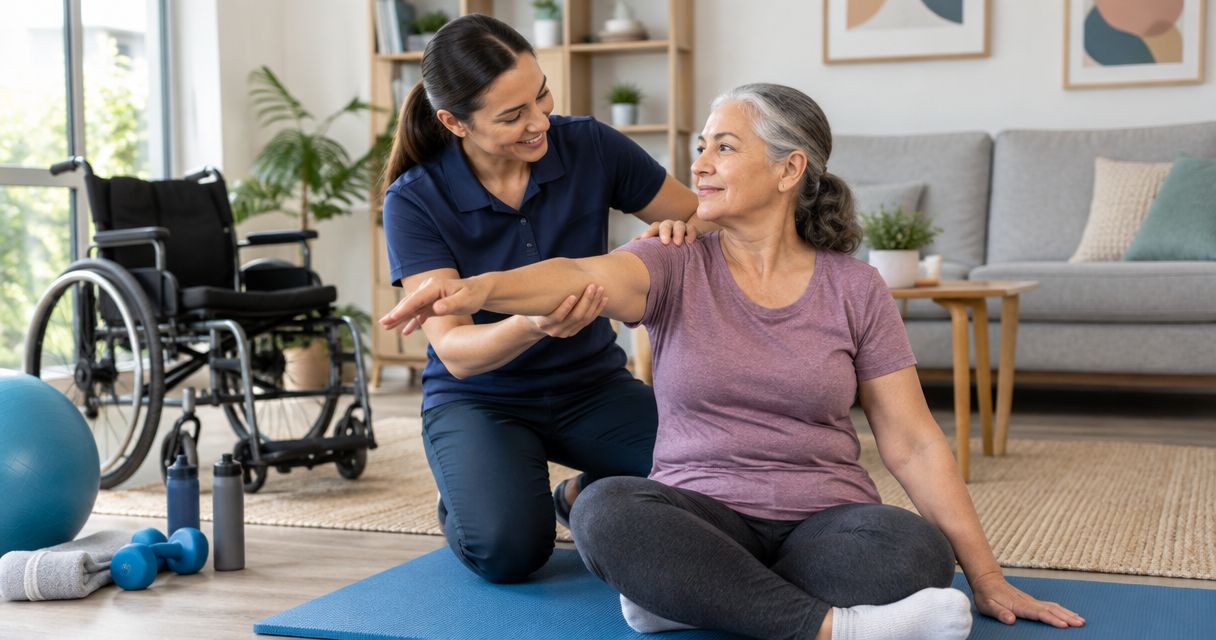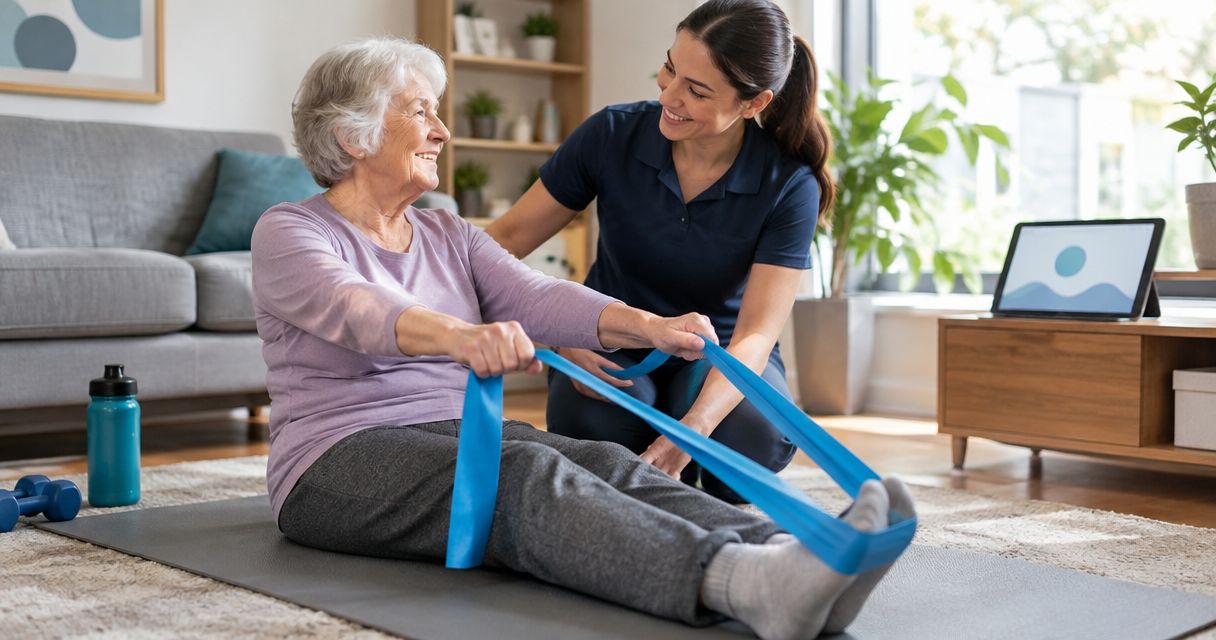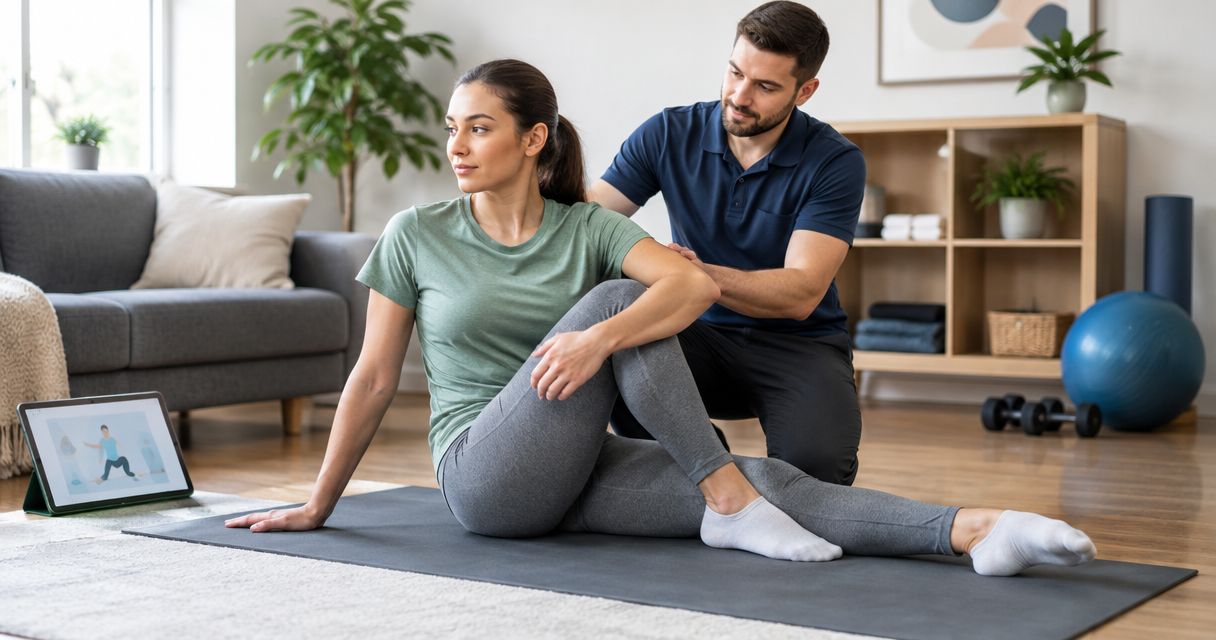
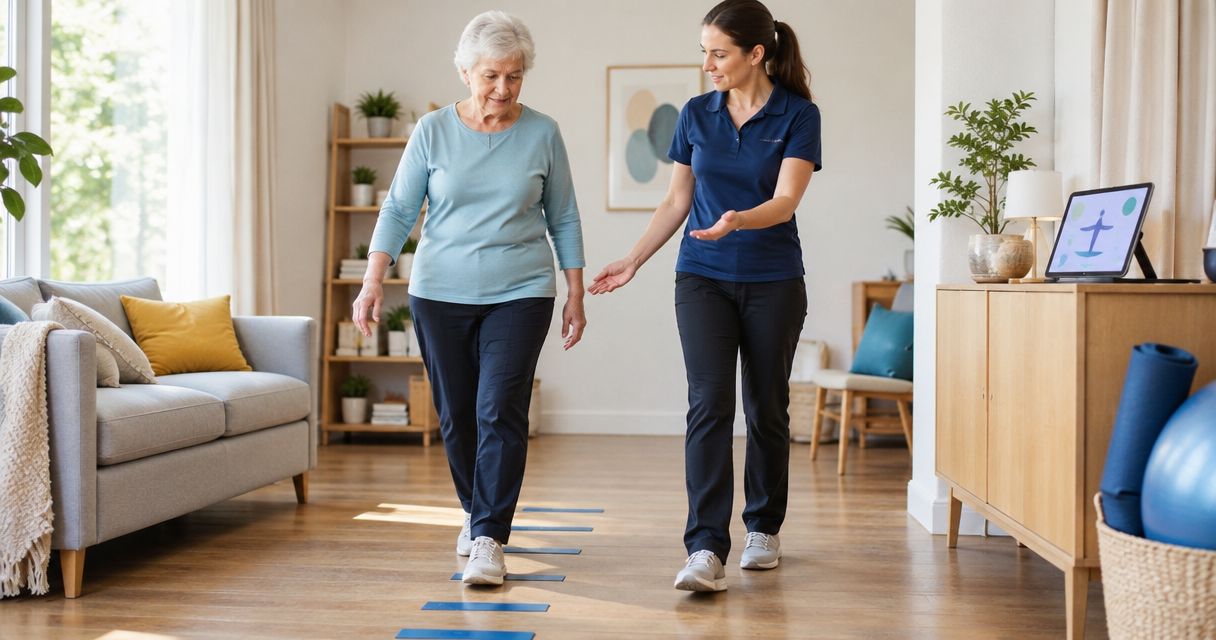
A home physio assesses walking and balance in seniors by discussing recent changes, watching everyday movement, and choosing suitable checks of walking, strength and steadiness. The assessment also considers the home environment and the person’s goals; it is not simply a test score or a request to walk without support.
- Home physiotherapy for seniors assesses everyday walking, balance and confidence in the home environment.
- Foveria Health offers in-home assessment across Greater Sydney; discuss your goals and support needs with Simon.
- Walking aids, recent falls, symptoms and the home layout help shape a suitable assessment.
- Standardised tests support clinical judgement; no single result explains every fall or guarantees safety.
How does a home physio assess walking and balance in seniors?
The assessment usually moves from conversation to observation, then to selected movement checks. Your physio chooses tasks according to your health, usual assistance and ability on the day, rather than expecting everyone to complete the same routine.
For families arranging home physiotherapy for seniors, Foveria Health offers in-home assessment and treatment across Greater Sydney. Discuss the person’s priorities with Simon, including movements that feel difficult or require another person’s help.
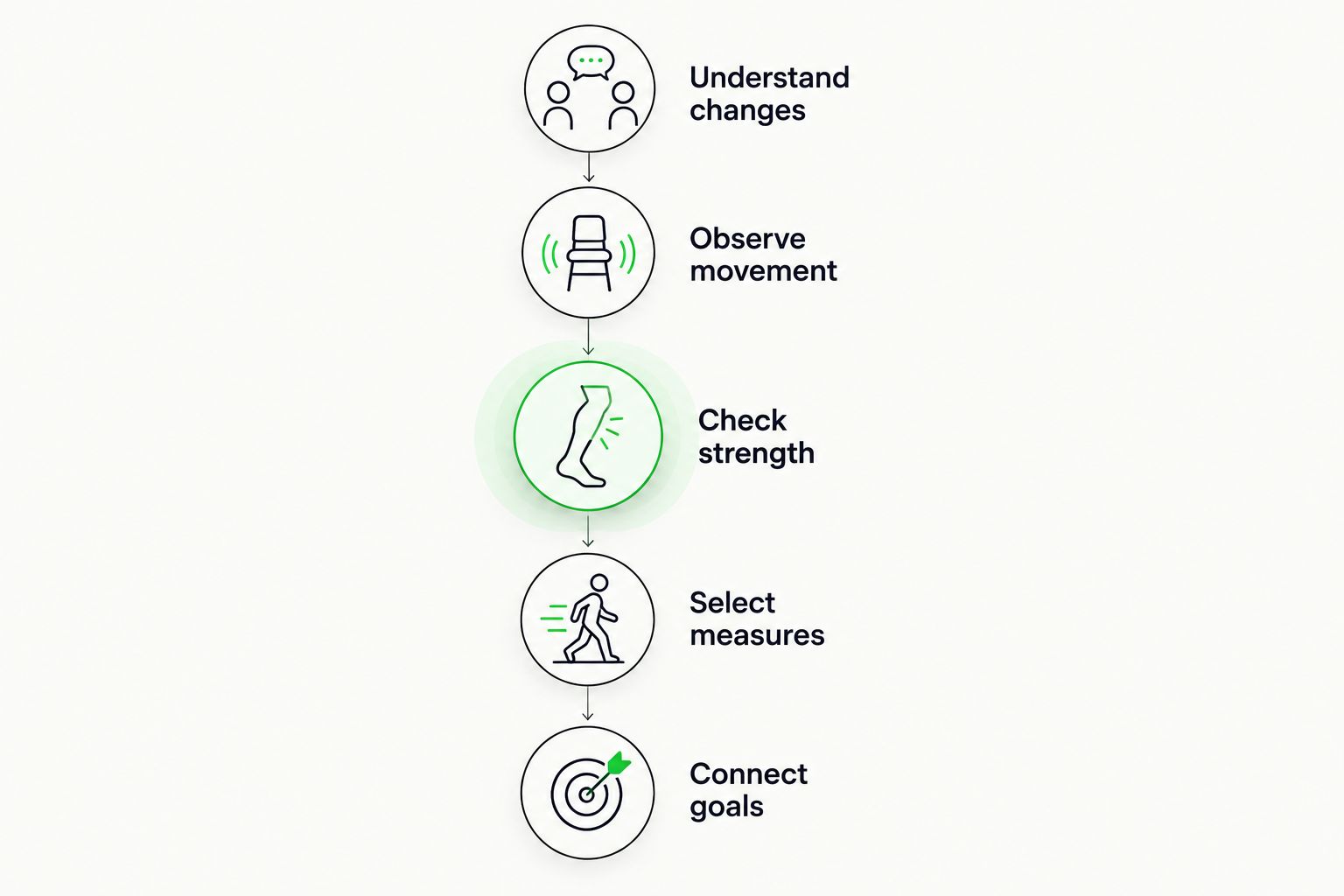
1. Understand what has changed
Your physio asks about walking difficulties, falls, near-falls, pain, dizziness and changes in confidence. They also ask what you want to do more comfortably or independently, such as reaching the bathroom or walking to the front gate.
The circumstances matter. Feeling unsteady when first standing up is different from catching a foot at a doorway, so describe what happened rather than simply saying your balance is poor.
2. Observe everyday movement
The physio watches suitable tasks such as rising from a chair, starting to walk, turning and sitting down. They consider how much support you use, whether movement causes symptoms, and how your walking aid fits into the task.
You do not need to demonstrate unsupported walking to make the assessment useful. Tell the physio about your usual assistance before moving, including help from family or support workers.
3. Check relevant movement and strength
Depending on the concern, assessment can include joint movement, muscle strength, sensation and the ability to control a movement. These checks help the physio explore contributors to difficulty rather than treating every change as a balance problem.
Not every check suits every person. Pain, recent surgery, medical conditions and fatigue influence what is appropriate during the visit.
4. Select walking and balance measures
A physio can use standardised tasks to record a starting point and compare performance later. Some involve a short walk; others look at standing balance or repeated chair rises.
The choice depends on what can be assessed safely and meaningfully. A task that needs adapting can still provide useful clinical information, but the adaptation matters when interpreting the result.
5. Connect the findings to your goals
The assessment should finish with an explanation of the main findings and the proposed next steps. Ask how those findings relate to the activity you care about, rather than leaving with an unexplained score.
A plan can include discussion of exercises, walking aids, assistance, environmental concerns or referral to another professional. These are individual decisions, not an automatic package attached to a particular result.
Why this matters
A person can manage a clear hallway but struggle when turning into a narrow bathroom. Assessing movement at home allows the physio to consider the setting in which you actually move, including furniture, doorways and your usual chair.
Foveria Health home physiotherapy for seniors suits people seeking assessment around their everyday movement at home. The benefit is context; the limitation is that a home visit does not replace medical investigation or every assessment available in a clinic.
For a 2026 care plan, describe the activity you want help with in practical terms. Getting out of your dining chair is a clearer assessment goal than simply improving mobility.
Which walking and balance checks might a physio use?
Standardised measures help make observations more consistent, but they answer different questions. The following examples appear in the US Centers for Disease Control and Prevention’s STEADI falls-prevention resources; they are not a promise that every home appointment includes them.
| Assessment example | What it involves | Most useful for | Important limitation |
|---|---|---|---|
| Timed Up and Go | Standing from a chair, walking 3 metres, turning, returning and sitting | Observing a sequence of everyday movements | Timing alone does not explain why movement is difficult |
| 30-second Chair Stand | Repeated chair rises over 30 seconds under a defined protocol | Assessing lower-limb functional strength and endurance | Chair setup and use of arms affect interpretation |
| Four-Stage Balance Test | Standing in progressively more challenging foot positions, with holds of up to 10 seconds | Assessing static standing balance | Standing still does not assess all the demands of walking |
Timed Up and Go: walking, turning and sitting
The Timed Up and Go uses a 3-metre walking distance. Alongside the recorded time, a physio can observe the chair rise, first steps, turn, approach to the chair and controlled return to sitting.
This makes the task more informative than a stopwatch result alone. The physio also considers the walking aid, physical assistance and instructions used during the assessment.
30-second Chair Stand: repeated chair rises
The 30-second Chair Stand records repeated chair rises during a defined period. It provides information about functional leg strength and endurance, rather than a complete assessment of balance.
Someone who needs their arms or another person’s assistance still deserves an assessment suited to their needs. The physio can select another approach instead of asking them to force a standardised task.
Four-Stage Balance Test: standing steadiness
The Four-Stage Balance Test uses progressively more challenging standing positions, with each position held for up to 10 seconds under the protocol. It explores standing balance, not how safely someone manages every household activity.
These are clinician-selected assessment examples, not a home testing programme. Do not practise difficult balance positions alone to prepare for an appointment.
When discussing a 2026 assessment report, ask which measure was used and what the result means for your goals. A named test without an explanation gives families little direction.
Why walking and balance assessment varies
Your physio selects tasks that answer a useful question without creating unnecessary risk. The assessment can differ between people, and between visits for the same person.
- Usual assistance: A person who walks independently needs a different assessment approach from someone who needs hands-on support.
- Symptoms: Pain, dizziness, breathlessness and fatigue influence which activities are appropriate.
- Medical history: Recent surgery, injuries and health conditions affect assessment choices and precautions.
- Home layout: Available space, steps, flooring and furniture shape which everyday movements can be observed.
- Walking aids: The physio needs to understand how you normally use your stick, frame or other aid.
- Personal goals: Getting to the toilet, managing the entrance and returning to outdoor walking involve different demands.
For reviews in 2026, tell the physio about changes since the last visit. A new walking aid or different level of assistance changes the context of a result, even when the recorded time looks similar.
What should you tell the physio before the visit?
Start with the movements that concern you and the help you currently need. There is no need to write a detailed medical report, but clear examples help the physio prepare.
Useful information includes:
- Where and when a fall or near-fall happened, and whether an injury followed.
- Whether walking has changed suddenly or gradually.
- Pain, dizziness or other symptoms associated with movement.
- Your usual walking aid and the assistance you need for transfers.
- Recent hospital care, surgery or instructions from treating clinicians.
- Communication needs and whether you want someone present.
Families can contribute observations without speaking over the person receiving care. Ask the older person what matters most to them, then add details they want the physio to know.
Sudden new difficulty walking needs medical attention rather than waiting for a routine physiotherapy visit. Call 000 for suspected stroke symptoms, including sudden facial droop, arm weakness or speech difficulty.
Do you need a large space for a walking assessment?
A 3-metre walking route is used for the standard Timed Up and Go, but that is not a minimum space requirement for every home physiotherapy assessment. Tell the physio about narrow rooms or limited clear floor space before the visit.
Keep your usual walking aid accessible and avoid rearranging heavy furniture yourself. The physio can decide which observations or measures suit the available setting; not completing a particular test does not make the whole visit unsuccessful.
Can a family member or support worker help?
A family member or support worker can share useful information and attend with your agreement. Their observations are particularly helpful when the difficulty happens outside the appointment or when different people provide assistance.
Let the physio direct any movement task. Familiar assistance remains important, but an assessment is not the time for a relative to introduce a harder walking challenge or reduce support to see what happens.
For an appointment in 2026, agree beforehand who should attend and what information can be shared. Keeping your preferences central helps the discussion remain personal and useful.
What should happen after the assessment?
You should understand the main concern, the proposed next step and how that step connects to your goal. Ask for plain-language explanations if terms or test results are unclear.
Useful questions include:
- What did you notice about the movement I find difficult?
- What assistance should I use for that activity?
- What are we working towards, and how will we review it?
- Does anything need discussion with my GP or another professional?
For home care providers and support coordinators, distinguish between the person’s goal, the physio’s findings and the recommended support. With appropriate consent, share relevant reports and existing assistance arrangements so advice can be considered in context.
A 2026 support plan should describe actual needs, not assume that an assessment score establishes funding eligibility. Confirm referral, reporting and funding arrangements directly before arranging care.
FAQ
What happens during a home physiotherapy balance assessment for an older person?
A home physiotherapy balance assessment combines a discussion of concerns, observation of everyday movement and suitable physical checks. The physio considers usual assistance, symptoms, walking aids and the home environment before explaining the findings.
Will I have to walk without my frame during the assessment?
You do not need to demonstrate unsupported walking to make the assessment useful. Tell the physio which frame or other aid you normally use and what assistance you need before starting any task.
How far do you walk in the Timed Up and Go test?
The standard Timed Up and Go uses a 3-metre walking distance, followed by a turn and return to the chair. A physio decides whether that test is appropriate and considers the movement as well as the time.
Can a balance test predict whether my parent will fall?
No single balance test can determine whether your parent will fall. Assessment considers test findings alongside previous falls, symptoms, assistance needs and the circumstances of everyday movement.
Should I practise balance tests before the physio comes?
Do not practise challenging balance tests alone before the visit. Prepare by noting your concerns and keeping your usual walking aid accessible, rather than trying to improve a test result.
Can home physiotherapy assess someone who needs help getting out of a chair?
Home physiotherapy can assess everyday movement when someone needs assistance, with tasks selected for their circumstances. Explain the usual level of help before the appointment so the physio can consider an appropriate approach.
One last thing
Describe a near-fall as carefully as a fall. Catching yourself on the kitchen bench, hesitating at a doorway or needing unexpected help to sit down gives the physio a specific activity to explore.
Before speaking with Foveria Health, write down the movement you most want help with and what happens during it. You do not need to diagnose the problem; that practical detail is a useful place to start with Simon.