Yes—home physiotherapy for seniors can help after a fall by assessing movement, identifying difficulties with everyday tasks and planning suitable rehabilitation. It does not replace medical assessment for a possible injury or unexplained fall, and treatment should reflect the person’s health, preferences and recovery goals.
- Home physiotherapy for seniors supports individual assessment and rehabilitation after a fall; urgent injuries need medical care first.
- Foveria Health offers in-home physiotherapy assessment and treatment for older people across Greater Sydney.
- A home visit lets you discuss walking, everyday tasks and confidence in the setting where you live.
- Ask for a clear plan rather than a promise about recovery time or preventing every future fall.
Can home physiotherapy help seniors after a fall?
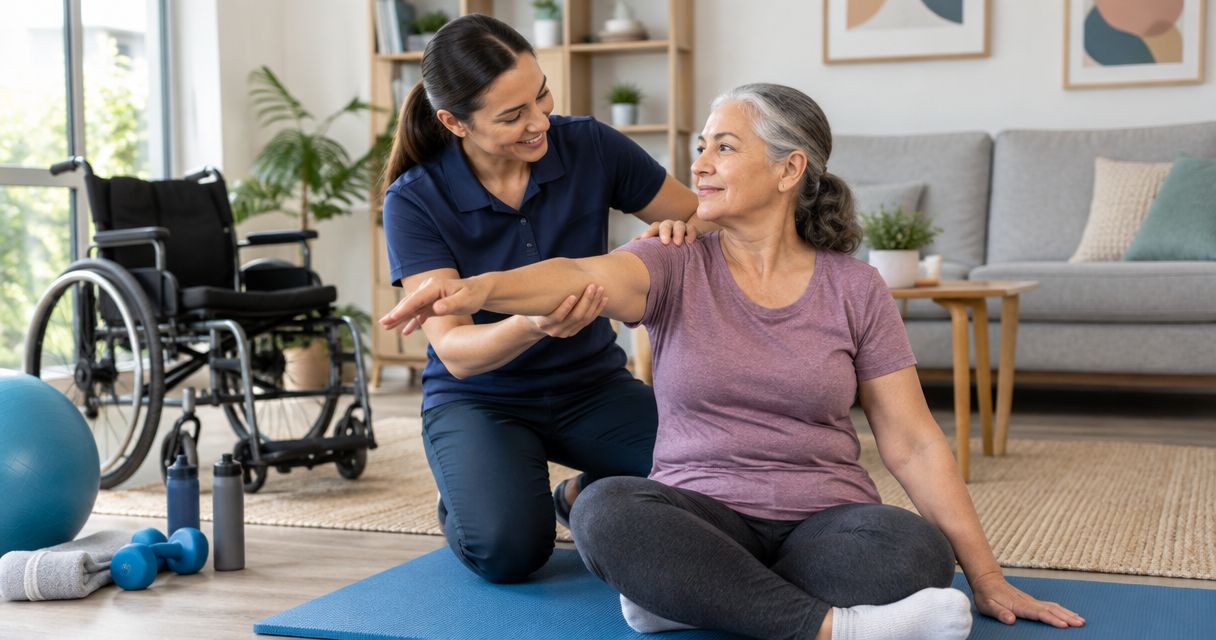
Home physiotherapy can support recovery after a fall, but the first decision is whether medical attention is needed. Once immediate concerns have been addressed, a physiotherapist can assess how you move and discuss what has become difficult or worrying.
For families considering Foveria Health, the service provides assessment and treatment at home across Greater Sydney. Whether you live in Punchbowl, a nearby suburb or elsewhere in Sydney, confirm your address and care needs when making an enquiry.
A sensible pathway separates urgent medical concerns from rehabilitation:
- Check immediate safety. Seek urgent help for serious symptoms or a suspected significant injury rather than waiting for a physiotherapy appointment.
- Explain what happened. Tell the treating clinician about the fall, any symptoms beforehand and changes since it happened.
- Assess everyday movement. Discuss walking, getting out of a chair and other tasks that matter to you.
- Agree on a plan. Choose meaningful goals, clarify any precautions and arrange how progress will be reviewed.
A home assessment is not simply an exercise session delivered somewhere different. It gives the physiotherapist a chance to understand the tasks you need to manage in your own surroundings.
Why this matters after a fall
A fall can affect more than the part of your body that hurts. You might feel less confident walking to the bathroom, using the front steps or moving around when nobody else is home.
Families arranging care in 2026 need a plan that addresses those concerns without taking away the older person’s say. Ask what they want help with before deciding what recovery should look like.
For one person, the priority is reaching the kitchen comfortably. For another, it is returning to a regular outing. Those goals help make the assessment relevant, but they are not promises about what treatment will achieve.
The aim is appropriate support—not pressure to move faster than feels safe or to return to every activity immediately.
When should you seek medical help before physiotherapy?
Call 000 for a life-threatening emergency, including unconsciousness, severe breathing difficulty, signs of stroke or uncontrolled bleeding. Do not wait for a home physiotherapy visit to deal with an emergency.
Seek urgent medical assessment for a suspected fracture, severe pain, a head injury, or an inability to stand or bear weight after a fall. Tell the clinician if you take blood-thinning medicine, particularly after a head strike.
If someone is on the floor and cannot get up, do not try an unsafe lift. Call for appropriate help and explain whether they are injured, distressed or have been there for an extended period.
An unexplained fall also needs medical attention, especially if it involved fainting, dizziness or a sudden change in health. Physiotherapy can assess movement difficulties, but it does not replace investigation of a possible medical cause.
You do not need to work out the diagnosis yourself. Describe what happened and let the relevant health professional guide the next step.
What can a home physiotherapy assessment cover?
A home visit starts with understanding your situation rather than assuming everyone needs the same exercises. Tell the physiotherapist about medical advice you have already received and any restrictions following an injury or hospital stay.
Your fall story
Explain where you were, what you were doing and what you remember before and after the fall. Mention previous falls, near misses and whether you needed help to get up.
You do not need a perfect account. If a family member witnessed the fall, their observations can help fill in gaps—with your permission.
Your everyday movement
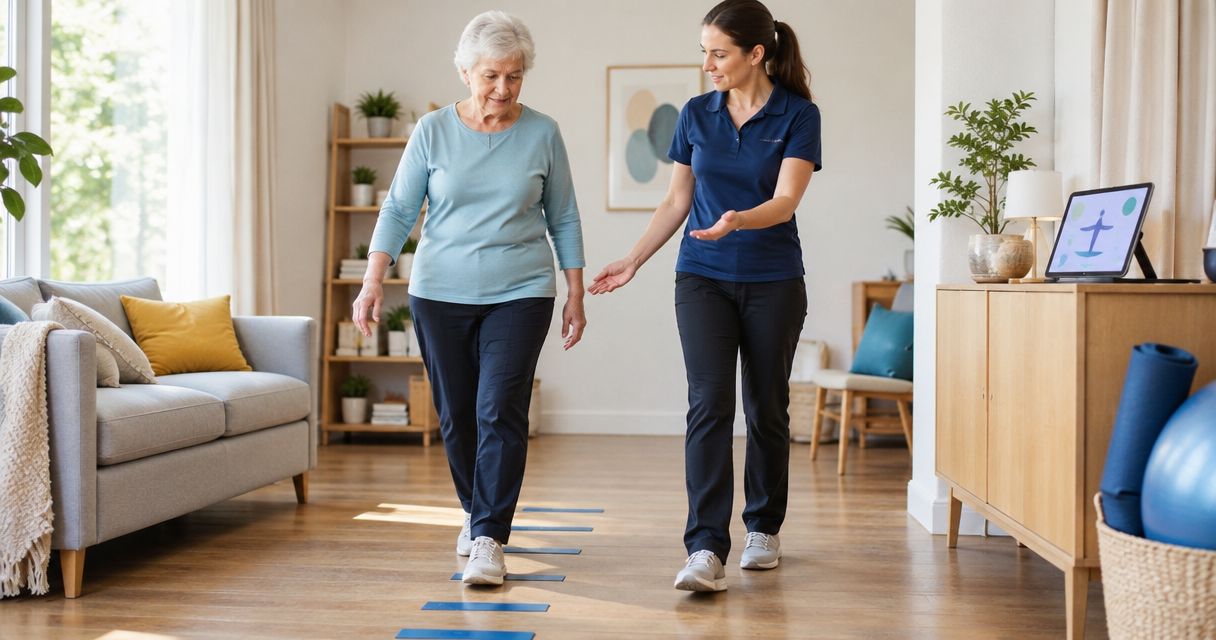
The physiotherapist can assess relevant movements, such as standing from a chair, walking or turning, where these are appropriate and safe. The choice depends on your symptoms, health and any precautions.
Describe changes in what you can do, not just changes in pain. Needing help with a task you previously managed independently is useful information.
Your home tasks
A home appointment allows discussion of the places and routines that feel difficult. Examples include reaching the bathroom, moving between rooms or managing the entrance.
This does not mean every household issue falls within physiotherapy. Some concerns need input from an occupational therapist, your GP or another member of your care team.
Your recovery goals
Choose goals that reflect your own priorities. A useful goal describes an activity you want to work towards, rather than simply asking to become stronger.
For a 2026 care plan, write those goals in everyday language and keep them with the agreed advice. That makes it easier for you, your family and your support workers to understand the plan.
Is home physiotherapy better than attending a clinic?
The better setting is the one that matches your assessment needs and circumstances. A home visit is not a substitute for urgent medical care, and a clinic is not automatically the wrong choice after a fall.
| Care setting | Best for | Main advantage | Limitation |
|---|---|---|---|
| Home physiotherapy | People who need movement assessed in their home environment or find travel difficult | Everyday tasks can be discussed where they happen | The clinician must work within the home setting; some needs require another service |
| Clinic physiotherapy | People able to travel whose needs suit clinic-based assessment | Assessment takes place in a dedicated treatment setting | Travel and getting into the clinic add practical demands |
| Urgent medical care | People with serious symptoms or a suspected significant injury | Medical assessment addresses urgent concerns | It serves a different purpose from an ongoing rehabilitation plan |
If you are unsure which setting is appropriate, describe the fall and your current difficulties before booking. Ask whether medical assessment is needed first and whether the service can meet your needs.
Foveria Health suits seniors in Greater Sydney seeking physiotherapy assessment and treatment at home. The service setting is a useful match only when home-based care is appropriate for the person’s needs.
Why recovery support after a fall varies
There is no single rehabilitation plan for every older person who falls. The assessment should guide what happens next.
Relevant factors include:
- Injury and symptoms: Pain, swelling and injury-related restrictions affect which movements are appropriate to assess.
- Previous movement: Your usual walking ability and level of independence help explain what has changed.
- General health: Other health conditions, fatigue and recent illness belong in the assessment discussion.
- Confidence and preferences: Fear of another fall matters, as does your willingness to try a proposed activity.
- Home demands: Steps, walking routes and daily tasks influence which goals are useful.
- Available support: Family involvement and existing care arrangements affect how a plan fits into everyday life.
These factors also explain why a recovery timetable should not be promised before assessment. Ask what will be reviewed and what changes should prompt contact with your treating team.
How do you prepare for a home visit after a fall?
You do not need to rearrange the whole house or practise movements to demonstrate what you can do. Prepare information, explain access needs and avoid any task that feels unsafe.
- Fall details: Note what happened, when it happened and any symptoms or difficulties since then.
- Medical advice: Have relevant discharge information, instructions and movement restrictions ready to discuss.
- Daily goals: Choose the activities you most want help with, such as getting out of a chair or walking indoors.
- Visit arrangements: Explain entry access, who will be present and whether you want a support person involved.
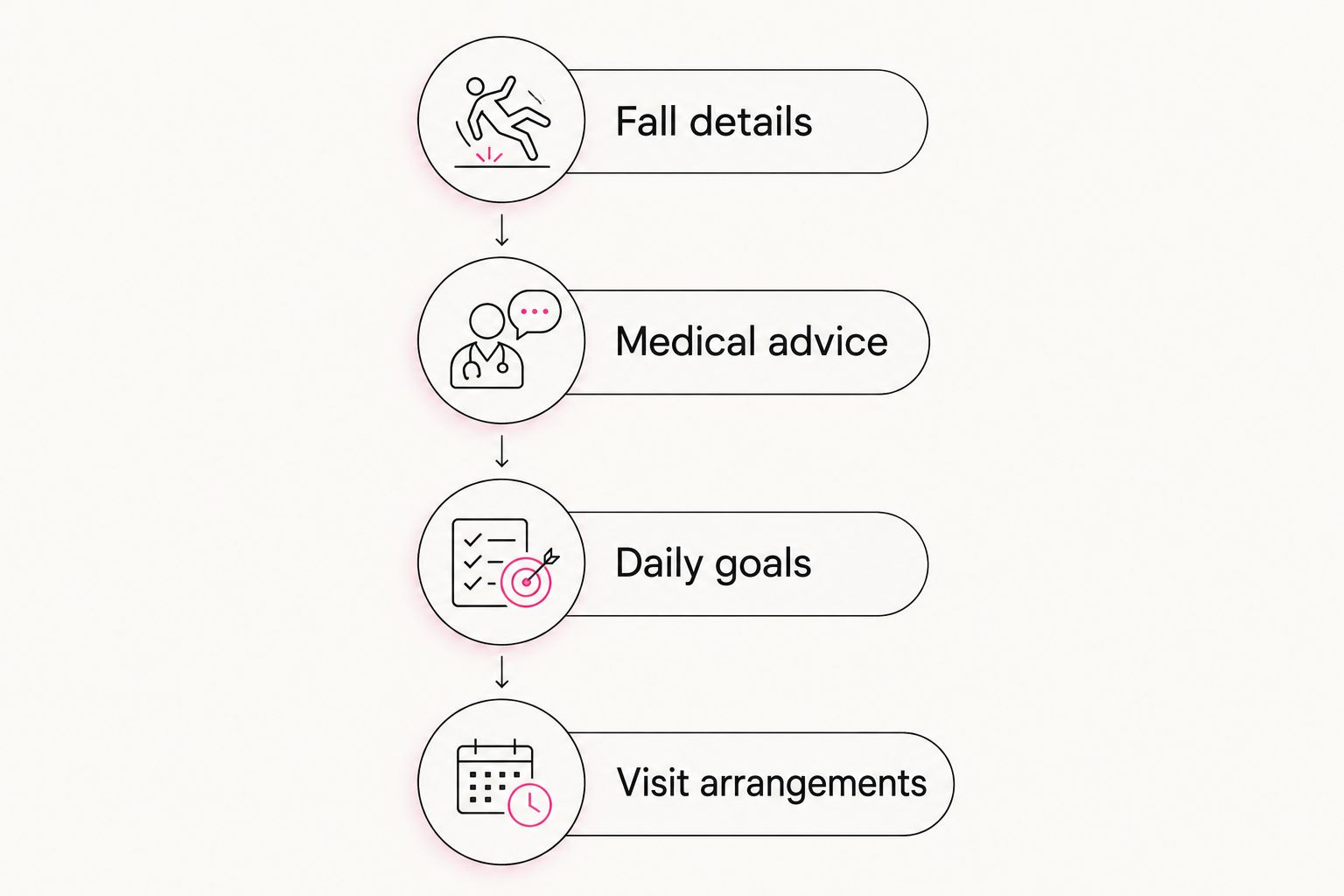
Keep your usual walking aid nearby if you use one. Ask the provider beforehand whether there is anything else to prepare; do not buy equipment simply because you assume it will be needed.
When arranging an appointment in 2026, confirm the current booking requirements, visit arrangements and any paperwork directly. If another organisation is involved in paying for or coordinating care, clarify responsibilities before the appointment.
What should families and professional referrers share?
A helpful referral explains the change in function and the person’s priorities. Simply writing that someone has fallen leaves important questions unanswered.
With the person’s consent, include:
- What happened and whether medical assessment has taken place.
- Relevant injuries, precautions or discharge instructions.
- Changes in walking, transfers or everyday activities.
- Existing support and who coordinates care.
- The person’s goals and any communication needs.
- The appropriate contact for appointment arrangements.
For a referral made in 2026, distinguish current concerns from older information in the record. If you do not know something, say so rather than presenting an assumption as a finding.
A family member or support worker can contribute observations without speaking over the person receiving care. Ask how they would like others involved and what information they are comfortable sharing.
Will home physiotherapy prevent another fall?
Home physiotherapy cannot guarantee that you will not fall again. Assessment and suitable rehabilitation can address movement-related concerns, but falls can involve several contributing factors.
A physiotherapist might identify a need for further input rather than more exercises. Medication concerns belong with the prescribing clinician or pharmacist; other issues can require a GP, occupational therapist or another professional.
Ask how the proposed plan connects to your identified difficulties. A clear explanation is more useful than a broad promise to prevent falls.
Can you start physiotherapy if you are frightened of walking?
Yes—you can discuss fear of walking during a physiotherapy assessment without committing to a demanding exercise session. Tell the physiotherapist which situations worry you and whether anything has changed since the fall.
An assessment should respect your consent and current abilities. Do not push through a task simply because a family member thinks you should be ready.
How long does recovery after a fall take?
Recovery after a fall has no single timetable because injuries, health and previous function differ. The useful question is what the next appropriate goal is and how progress will be checked.
Ask what changes should trigger a review of the plan. New or worsening symptoms need attention rather than being dismissed as an expected part of recovery.
FAQ
Can home physiotherapy for seniors help after a fall in 2026?
Home physiotherapy for seniors can support assessment and rehabilitation after a fall when home-based care is appropriate. A suspected injury or unexplained fall needs medical attention rather than waiting for physiotherapy.
Should my parent see a doctor before a home physiotherapy appointment?
Your parent needs medical assessment first if there is a suspected significant injury, concerning symptoms or an unexplained fall. Tell the physiotherapist what medical advice has already been provided.
Can a physiotherapist help someone who is afraid of falling again?
A physiotherapist can discuss fear of falling and assess relevant movement difficulties. Any proposed activities should reflect the person's consent, abilities and health needs.
Does a home physiotherapy visit guarantee better walking?
No home physiotherapy visit can guarantee better walking or a particular recovery outcome. Assessment helps establish appropriate goals and whether further professional input is needed.
Can I stay with my parent during the appointment?
Ask your parent whether they want you present, then confirm the arrangement with the provider. You can share observations while leaving room for your parent to describe their own concerns.
What should I tell Foveria Health when enquiring after a fall?
Tell Foveria Health where the person lives, what happened, whether medical assessment has taken place and what everyday tasks have become difficult. Share relevant precautions and explain who is coordinating the appointment.
One last thing
Before the appointment, ask: What feels harder since the fall? The answer might reveal a difficulty nobody has mentioned yet, such as avoiding the bathroom at night or feeling uncertain at the front door.
Write the person’s own words down. Those details give the assessment a practical starting point without deciding the treatment in advance.