

Instead of repeatedly chasing paperwork between your GP, family and physiotherapist, arrange your Medicare care plan physio enquiry in a clear order: check the referral requirements, confirm the appointment arrangements, then prepare for the home visit. This guide explains what to ask before booking home physiotherapy with Foveria Health in Greater Sydney, so you know which details still need confirming.
- For Medicare care plan physio, confirm your referral and appointment requirements before booking a home visit.
- Foveria Health provides mobile physiotherapy for people seeking personal, goal-focused care at home in Greater Sydney.
- Ask your GP and physiotherapist to clarify paperwork, payment arrangements and responsibilities rather than assuming everything transfers automatically.
- Prepare your health information, access instructions and everyday goals before the first home physiotherapy appointment.
Why this matters
A GP discussion, a care plan, a referral and a confirmed appointment are different parts of arranging care. Keeping them separate helps you identify the next action without repeatedly telling your story to different people.
Foveria Health mobile physiotherapy is best suited to people seeking personal, goal-focused care at home in Greater Sydney. The practical benefit is being assessed in the setting where you manage everyday activities; the limitation is that the clinician still needs to establish whether a home appointment suits your needs.
You can start with the Foveria Health website. When enquiring, explain that you want to discuss a GP referral for home physiotherapy rather than assuming the referral alone confirms the booking.
For a 2026 appointment, check the current requirements directly with your GP practice and physiotherapist. Use this guide to organise that conversation, not to decide your Medicare eligibility.
Before you start
- Have your documents accessible. Gather any GP referral, relevant care-plan information, current medication list and recent discharge information you already have. Ask what the physiotherapist actually needs before sending sensitive records.
- Choose a contact person. Decide whether you, a family member or a care coordinator will handle appointment messages. If someone is helping, explain their role and ask what consent is needed.
- Check the easily missed detail. Having a care plan does not tell the physiotherapy practice which documents it has received. Confirm that the required referral information has arrived and is suitable for the proposed appointment before treating the booking as settled.
You do not need to understand every administrative term before making an enquiry. You do need to tell each person what has already been arranged and what remains uncertain.
Your GP discussion and referral
Explain the reason for a home visit
- Describe the everyday difficulty. Tell your GP what has changed and which activities concern you. Getting out of a chair, moving around the home or returning to usual routines are useful examples to discuss—not diagnoses to make yourself.
- Explain why you are asking about home physiotherapy. Mention practical barriers to attending a clinic, any support you need to leave home, and whether assessing your usual surroundings matters to your goals.
- Ask which referral pathway applies. Tell the GP you are asking about Medicare care plan physio. Ask the GP to explain the current requirements relevant to you rather than relying on paperwork from another episode of care.
- Clarify the next action. Establish who will prepare the referral, where it will be sent and whether you need to provide anything further.
Expected result: you understand what your GP is recommending, which documents are being prepared and who is responsible for sending them.
Avoid leaving with only a general understanding that physiotherapy has been discussed. Before the conversation ends, ask whether the referral is ready, still being prepared or waiting on another action.
Keep a simple referral record
Write down 3 items: the referring practice, the date the referral was sent and the intended recipient. This is a suggested organising method, not a Medicare requirement.
Keep your own copy where possible. A family member helping with the booking should know where the paperwork is, but access to health information should follow your wishes and the consent arrangements agreed with the providers.
For paperwork prepared in 2026, ask the receiving practice to check the actual document. A date on a letter does not, by itself, answer every question about its suitability.
Your appointment enquiry and confirmation
Confirm the handover before choosing a date
- Give your location and reason for enquiring. Include your suburb, whether the appointment is for you or someone else, and the main difficulty you want assessed. For Punchbowl, nearby suburbs or elsewhere in Greater Sydney, ask about arrangements for the specific address.
- Identify the intended pathway. Explain that you have, or are arranging, a GP referral connected with a Medicare care plan physio enquiry. Do not assume the practice can infer this from a general request for home treatment.
- Ask how to provide the documents. Request the practice's preferred method for receiving referral and health information. Check the recipient before sending anything sensitive.
- Confirm the administrative details. Ask what needs checking before booking, how payment and any applicable claiming arrangements work, and what you must bring or provide. Request an explanation of anything you do not understand.
- Check the appointment details. Confirm the address, agreed date, arrival arrangements, contact person and any preparation instructions provided by the clinician.
Expected result: you know whether the appointment is confirmed or whether a document, consent decision or administrative check remains outstanding.
Do not treat a conversation about possible appointment dates as confirmation. Ask for a clear explanation of what is booked and what still needs to happen.
Choose who handles the booking
There is no need for several people to chase the same document. Choose the arrangement that suits the person receiving care, and keep them involved in decisions.
| Booking arrangement | Best for | Practical benefit | Limitation to address |
|---|---|---|---|
| You coordinate directly | People comfortable managing their own appointment | You control the conversation and explain your goals directly | You need to track the referral and replies yourself |
| A family member helps | People who want support with calls or paperwork | Someone can help keep the details together | Providers need clarity about your consent and the helper's role |
| A care coordinator assists | People whose appointment involves an existing support team | Relevant practical information can be brought together | Responsibilities and information-sharing permissions still need confirming |
If your situation involves both a Medicare enquiry and another care arrangement, tell the practice. Ask it to clarify the intended arrangement for this appointment rather than assuming different pathways are interchangeable.
Your home and first-visit preparation
Prepare the information and setting
- Collect the information requested. Keep the referral and relevant health documents accessible. Include information about recent treatment or surgery if it is relevant and available; do not delay an enquiry simply because you are unsure which records matter.
- Choose your priorities. Write down 2 everyday goals, such as discussing difficulty with household movement or understanding support for returning to a usual activity. These are conversation starters, not a prescribed exercise programme.
- Explain access needs beforehand. Mention stairs, entry instructions, parking restrictions, pets and any difficulty answering the door. Tell the practice about these details when arranging the appointment, not only when the clinician arrives.
- Agree who will attend. If you want a family member, interpreter or support worker involved, ask about the arrangements beforehand. Make your preferences about privacy clear.
- Keep your usual aids accessible. Have the walking aid or other equipment you normally use nearby. Do not buy new equipment or rearrange heavy furniture unless the clinician has specifically asked you to do so.
Expected result: you can welcome the clinician, find the relevant information and explain what you want help with without searching through paperwork during the visit.
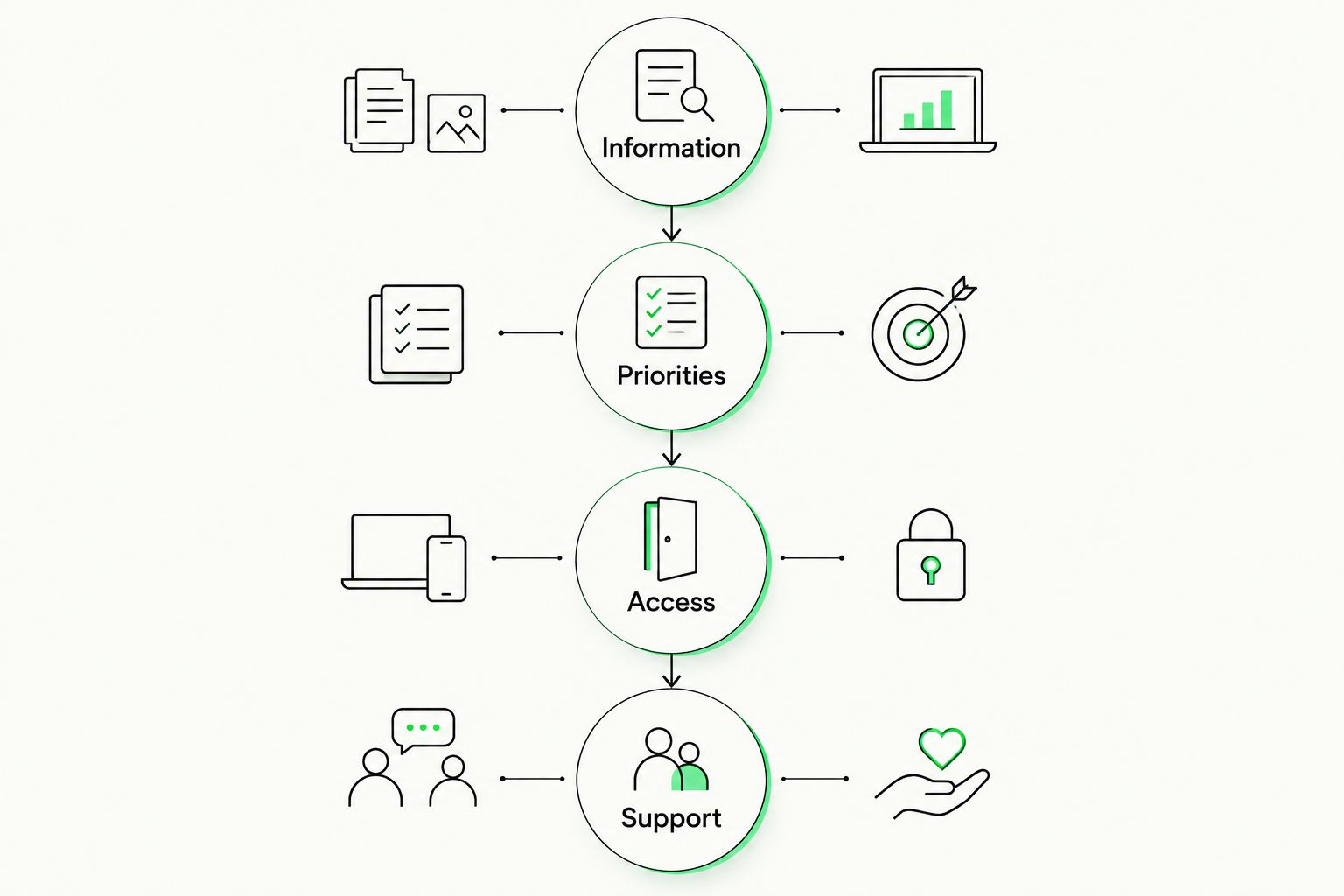
A home appointment does not require you to create a clinic in your living room. Ask what space is needed, keep the area reasonably accessible and explain any limitations rather than trying to solve them alone.
Know what to discuss during the visit
Use the first visit to explain your concerns, relevant history and priorities. Ask Simon to explain the proposed assessment and any treatment before you agree to proceed.
An assessment is not a promise of a particular treatment. Manual therapy, dry needling and other approaches should not be assumed simply because a service offers them; the discussion needs to address your circumstances and consent.
Before the visit finishes, ask 3 questions: what is the agreed plan, what should you do between appointments, and who needs an update? Ask for clarification if an instruction feels unclear or difficult to manage at home.
When an existing referral or care arrangement changes
You do not need to repeat the entire process blindly when something changes. Start by identifying the change, then ask the appropriate provider what it means for the proposed appointment.
- Name the change. Explain whether you have a new referral, a recent hospital discharge, a different address or a different person helping with appointments.
- Check the documents. Ask the GP practice and physiotherapist whether updated information is required. Do not assume an earlier document covers the new circumstances.
- Confirm the plan again. Check whether the appointment details, information-sharing permissions or administrative arrangements need updating.
For a change during 2026, use the latest confirmed information rather than relying on an earlier conversation. Keep a brief note of who confirmed the next action.
Expected result: everyone works from the same current information, with a named person responsible for anything still outstanding.
Troubleshooting common referral-to-visit problems
The physiotherapist has not received the referral
Ask the GP practice when it was sent and check the intended recipient. Then ask the receiving practice to confirm receipt; sending a document and receiving it are separate events.
Avoid repeatedly forwarding sensitive information to different addresses. Confirm the correct destination first.
You have a care plan but are unsure about the referral
Ask your GP practice to explain which documents have been prepared for physiotherapy. Then ask the physiotherapy practice what it needs to check before confirming the appointment.
Do not assume the words care plan mean every booking requirement is complete.
A family member is receiving all the messages
Tell the practice who should receive appointment information and who can discuss health details. Explain whether the family member is helping with administration, attending the visit or acting in another agreed role.
Keep the person receiving care involved according to their wishes and circumstances.
Someone expects a particular treatment or result
Bring that expectation into the first conversation. Explain what you are hoping for and ask how the assessment will guide the next steps.
Home physiotherapy should begin with an individual discussion, not an assumption that everyone needs the same treatment or will reach the same outcome.
Customise your workflow
Keep a single appointment note with the referral status, contact person, access instructions and your main goals. Update it when an arrangement changes so that family members or support staff do not work from conflicting messages.
For a 2026 booking with Foveria Health, explain whether you are enquiring for yourself, an older relative or someone you support professionally. Include the suburb and the person's priorities, then ask which information Simon needs before the first visit.
Professional referrers should make responsibilities clear: who sends the referral, who obtains consent for sharing information and who follows up an unanswered booking enquiry. More paperwork is not the aim; a clear handover is.
FAQ
How do I arrange Medicare care plan physio at home?
Start by discussing your needs with your GP, then ask the physiotherapy practice to confirm the referral and appointment requirements. Check the arrangements that apply to you before treating the visit as booked.
Does having a care plan mean my home physio appointment is booked?
No. A care plan and a confirmed physiotherapy appointment are different things. Contact the physiotherapy practice to check document receipt, outstanding requirements and the appointment details.
Should I send my whole medical history before the first visit?
Ask the physiotherapist which information is relevant before sending records. Use the practice's preferred method and confirm the recipient before sharing sensitive health information.
Can my adult child arrange the home physiotherapy appointment?
Your adult child can help with the enquiry, but the practice needs to clarify your wishes and the relevant consent arrangements. Explain whether they will handle messages, attend the appointment or help in another way.
What should I have ready for the first home visit?
Have the information requested by the practice, your usual aids and a short list of everyday goals accessible. Explain entry arrangements and any support needs beforehand.
What if my referral or circumstances change before the appointment?
Tell the physiotherapy practice before the visit and ask whether updated information is needed. Confirm any changes to the address, contact person, documents or appointment arrangements.
Can I ask Simon about home physiotherapy in Punchbowl?
Yes. Foveria Health provides mobile physiotherapy across Greater Sydney, so include your Punchbowl address when enquiring. Ask about arrangements for your specific location rather than assuming an appointment has been confirmed.
One last thing
Bring an everyday goal, not just a folder of documents. A referral helps explain why you are attending, but your own priorities help explain what matters to you.
Write one sentence about the activity you most want to discuss. Keep it beside your appointment information so the conversation starts with your life at home, not only the paperwork.