

Instead of repeating your situation across calls and emails, arrange support at home physiotherapy through a clear handover: confirm your assessment outcome, agree on the next steps with your provider, then prepare for the first home visit. Keep the person receiving care involved throughout, so the appointment reflects what matters to them.
- For support at home physiotherapy, confirm the proposed service and booking arrangements with your provider before proceeding.
- Foveria Health provides mobile physiotherapy in Greater Sydney; discuss your needs with Simon before arranging care.
- Keep assessment information, consent and practical home-access details together for a clearer handover.
- A first physiotherapy assessment informs treatment planning; it does not promise a particular outcome.
Why this matters
An aged care assessment and a physiotherapy assessment have different purposes. Your aged care assessment considers support needs; a physiotherapist assesses the concerns relevant to physiotherapy and discusses an appropriate plan with you.
Treat the handover as a separate step, not something the booking will automatically resolve. Before an appointment, everyone should understand who is arranging it, what information can be shared and which arrangements still need confirmation.
Foveria Health mobile physiotherapy is suited to Greater Sydney clients seeking assessment and treatment at home. You can introduce your situation through Foveria Health, while confirming any Support at Home arrangements separately with your provider.
This 2026 guide focuses on organising that handover. It does not determine your funding eligibility or replace individual advice from your provider or clinician.
Before you start
Gather the essentials before asking someone to organise an appointment:
- Assessment information: Have your assessment outcome and any care-planning documents you have received nearby. If you cannot find them, ask the organisation handling your assessment or care arrangements for help.
- People and permission: Identify the person receiving care, the provider contact and anyone the person wants involved. Ask what consent or representative authority is needed before sharing information.
- The easily missed detail: An assessment outcome is not the same as confirmation of a particular physiotherapy booking. Ask your provider to confirm the proposed service, approval process and payment arrangements before proceeding.
You do not need to turn these materials into a polished report. A short, accurate summary is more useful than a long account that leaves the booking questions unanswered.
Assessment information and personal goals
Establish the starting point
- Find the assessment outcome. Check what the document actually says rather than relying on a family member’s recollection. Note any references to mobility, daily activities or allied health that you want to discuss.
- Write down the main concern. Describe what is difficult in everyday language, such as getting out of a chair or walking between rooms. Separate the person’s own concerns from observations made by family or support workers.
- Choose a starting goal. Ask what the person would most like help with. Record the answer in their words, without promising that physiotherapy will achieve it.
- Identify relevant changes. Mention recent hospital care, changes in health or new assistance needs when speaking with the provider. Ask which records the physiotherapist needs to review.
Expected result: You have a brief account of the assessment outcome, the current concern and the person’s priorities.
For a 2026 enquiry, use current documents where possible and identify older information clearly. Do not copy an earlier care summary without checking whether it still describes the person’s situation.
Keep the person’s preferences visible
A family member might focus on walking, while the person receiving care is more concerned about managing the bathroom or feeling comfortable during an appointment. Both perspectives belong in the conversation, but they are not interchangeable.
Ask how the person prefers to communicate, whether they want someone present and what would make the visit easier. Share those preferences alongside the practical referral information, rather than leaving them until the physiotherapist arrives.
Provider confirmation and referral handover
Confirm the arrangements before booking
- Contact the provider managing your care arrangements. Explain that you want to discuss physiotherapy at home. Ask who handles this request and keep that person’s name with your notes.
- Clarify the decision process. Ask whether further discussion, documentation or approval is needed for the proposed service. Do not assume that another person has already completed this step.
- Confirm provider coordination. If you would like Simon involved, ask how your provider would coordinate with Foveria Health. Confirm the arrangement with both parties rather than assuming an existing agreement.
- Clarify payment responsibility. Ask who will receive invoices and what must be confirmed before a booking proceeds. Request a written explanation of the arrangements relevant to you.
- Agree on the next action. Record who will contact the physiotherapist, what they will send and who will update the person receiving care.
Expected result: You know who is responsible for the request and what must happen before an appointment is confirmed.
For Support at Home enquiries in 2026, ask about the arrangements that apply to your current circumstances. Another person’s experience is not confirmation of your own eligibility or service arrangements.
Use a short handover summary
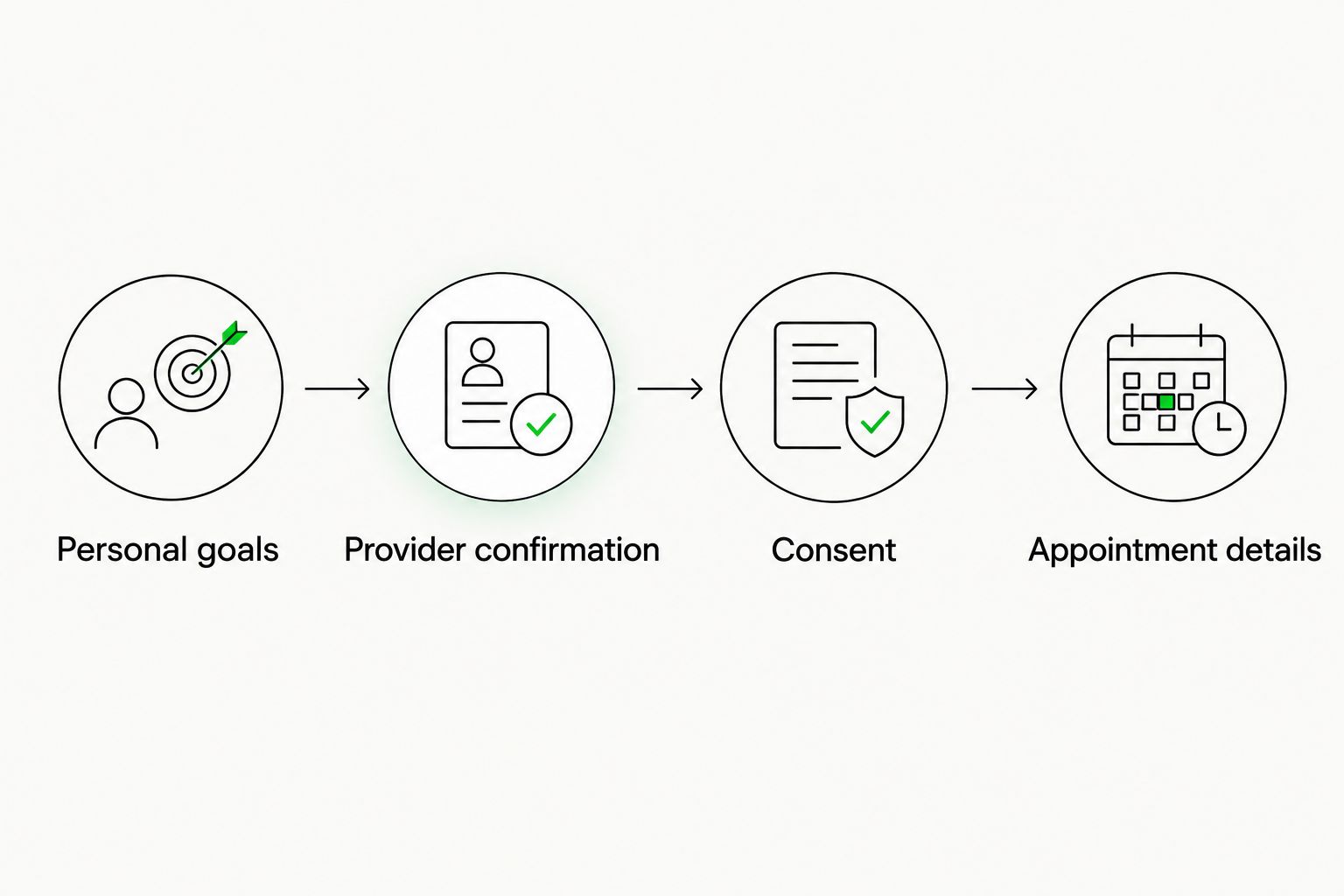
A useful handover can follow this sequence:
- Personal goals: What the person wants help with.
- Provider confirmation: What has been agreed and what remains unresolved.
- Consent: Who can receive information and participate in discussions.
- Appointment details: The home location, contact person and practical access information.
Keep sensitive information within the communication method agreed with the receiving service. Before forwarding a whole file, ask which documents are relevant and how to send them.
Appointment arrangements and home preparation
Give the booking contact practical information
- Confirm the address and access. Explain any entry instructions, stairs, parking restrictions or building access arrangements. Ask whether anything else is needed to plan the visit.
- Confirm who will attend. Tell the booking contact whether a family member, support worker or interpreter is requested. Ask how to arrange this rather than assuming another service will organise it.
- Ask about referral documents. Explain the proposed care arrangement and ask what clinical or administrative paperwork is required. Do not assume that aged care paperwork replaces every other document.
- Check the appointment details. Confirm the date, arrival arrangements, main contact and how to report a change before the visit.
Expected result: The appointment details are clear, and the physiotherapist knows about practical circumstances that affect the visit.
For households in Punchbowl, nearby suburbs or elsewhere in Greater Sydney, provide the exact suburb when making an enquiry. Ask about the proposed home visit directly rather than treating a general service description as confirmation of a particular booking.
Prepare without rearranging the whole home
Keep relevant documents and your current medication list accessible, and ask the physiotherapist what else to have ready. Leave usual walking aids nearby if you use them; there is no need to buy equipment before an individual assessment.
Choose a comfortable place to begin the conversation. Explain any concerns about moving furniture or preparing space, especially if you would need help to do so safely.
Write 3 questions you want answered and nominate 1 contact person for booking updates, if that suits your household. These are organising suggestions, not clinical requirements.
First-visit discussion and follow-up
Agree on what happens next
- Start with the person’s priorities. Tell Simon what you hope the assessment will help clarify. Mention anything that has changed since the referral was prepared.
- Discuss the assessment before proceeding. Ask what the physiotherapist proposes, why it is relevant and how to raise discomfort or concerns. You can ask for an explanation in plain language.
- Clarify any recommendations. Ask what is intended for the person receiving care and what, if anything, family or support workers should help with. Do not turn a general discussion into an exercise routine without individual instructions.
- Confirm the communication plan. Agree on who should receive an update, subject to consent, and who will coordinate any proposed next steps with the provider.
Expected result: You understand the assessment findings, the proposed next steps and who is responsible for following up.
Foveria Health provides in-home assessment and treatment, but the appropriate approach depends on the individual assessment. A first visit is an opportunity to establish a plan, not a promise of a particular result.
For ongoing support at home physiotherapy, keep the person’s goals connected to the written plan. The guide to what a Support at Home physiotherapy care plan should include explains the questions to take into that discussion.
When an existing care arrangement needs updating
You do not need to start every conversation from the beginning when circumstances change. Instead, identify what has changed and ask the provider and physiotherapist which parts of the existing arrangement need review.
For a 2026 care-plan update, check these points:
- Describe the change, including when it began, without trying to diagnose it yourself.
- Ask the provider whether the proposed service arrangements need further confirmation.
- Tell the physiotherapist about relevant new records or instructions from treating clinicians.
- Confirm whether consent, contact details or the people involved have changed.
Expected result: Everyone works from the updated information rather than an outdated referral.
If a new health concern needs medical attention, seek appropriate medical advice rather than waiting for administrative arrangements to catch up. A routine home physiotherapy booking is not an emergency service.
Troubleshooting the handover
Nobody knows who is organising the appointment
Ask the provider to nominate a booking contact and confirm the next action in writing. Include the person receiving care in updates using their preferred communication method.
The assessment mentions support, but the service is unclear
Ask the provider to explain how the assessment outcome relates to the proposed physiotherapy request. Keep the appointment enquiry separate from any unresolved approval or payment questions.
Documents have been sent, but consent is unclear
Pause further sharing and ask the receiving service what permission or authority it needs. Being a relative or helping with phone calls does not, by itself, settle every consent question.
Family and support workers have different expectations
Return to the person’s own goals and record the different observations separately. Ask the physiotherapist to clarify the proposed plan rather than expecting the first appointment to resolve every concern at once.
Customise your workflow
For families, a shared note can prevent repeated calls. Keep it focused on confirmed arrangements, unanswered questions and the next action; avoid adding sensitive health information to a widely shared message thread.
For home care providers and professional referrers, make responsibility explicit. State who is requesting the assessment, who needs the report, what consent covers and who will respond to recommendations.
Foveria Health mobile physiotherapy enquiries can begin with a plain-language description of the person’s needs and location. Ask Simon about suitability and the information required, while your provider confirms the proposed care arrangements.
FAQ
How do I arrange support at home physiotherapy after an assessment?
Start by discussing the assessment outcome and proposed physiotherapy with your provider. Confirm the approval process, referral information and payment arrangements before treating an appointment as confirmed.
Does my aged care assessment replace a physiotherapy assessment?
No. An aged care assessment considers support needs, while a physiotherapy assessment examines the concerns relevant to physiotherapy and informs an individual plan.
Can I ask for Simon to provide my home physiotherapy?
You can tell your provider that you would like to discuss care with Simon at Foveria Health. Confirm coordination with both parties before assuming the proposed arrangement is agreed.
What documents should I have ready for the first home visit?
Have your assessment information, relevant care documents and current medication list accessible. Ask the physiotherapist which records are needed and how to share them appropriately.
Can a family member help arrange the appointment?
A family member can help with arrangements when the person receiving care wants that assistance. Ask the services involved what consent or representative authority they require for sharing information and making decisions.
Should I buy exercise equipment before the physiotherapist visits?
Do not buy equipment solely to prepare for the first assessment. Ask the physiotherapist what to have nearby and discuss any equipment recommendations after the individual assessment.
What if my needs change while I am waiting for the visit?
Tell your provider and the physiotherapist about the change before the appointment. Seek appropriate medical advice for a health concern rather than waiting for a routine physiotherapy visit.
One last thing
The most useful handover detail is often the person’s own description of what matters: not just a condition name, but the daily activity they want help with. Put that sentence near the top of your notes.
Before a 2026 appointment, read it back to the person and ask whether it still feels right. A clear goal gives the first conversation a practical starting point without promising an outcome.