Best gentle starting option: pelvic tilts. Best for a supported lying stretch: single knee-to-chest. Best for movement on hands and knees: cat–cow. The best stretches for lower back pain at home depend on which movements feel comfortable, not how far you can stretch; this 2026 guide explains five options and when to seek assessment instead.
- The best stretches for lower back pain at home are comfortable movements, not a routine everyone must complete.
- Pelvic tilts and cat–cow are mobility exercises rather than sustained stretches; neither should be forced.
- Stop exercises that increase pain or bring on tingling, numbness or weakness.
- Foveria Health offers home physiotherapy assessment in Greater Sydney when you need individual guidance.
For help choosing movements around your symptoms and everyday goals, Foveria Health provides mobile physiotherapy assessment and treatment in Greater Sydney. Foveria Health home physiotherapy suits people who want their back pain assessed in their own home.
Why this matters
A tight-feeling back does not automatically need a stronger stretch. Back pain has different causes, and the direction that feels comfortable for one person can aggravate another person's symptoms.
The useful question is whether a movement helps you move comfortably afterwards. Getting out of a chair, dressing and walking around your home matter more than reaching your toes.
This is general information, not a diagnosis or a personalised exercise prescription. If you have recently had surgery, a fracture or specific movement restrictions, follow your treating team's advice rather than starting this list independently.
When stretching is not the next step
Seek urgent medical assessment for new difficulty passing urine, loss of bladder or bowel control, numbness around the groin or bottom, or new or worsening leg weakness. These symptoms need assessment rather than a home exercise trial. Call 000 if you need emergency assistance.
Back pain after a significant fall or injury, or back pain with fever or feeling seriously unwell, also needs prompt medical attention. Tell your clinician about osteoporosis, cancer history or unexplained weight loss rather than assuming the pain is simply muscle tightness.
What makes the best home back-pain exercise in 2026?
Use these criteria before choosing from the table:
- Comfort: The movement stays gentle and does not increase your symptoms.
- Easy access: You can reach the starting position and get out of it safely.
- Control: You can move slowly without bouncing, straining or holding your breath.
- Useful carry-over: You judge the movement by everyday comfort, not stretch depth.
- Individual fit: The movement respects your health conditions and any clinical restrictions.
There is no universal winner. The order below starts with a small lying movement, then separates options by position and purpose—not by proven superiority.
Home stretches and movements at a glance
| Option | Best for | Standout feature | Key limitation |
|---|---|---|---|
| Pelvic tilts | Small, controlled movement while lying down | Lets you explore back movement without a sustained stretch | Not a muscle stretch; lying down must be comfortable |
| Single knee-to-chest | A supported stretch while lying down | You support one leg with your hands | Hip or knee discomfort can limit the position |
| Cat–cow | Gentle movement on hands and knees | Moves the spine between comfortable rounding and arching | Loads the wrists and knees; requires safe floor access |
| Seated trunk rotation | A seated movement without floor transfers | Uses a stable chair | Twisting can aggravate symptoms or conflict with restrictions |
| Supported standing hip-flexor stretch | Stretching the front of the hip without kneeling | Uses standing support | Needs balance and is not a direct lower-back stretch |
1. Pelvic tilts: best for small, controlled lying movements
Pelvic tilts gently rock your pelvis while you lie with your knees bent. They are a mobility exercise, not a sustained stretch, and offer a way to explore a small movement without pulling on your legs.
How to try pelvic tilts
Lie on a comfortable, supportive surface with your knees bent and feet resting down. Gently roll your pelvis so your lower back moves towards the surface, then ease back towards your starting position.
Keep the movement small. You do not need to flatten your back firmly, squeeze hard or lift your hips into a bridge.
Pelvic tilt pros:
- Requires no exercise equipment.
- Lets you keep your head and legs supported.
- Makes it easy to explore a small movement range.
Pelvic tilt cons:
- Does not provide a sustained muscle stretch.
- Lying on your back can be uncomfortable.
- Getting down to the floor and back up can be difficult.
Best for: Someone who is comfortable lying down and wants to explore gentle back movement.
Verdict: Skip pelvic tilts if lying down or rocking your pelvis increases your symptoms.
2. Single knee-to-chest: best for a supported lying stretch
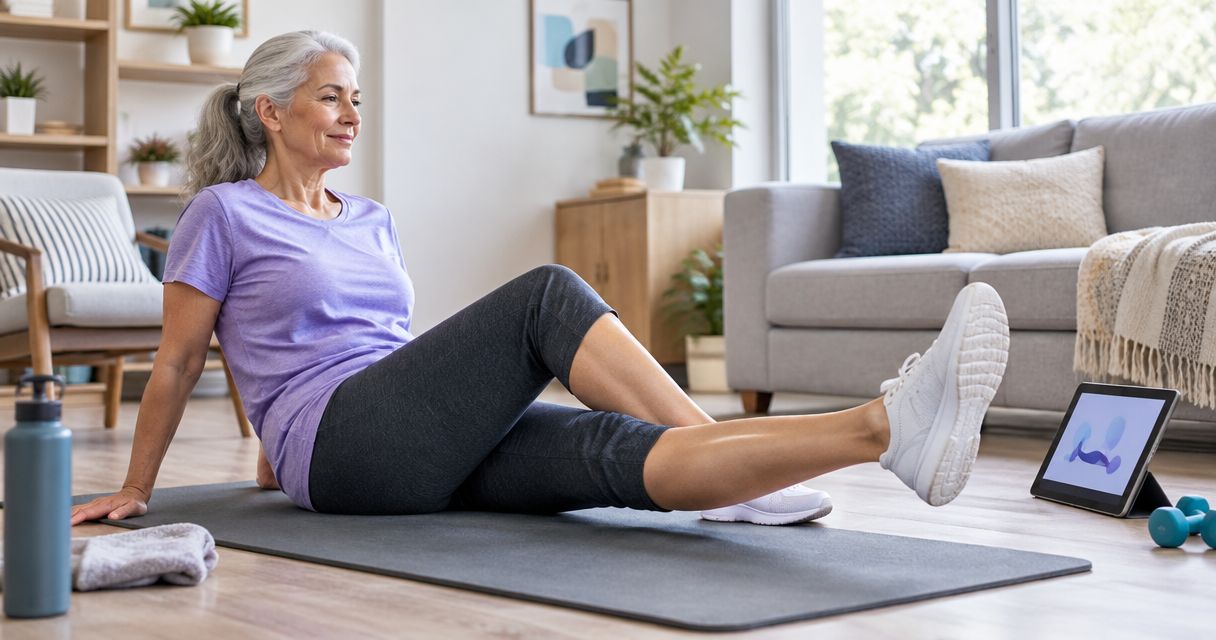
Single knee-to-chest brings one thigh towards your body while you lie on your back. It introduces a bending movement through the hip and lower back; that direction does not suit every back-pain presentation.
How to try single knee-to-chest
Start lying down with both knees bent. Support one thigh with your hands and gently bring it towards your body, leaving the other foot resting on the surface.
Stop before pain or a strong pulling sensation. Avoid gripping tightly over a sore knee or pulling your leg further because you think a deeper stretch must work better.
Single knee-to-chest pros:
- Keeps your head and back supported.
- Lets you move one leg at a time.
- Allows you to release the position easily.
Single knee-to-chest cons:
- Can aggravate symptoms when bending forwards is uncomfortable.
- Hip or knee stiffness can limit the position.
- Reaching around your leg can be difficult.
Best for: Someone who tolerates lying down and finds gentle bending comfortable.
Verdict: Skip single knee-to-chest if it brings on or increases leg pain, tingling or numbness.
3. Cat–cow: best for gentle movement on hands and knees
Cat–cow alternates between gently rounding and gently arching your back. Like pelvic tilts, it is better described as a mobility exercise than a stretch you hold.
How to try cat–cow
Start on your hands and knees on a comfortable surface. Slowly round your back, then return through the middle towards a gentle arch, keeping your neck comfortable.
Use a small range rather than aiming for the biggest possible curve. Breathe normally and stop if either direction increases your symptoms.
Cat–cow pros:
- Explores movement in two directions.
- Does not require a held end position.
- Lets you keep the movement small.
Cat–cow cons:
- Places weight through your wrists and knees.
- Requires safe access to the floor.
- One direction can feel comfortable while the other aggravates symptoms.
Best for: Someone who can comfortably get onto hands and knees and move between positions safely.
Verdict: Skip cat–cow if wrist pain, knee pain or floor transfers make the starting position unsuitable.
4. Seated trunk rotation: best for avoiding floor transfers
Seated trunk rotation gently turns your upper body while your pelvis stays facing forwards. It offers a seated option, but twisting is not automatically appropriate just because you are sitting down.
How to try seated trunk rotation
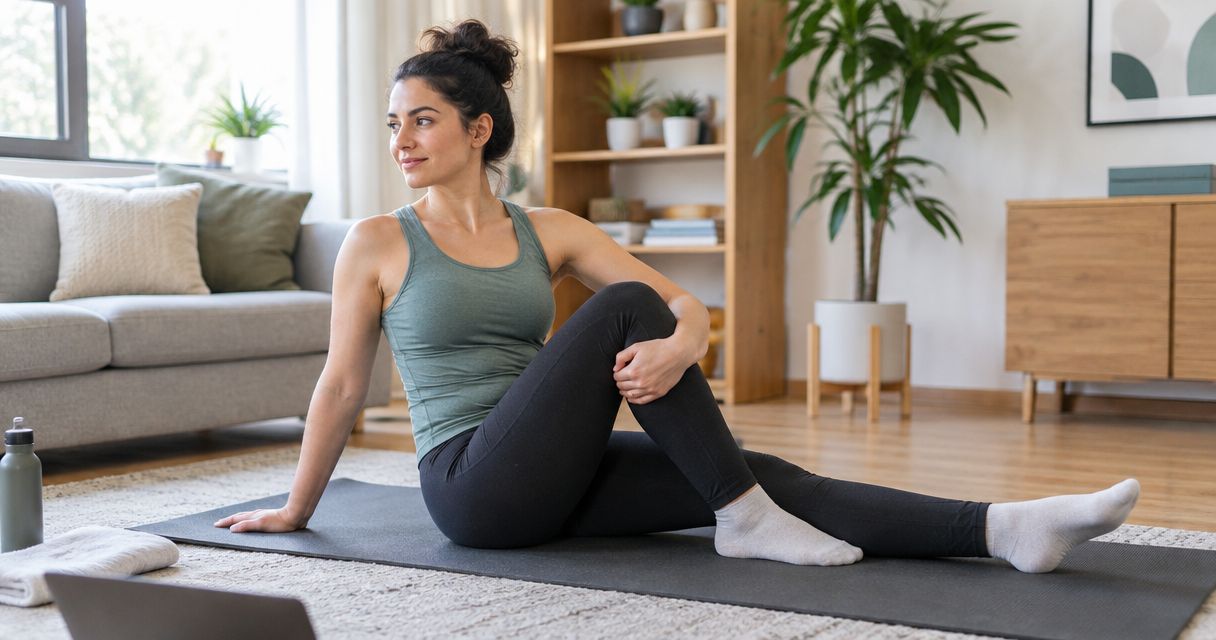
Sit on a stable, non-wheeled chair with your feet supported. Turn your chest gently to one side, return to the middle and explore the other side only within a comfortable range.
Keep your hands resting lightly rather than using the chair back to pull yourself further. Do not bounce or force the turn.
Seated trunk rotation pros:
- Avoids getting onto the floor.
- Uses a familiar seated position.
- Allows a small, controlled turn.
Seated trunk rotation cons:
- Twisting can aggravate back symptoms.
- Pulling against the chair can force the movement.
- Recent surgery or other restrictions can rule it out.
Best for: Someone who needs a seated option and has no restriction or pain with gentle rotation.
Verdict: Skip seated trunk rotation if turning increases pain or your treating team has restricted twisting.
5. Supported hip-flexor stretch: best for a standing hip stretch
A supported hip-flexor stretch targets the front of the hip rather than the lower back directly. It belongs here as an option for discussing hip tightness, not as a claim that tight hips cause your back pain.
How to try a supported hip-flexor stretch
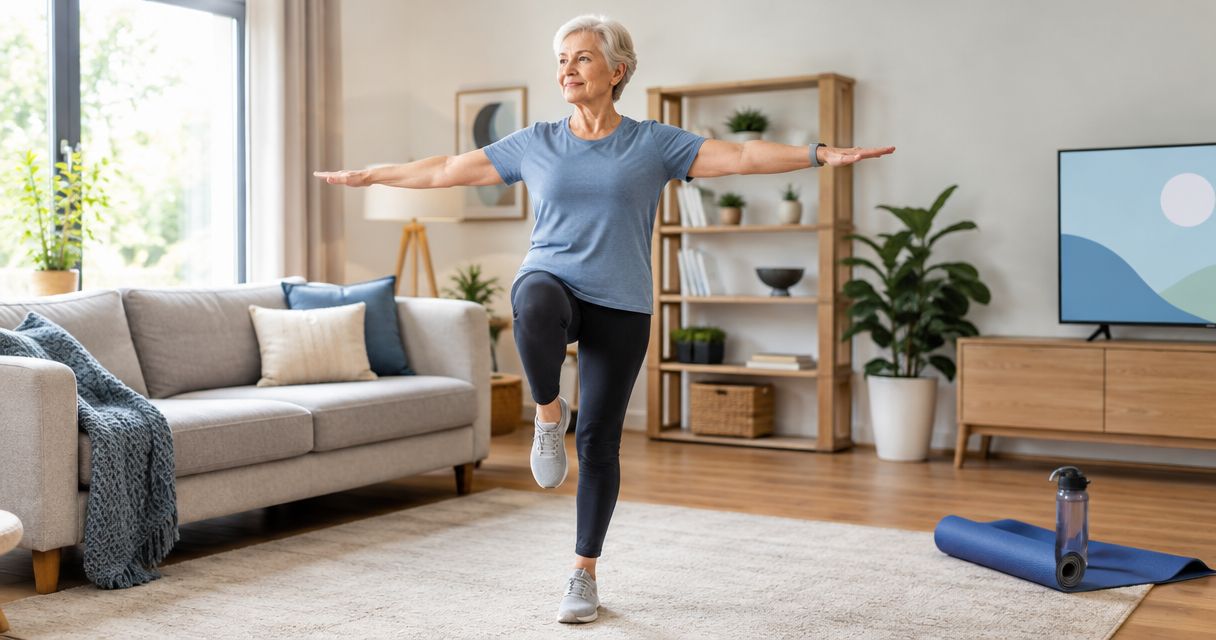
Stand beside a secure support and place one foot slightly behind the other. Keep your trunk upright, gently tuck your pelvis and move your weight forwards until you notice a mild stretch at the front of the trailing hip.
Avoid arching your lower back to create a bigger stretch. If you cannot find the position comfortably, stop rather than adjusting repeatedly through pain.
Supported hip-flexor stretch pros:
- Avoids kneeling.
- Uses support for steadiness.
- Targets a different area from the lying back movements.
Supported hip-flexor stretch cons:
- Still requires standing balance.
- Can become a back arch rather than a hip stretch.
- Is not a direct treatment for every cause of back pain.
Best for: Someone who stands safely and wants an alternative to a kneeling hip stretch.
Verdict: Skip the standing hip-flexor stretch if you feel unsteady or cannot avoid back pain in the position.
How to choose a comfortable starting point
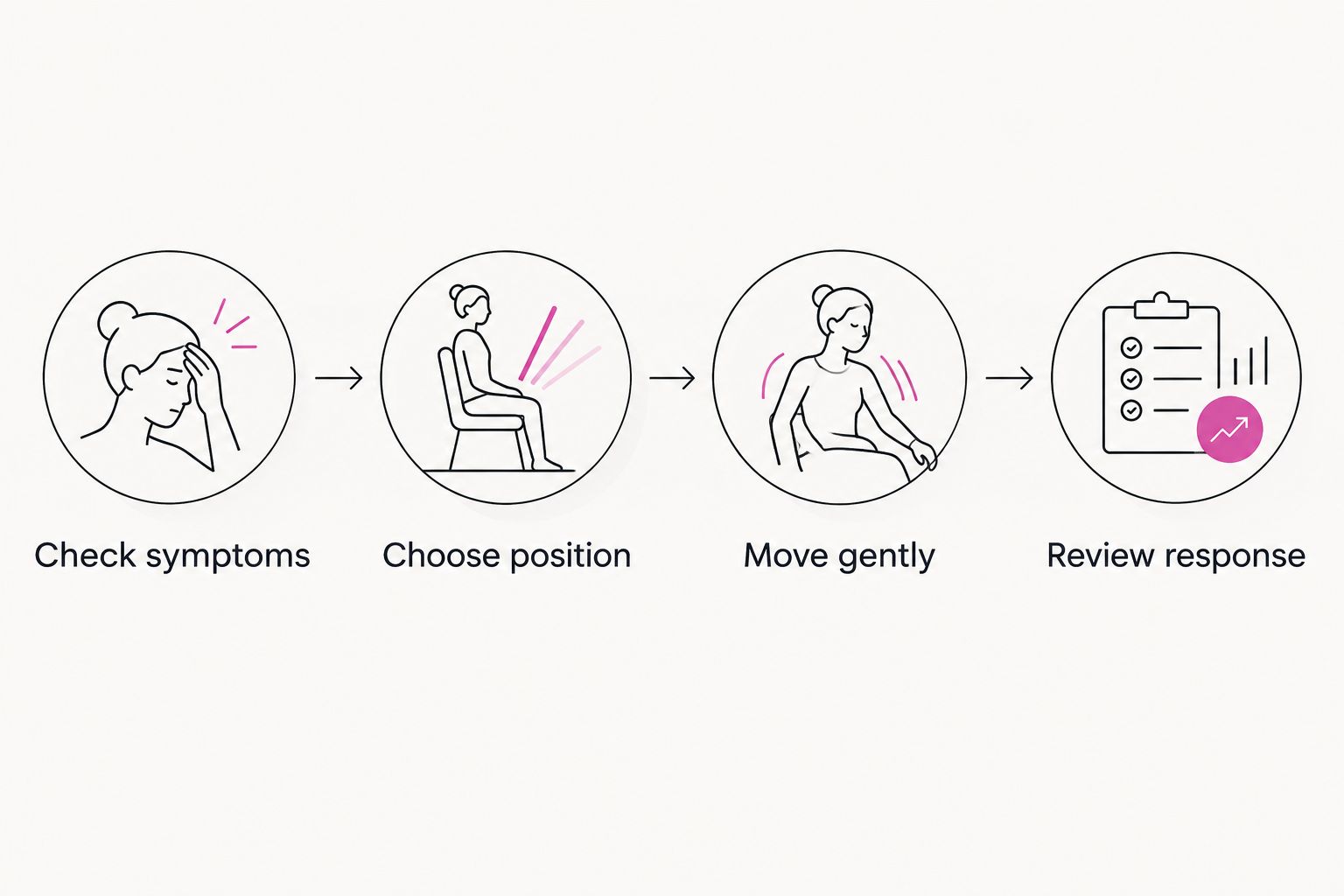
For a home routine in 2026, use the same simple sequence each time:
- Check symptoms: Set aside the routine if you have warning signs or new symptoms needing assessment.
- Choose position: Select lying, seated, standing or hands-and-knees only if you can manage it safely.
- Move gently: Explore a small movement without forcing a stretch.
- Review response: Notice how you feel during the movement and afterwards, including during ordinary activities.
The right response is not necessarily a dramatic feeling of release. Comfortable movement is enough; a stronger sensation is not a reason to push further.
There is no single hold time or repetition count suitable for everyone reading this page. Ask your physiotherapist to write down your individual starting amount, what to change and when to stop.
How these options were ranked
This 2026 guide groups movements by starting position, control and practical limitations. It does not claim that one stretch treats every cause of lower back pain or replaces an assessment.
Some entries are mobility exercises rather than stretches because a useful home plan need not consist only of held positions. Strength, walking and other everyday activity also belong in the conversation with your clinician.
Which option should you choose?
Start with the position you can manage comfortably, not the highest-ranked exercise. Pelvic tilts are a gentle option to discuss if lying down suits you; seated movement avoids floor transfers but still needs to suit your symptoms.
If pain keeps returning, limits walking or makes getting out of bed difficult, seek assessment rather than collecting more stretches. Foveria Health provides home physiotherapy with Simon, with care focused on your goals and the activities you need to manage at home.
Families and professional referrers can help by describing what has changed, what movements are difficult and any existing restrictions. Include the person's own priorities rather than requesting a generic exercise sheet.
FAQ
What's the best stretch for lower back pain at home in 2026?
There is no single best stretch for every cause of lower back pain. Pelvic tilts offer small lying movements, while other options use seated, standing or hands-and-knees positions; choose according to comfort and safety.
Should I stretch if my lower back hurts?
Do not force a stretch through pain. Gentle movement that does not worsen symptoms is different from pushing into a painful position, and new or worsening symptoms need assessment.
How long should I hold a lower-back stretch?
Your starting hold time should suit your symptoms and assessment rather than a universal target. Ask your physiotherapist for a clear amount and instructions for stopping or adjusting it.
Can I do back stretches on my bed?
A bed is suitable only if you can move safely and the surface supports the position comfortably. A soft or unstable surface can make movement harder to control; ask for an alternative if getting onto the floor is difficult.
What if stretching sends pain down my leg?
Stop the movement if it brings on or increases pain travelling down your leg. Seek assessment, particularly if you also notice tingling, numbness or weakness.
Are these stretches suitable after back or hip surgery?
Follow your treating team's restrictions after surgery rather than starting this list independently. Ask which positions and movements are appropriate for your recovery.
Can someone assess my back pain at home in Sydney?
Foveria Health offers mobile physiotherapy assessment and treatment in Greater Sydney. Discuss your symptoms, suburb, access needs and goals when enquiring about an appropriate appointment.
One last thing
For your 2026 home routine, keep a note of what feels easier afterwards—not just which stretch you completed. Being able to put on your shoes or rise from your usual chair is more useful feedback than stretching further.