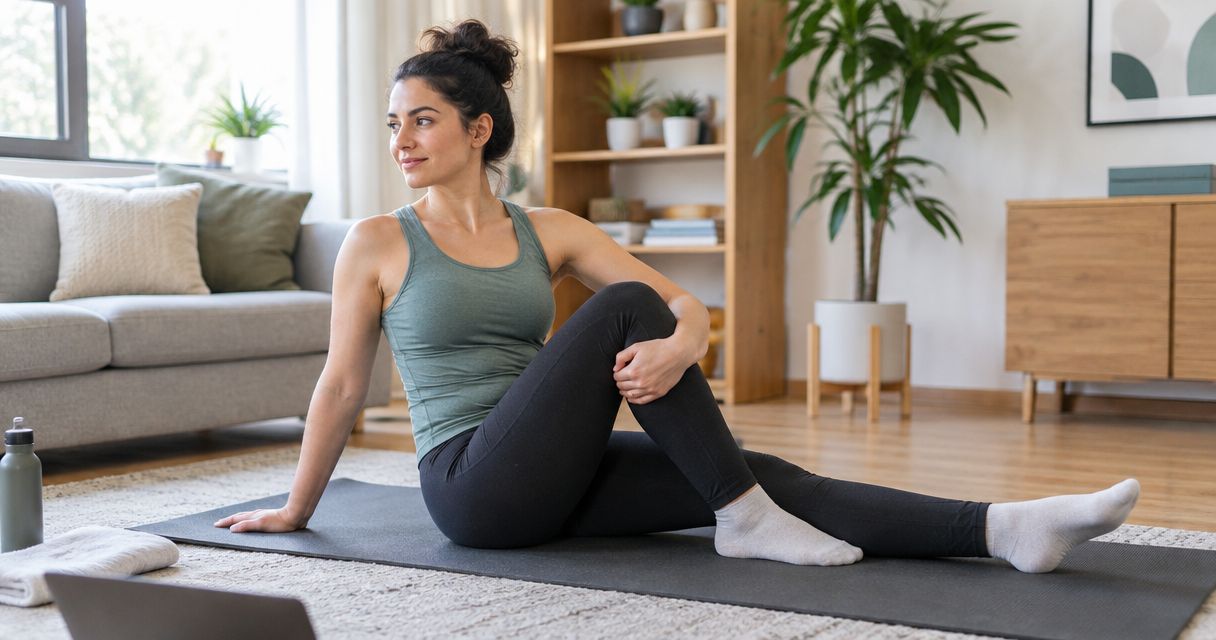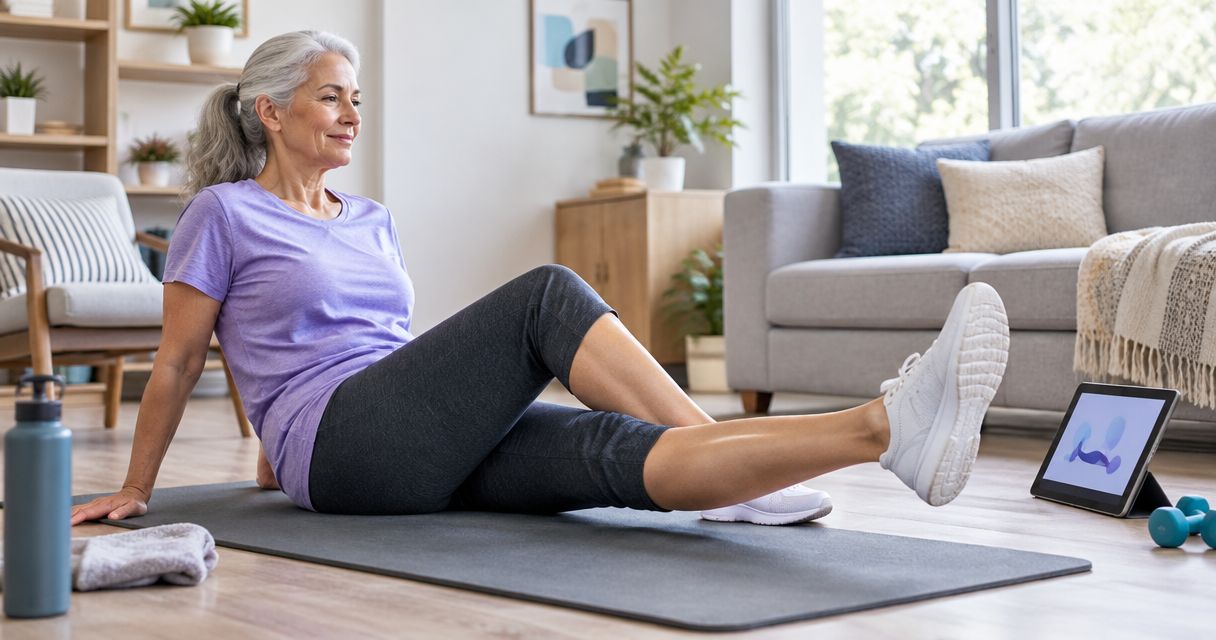
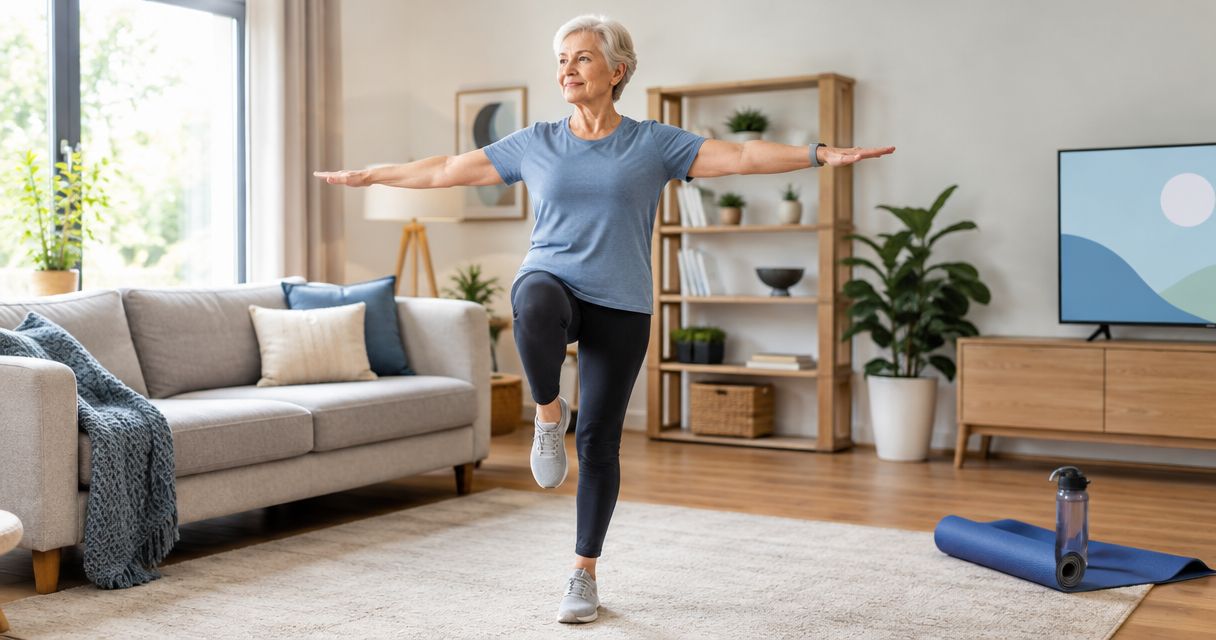
Best starting option: supported weight shifts. Best for practising chair transfers: sit-to-stand. Best for a narrower standing position: supported semi-tandem standing, after assessment. This 2026 guide compares the best exercises to improve balance in seniors and explains when to ask for help before trying them at home.
- The best exercises to improve balance in seniors depend on standing ability, symptoms and support needs.
- Supported weight shifts practise moving your weight while keeping both feet on the floor.
- Sit-to-stand practises chair transfers; supported marching practises lifting each foot.
- Foveria Health offers home physiotherapy for older people seeking personal assessment in Greater Sydney.
- Seek assessment before starting if you have fallen recently or need another person to help you stand.
Balance exercises should match what you can safely do today, not what an online demonstration makes look easy. Foveria Health provides mobile physiotherapy with Simon, so you can discuss your goals in the setting where everyday movement happens.
Why this matters
Getting out of a chair, turning towards the kitchen and stepping sideways each ask something different of your balance. A useful home programme connects exercise to the activities you want to manage, rather than simply making standing harder.
Foveria Health home physiotherapy suits older people who want an individual balance assessment in their own home. For families choosing exercises in 2026, that assessment is the starting point when safety or support needs are unclear.
This guide provides general information, not a personal exercise prescription. Do not use it to replace advice following a fall, an operation or a new change in your health.
What makes the best balance exercises for seniors?
Use these criteria before choosing an exercise:
- Suitable starting level: You can get into and out of the position safely.
- Dependable support: A fixed bench or securely positioned support is within comfortable reach.
- Everyday relevance: The movement relates to a goal, such as standing up or moving along a bench.
- Controlled movement: You can move without rushing, grabbing suddenly or holding your breath.
- Appropriate progression: Difficulty changes only when the current version is safe and controlled.
- Clear stopping rules: You know when to stop and when to seek professional advice.
Do not remove support just to make an exercise look more advanced. The right challenge is individual, especially if you use a walking aid or need assistance with transfers.
Best balance exercises at a glance
These are exercise options to discuss, not a routine that everyone should complete. The order starts with supported weight transfer and then separates exercises by their everyday purpose.
| Exercise | Best for | Main feature | Key limitation |
|---|---|---|---|
| Supported weight shifts | Starting weight-transfer practice | Keeps both feet on the floor | Still requires safe supported standing |
| Sit-to-stand | Practising chair transfers | Rehearses standing up and sitting down | Chair height and leg symptoms affect suitability |
| Supported heel raises | Practising ankle control | Lifts the heels while the forefeet stay down | Does not cover turning or stepping |
| Supported marching | Practising foot clearance | Alternates lifting each foot | Requires weight transfer onto the other leg |
| Supported semi-tandem standing | Narrowing the standing position | Places one foot partly ahead of the other | More demanding than a comfortable wide stance |
| Supported sideways stepping | Practising movement along a bench | Adds sideways travel | Needs a clear route and suitable support |
1. Supported weight shifts: best for starting weight-transfer practice
Supported weight shifts involve gently moving your weight from one leg towards the other while keeping both feet on the floor. They offer a way to practise weight transfer without immediately adding a step.
Stand facing a fixed support, with your feet comfortably apart. Hold the support as advised and make a small sideways weight shift, then return towards the middle; avoid leaning your whole body far to one side.
Supported weight shifts pros:
- Both feet remain in contact with the floor.
- The movement can stay small.
- Support remains directly in front of you.
Supported weight shifts cons:
- You still need enough control to stand safely.
- They do not practise lifting a foot or taking a step.
Best for: Someone who can stand safely with support and wants to practise controlled weight transfer.
Verdict: Choose supported weight shifts as an introductory option only when supported standing is already safe.
2. Sit-to-stand: best for practising chair transfers
Sit-to-stand rehearses getting up from a chair and lowering yourself back down. It is a functional leg-strength exercise that belongs in a balance discussion because chair transfers are part of everyday mobility.
Use a firm, stable chair that will not slide, ideally positioned against a wall. Follow your physiotherapist's advice about foot position and arm support; pushing through the armrests is not a failure or something to remove automatically.
Sit-to-stand pros:
- Directly practises an everyday task.
- Includes both standing up and controlled sitting.
- Allows discussion of the chair you actually use.
Sit-to-stand cons:
- A low or soft chair makes the task harder.
- Pain, weakness or movement restrictions can make an unsupervised attempt unsuitable.
Best for: Someone working towards safer, more controlled chair transfers.
Verdict: Choose sit-to-stand when chair transfers are your goal and the chair setup has been checked.
3. Supported heel raises: best for practising ankle control
Supported heel raises involve lifting your heels while keeping the front of your feet on the floor, then lowering with control. They work the calf muscles and practise movement through the ankles.
Face a fixed support and use the hand support recommended for you. Rise only as far as you can control without rocking forwards or pulling yourself up with your arms.
Supported heel raises pros:
- Practise a specific ankle movement.
- Keep the exercise in one place.
- Allow a small movement range when appropriate.
Supported heel raises cons:
- Foot or ankle symptoms can limit suitability.
- They do not replace practice with walking, turning or stepping.
Best for: Someone whose programme includes calf strength and ankle movement.
Verdict: Choose supported heel raises for a specific ankle-control goal, not as a complete balance programme.
4. Supported marching: best for practising foot clearance
Supported marching means lifting one foot, placing it down and then changing sides while holding a fixed support. Unlike weight shifts, it requires you to briefly support your weight through the other leg.
Keep the lift small rather than aiming for high knees. Place the foot down deliberately before changing sides, and stop if you need to grab, rush or lean heavily to stay upright.
Supported marching pros:
- Practises lifting each foot from the floor.
- Adds alternating movement without travelling forwards.
- Keeps a support surface within reach.
Supported marching cons:
- Requires more control than keeping both feet down.
- A moving chair or walking frame is not a substitute for an assessed support setup.
Best for: Someone ready to practise alternating foot lifts with suitable support.
Verdict: Hold supported marching until you can transfer weight safely and your support needs are clear.
5. Supported semi-tandem standing: best for narrowing your stance
Semi-tandem standing places one foot partly ahead of the other, rather than directly beside it. This narrows your standing position without immediately asking you to stand heel-to-toe.
Ask a physiotherapist to show you an appropriate foot position and hand support. Keep your eyes open; closing them or letting go is a separate increase in difficulty, not the next automatic step.
Supported semi-tandem standing pros:
- Changes standing difficulty without adding travel.
- Allows a smaller change than full heel-to-toe standing.
- Provides a specific standing-balance task.
Supported semi-tandem standing cons:
- A narrower stance is harder to control.
- Getting into or out of the position can itself be difficult.
Best for: Someone assessed as ready for a narrower standing position.
Verdict: Hold semi-tandem standing until safe foot placement and support have been demonstrated.
6. Supported sideways stepping: best for moving along a bench
Supported sideways stepping practises moving sideways beside a fixed support, such as a suitable kitchen bench. It connects balance practice with moving across a small space at home.
Take 1 small step sideways, then bring the other foot across without crossing your feet. Your physiotherapist should check the route, support height and whether this movement suits your walking ability.
Supported sideways stepping pros:
- Practises sideways movement rather than standing alone.
- Connects to movement along a bench.
- Includes deliberate foot placement.
Supported sideways stepping cons:
- Requires a clear route without corners or obstacles.
- Is unsuitable for independent practice if you need physical help to step safely.
Best for: Someone ready to practise supported sideways travel.
Verdict: Choose sideways stepping only after the movement and home setup have been checked.
Make the space safe before choosing a routine
For home exercise in 2026, the surroundings matter as much as the movement. A loose rug, rolling chair or pet underfoot can turn a simple task into an avoidable hazard.
- Fixed support: Use a stable surface that will not move when you hold it.
- Clear floor: Remove loose rugs, trailing cords and nearby clutter.
- Suitable footwear: Follow advice about secure footwear rather than exercising in slippery socks.
- Help nearby: Arrange the assistance your physiotherapist recommends; do not assume a family member can safely catch you.
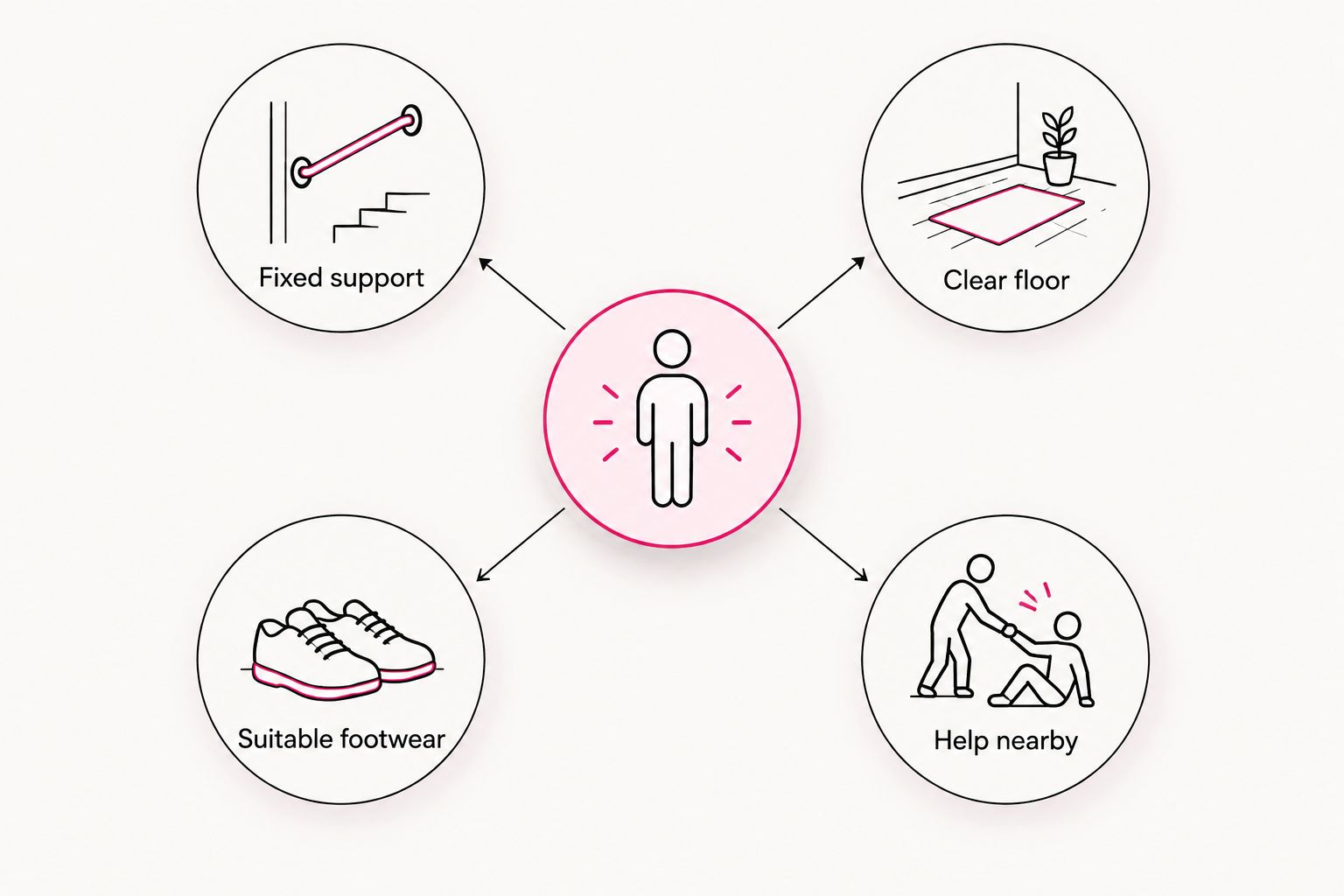
A physiotherapist can check whether you need 2 hands on the support or a different starting task altogether. Keeping 2 feet on the floor is not a guarantee of safety if standing itself is difficult.
How these exercises were ranked
The ranking separates exercises by purpose: weight transfer, chair transfers, ankle control, foot lifting, stance width and sideways movement. It does not claim one exercise is clinically best for every older person.
NHS balance exercise guidance describes supported standing and stepping exercises for older adults. This guide uses those familiar exercise types as a starting point, while keeping personal safety, home setup and everyday goals central to the choice.
Which balance exercise should you choose in 2026?
Start with the everyday task you want to manage, then ask which exercise fits it. Supported weight shifts are the introductory option here for people who can already stand safely with support; they are not a substitute for assessment.
If you have fallen, developed new unsteadiness or started needing more help, arrange an assessment before adding exercises. The guide to how a home physio assesses walking and balance in seniors explains what to discuss.
Foveria Health offers home physiotherapy across Greater Sydney, including enquiries from Punchbowl and nearby suburbs. Ask Simon about your current movement difficulties and the activities you want to work towards.
Discuss balance care at home
Ask Simon about an individual home physiotherapy assessment in Greater Sydney.
What families and home care teams should share
Describe what has changed, rather than simply writing that someone has poor balance. Useful details include difficulty rising from a particular chair, needing help on the way to the bathroom, or feeling unsteady when turning.
With the person's consent, share recent falls, current walking aids, relevant discharge instructions and the assistance already provided. Ask for clear guidance about supervision, stopping rules and which exercises support workers can assist with; do not add exercises independently to a care plan.
FAQ
What are the best exercises to improve balance in seniors at home?
Supported weight shifts, sit-to-stand, heel raises, marching, semi-tandem standing and sideways stepping are options to discuss with a physiotherapist. The best choice depends on your standing ability, symptoms, goals and need for assistance.
What is the easiest balance exercise to start with?
Supported weight shifts are an introductory option for someone who can already stand safely with support. If standing is difficult or you need physical assistance, ask for assessment rather than trying a standing exercise alone.
How many balance exercises should an older person do each day?
The amount should be set for the individual rather than copied from a general list. Ask your physiotherapist to specify the exercises, repetitions, rest and supervision that suit you.
Should I let go of the bench when balance exercises feel easier?
Do not remove support automatically. Your physiotherapist can decide whether to change hand support, movement or foot position while keeping the task appropriate for you.
Can I start balance exercises after a fall?
Arrange an assessment before starting a new routine after a fall, particularly if you have pain, an injury or a change in walking. New or worsening symptoms need medical advice rather than exercise progression.
When should I stop a balance exercise?
Stop if you feel dizzy, faint, unexpectedly breathless, develop pain or cannot stay steady with the agreed support. Seek urgent medical help for chest pain, sudden weakness or other severe new symptoms.
Can Foveria Health assess balance at home in Sydney?
Foveria Health provides in-home physiotherapy assessment and treatment across Greater Sydney. Discuss your balance concerns, suburb and support needs with Simon when arranging an appropriate appointment.
One last thing
For your 2026 balance plan, make the goal more specific than standing on one leg. Tell your physiotherapist which everyday movement matters most: getting up from your favourite chair, turning towards the bathroom or moving along the kitchen bench.
That gives the exercise a purpose. It also gives you and your family something practical to discuss at the next review.