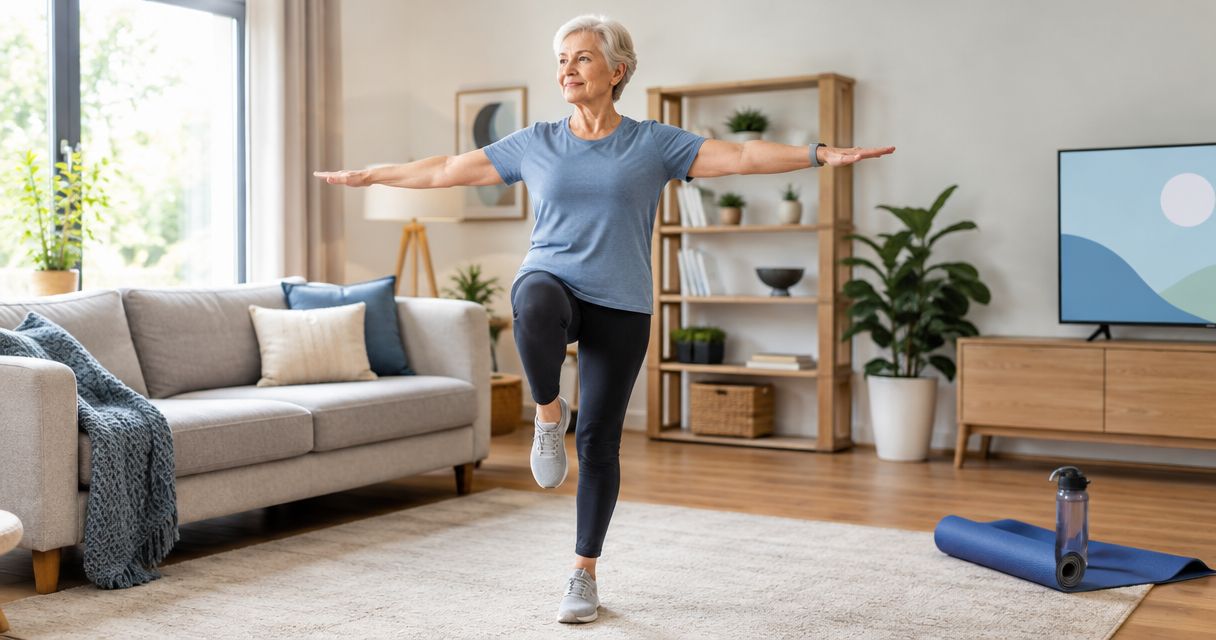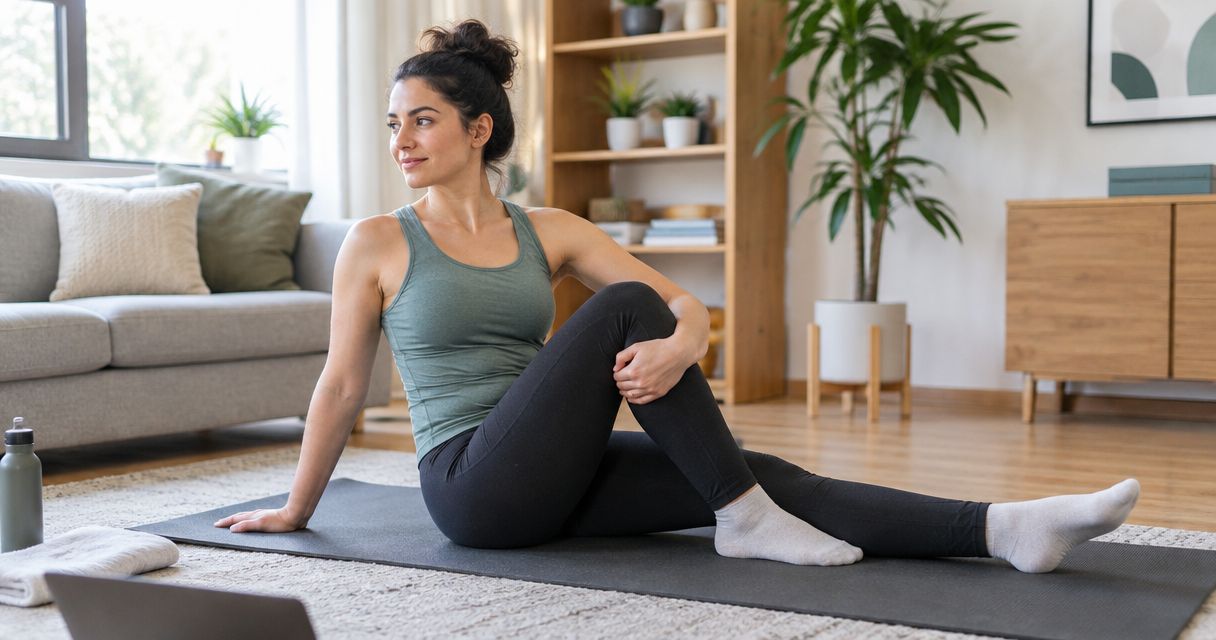
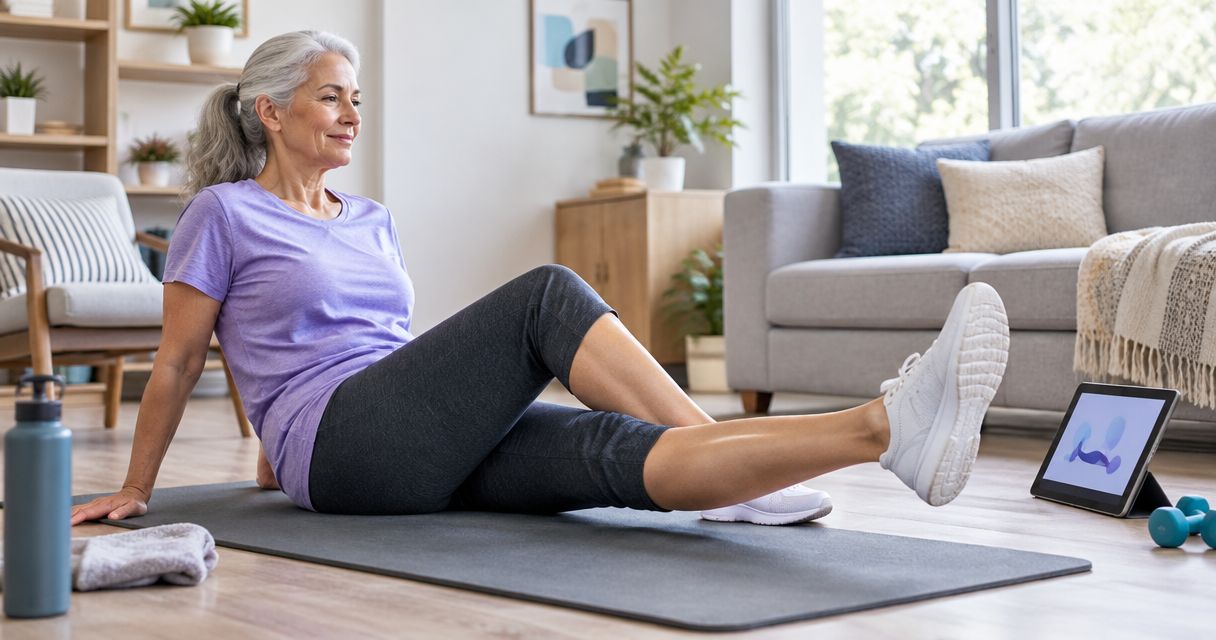
Best starting point: the exercises in your discharge plan. For the best exercises after knee replacement at home in 2026, heel slides support bending, thigh squeezes target muscle activation, and short walks practise everyday movement—once your treating team has cleared them.
- The best exercises after knee replacement at home are those matched to your discharge instructions and current ability.
- Heel slides target bending; thigh squeezes target muscle activation; supported walking practises everyday mobility.
- Foveria Health offers home physiotherapy in Sydney for people seeking assessment and a personal recovery plan.
- Do not force movement or progress exercises without advice from your treating physiotherapist.
Why this matters
Getting home after knee replacement brings practical questions: how to get out of your chair, walk to the bathroom and exercise without overdoing it. A useful programme connects exercise to those daily tasks, rather than asking you to complete the longest possible list.
Foveria Health provides mobile physiotherapy assessment and treatment across Greater Sydney. Foveria Health is an option for people seeking personal physiotherapy assessment in their own home.
This 2026 guide explains common exercise options, not a programme to start independently. Your surgeon’s restrictions and discharge instructions take priority, including any instructions about weight-bearing, wound care and walking aids.
What makes the best home exercises after knee replacement?
Choose exercises with your physiotherapist using these criteria:
- Clear purpose: Know whether the exercise targets bending, straightening, strength or everyday movement.
- Suitable timing: Follow your treating team’s advice about when to begin and progress.
- Safe setup: Use a stable surface, prescribed walking aid and appropriate support.
- Manageable response: Report increasing pain, swelling or reduced function rather than pushing through.
- Personal relevance: Connect exercises to a goal, such as reaching the toilet or standing from a chair.
For your 2026 recovery plan, ask for written instructions covering repetitions, frequency and when to stop. A generic exercise count cannot account for your operation, medical history or current symptoms.
Home knee replacement exercises at a glance
The order below separates different purposes; it is not a sequence everyone must follow. An exercise lower in the table is not necessarily less useful.
| Exercise | Best for | Main purpose | Key limitation |
|---|---|---|---|
| Heel slides | Practising knee bending | Moves the knee through a comfortable bend | Does not replace strengthening or walking practice |
| Thigh squeezes | Activating the front thigh muscle | Practises a controlled quadriceps contraction | Muscle activation alone does not restore everyday function |
| Supported knee extension | Practising knee straightening | Focuses on the straightening movement | Position and support need individual instructions |
| Ankle pumps | Moving the ankles during rest | Adds ankle movement while sitting or lying | Does not replace prescribed clot-prevention treatment |
| Sit-to-stand practice | Getting out of a chair | Rehearses an everyday transfer | Requires a suitable chair and safe standing ability |
| Supported walking | Moving around the home | Practises walking with the prescribed aid | Distance alone does not show good walking quality |
1. Heel slides: best for practising knee bending
A heel slide involves sliding your heel towards your body to bend your knee, then returning as instructed. Your physiotherapist can show you an appropriate position and whether assistance is needed.
The aim is controlled movement, not forcing your heel closer at every attempt. Follow the range and technique your treating team has demonstrated.
Heel slide pros:
- Targets knee bending directly.
- Can be practised in a supported position.
- Gives you a specific movement to discuss during review.
Heel slide limitations:
- Does not address every part of recovery.
- Pulling harder is not an appropriate response to sharp pain or resistance.
Best for: People whose prescribed programme includes knee-bending practice.
Ask your physiotherapist how the movement should feel and what assistance is appropriate. Family members should not push the knee into a bend.
Verdict: Hold if heel slides have not been cleared or cause sharp pain; otherwise follow your prescribed technique.
2. Thigh squeezes: best for front-thigh muscle activation
Thigh squeezes, also called quadriceps sets, involve tightening the muscle at the front of your thigh while your leg is supported. Your physiotherapist can check whether you are contracting the intended muscle.
This is different from lifting the whole leg. Do not add a straight-leg raise simply because a thigh squeeze feels manageable.
Thigh squeeze pros:
- Focuses on the muscle involved in straightening the knee.
- Does not require standing.
- Allows a physiotherapist to assess your muscle control.
Thigh squeeze limitations:
- Does not replace functional strengthening.
- Technique can be difficult to judge without feedback.
Best for: People working on quadriceps activation within their prescribed recovery plan.
Keep breathing normally rather than holding your breath during the effort. If you cannot tell whether the muscle is working, ask for a demonstration rather than making the contraction more forceful.
Verdict: Hold progression until your physiotherapist has checked your technique.
3. Supported knee extension: best for practising straightening
Supported knee extension focuses on moving towards the knee-straightening position your treating team recommends. The correct leg support and exercise position depend on your instructions.
Ask your physiotherapist to demonstrate the setup on the bed or chair you actually use. Do not add weights, have someone press on your knee, or improvise a prolonged stretch.
Supported knee extension pros:
- Gives straightening a specific place in your programme.
- Can be checked against a clear positioning instruction.
- Does not require walking practice at the same time.
Supported knee extension limitations:
- Poor positioning can change the exercise.
- More pressure is not a substitute for an assessment.
Best for: People whose treating team has prescribed knee-straightening work.
For recovery at home in 2026, a clear demonstration is more useful than copying a position from an unrelated video. Ask where supports belong and how long the prescribed position should be maintained.
Verdict: Hold until you have clear positioning instructions; never force the knee straight.
4. Ankle pumps: best for ankle movement during rest
Ankle pumps involve moving your feet up and down while sitting or lying in a supported position. They are commonly included in post-operative exercise instructions.
They are not a treatment for a suspected blood clot and do not replace prescribed medicines, compression or mobilisation advice.
Ankle pump pros:
- Adds movement without requiring standing.
- Needs no exercise equipment.
- Can form part of your prescribed rest-period routine.
Ankle pump limitations:
- Does not directly practise knee bending or straightening.
- Cannot rule out or treat a post-operative complication.
Best for: People whose discharge plan includes ankle movements during rest.
Follow your team’s instructions about frequency. New calf pain or swelling needs medical advice, not extra ankle pumping to see whether the symptoms settle.
Verdict: Hold exercise and seek advice if new calf symptoms develop.
5. Sit-to-stand practice: best for getting out of a chair
Sit-to-stand practice rehearses rising from and returning to a suitable chair. It connects exercise with a task you need throughout the day.
Your physiotherapist should check chair height, hand support, foot placement and any assistance required. A low sofa is not interchangeable with a stable chair selected for practice.
Sit-to-stand pros:
- Practises an everyday transfer.
- Reveals whether your usual chair suits your current ability.
- Gives family members a task to discuss with the physiotherapist.
Sit-to-stand limitations:
- Requires enough balance and strength for the chosen setup.
- Unsafe furniture or untrained assistance can increase fall risk.
Best for: People cleared to practise standing transfers with the recommended support.
Do not remove hand support simply to make the exercise harder. Ask your physiotherapist when and how to change the task.
Verdict: Hold independent practice if you feel unsteady or need assistance that has not been taught.
6. Supported walking: best for everyday movement at home
Supported walking means practising with the walking aid and assistance your treating team has prescribed. The immediate goal is safe movement, not covering the greatest distance.
Your physiotherapist can assess turning, navigating doorways and approaching a chair. These details matter when you move around your own home.
Supported walking pros:
- Practises movement needed for everyday activities.
- Helps identify obstacles along familiar routes.
- Allows review of walking-aid use in the actual home environment.
Supported walking limitations:
- Fatigue and poor technique can make additional distance unhelpful.
- Walking alone does not replace prescribed bending and strengthening work.
Best for: People cleared to walk using their prescribed aid and support.
Do not stop using a walking aid because a certain date has arrived. Ask for reassessment before changing it.
Verdict: Hold progression if walking becomes less steady, more painful or inconsistent with your instructions.
How these exercises were ranked
These exercises are grouped by their practical purpose: bending, muscle activation, straightening, ankle movement, transfers and walking. The selection reflects common post-operative rehabilitation activities described in established patient guidance, including the American Academy of Orthopaedic Surgeons’ total knee replacement exercise guidance.
This is not a ranking of guaranteed results. The right order for you depends on assessment, surgical instructions and the task you are trying to regain.
Make your exercise plan work at home
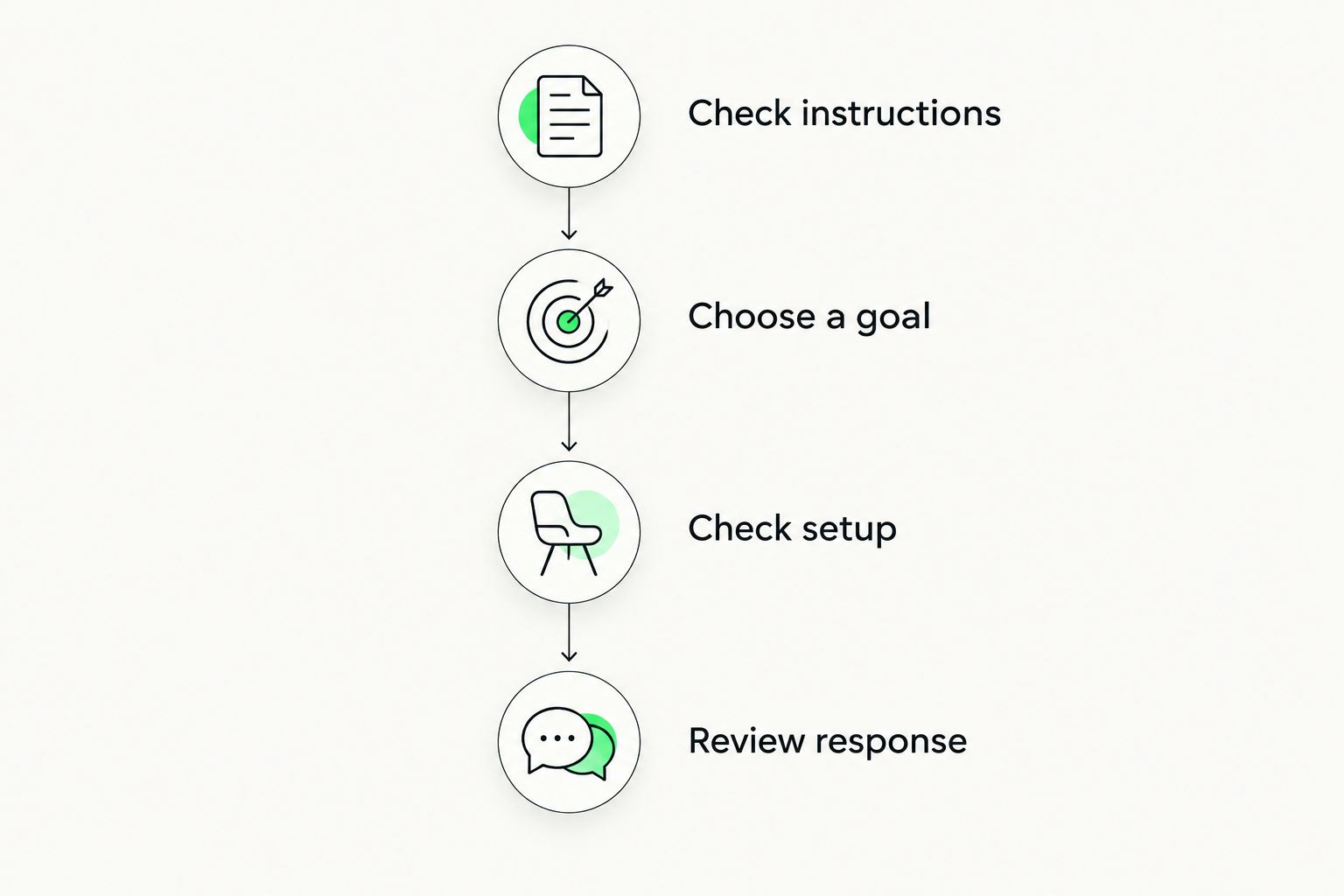
Before changing your 2026 exercise routine, take these steps with your treating team:
- Check instructions: Have your discharge exercise sheet and surgical restrictions available.
- Choose a goal: Describe a specific difficulty, such as standing from your usual chair.
- Check setup: Show the physiotherapist your furniture, walking aid and usual walking route.
- Review response: Explain what happens during exercise and afterwards, including changes in swelling or function.
For families, the most useful support is often practical: bring the exercise sheet, keep the walking route clear and write down questions. Do not pull on someone’s arms or change their exercises without instruction.
Professional referrers can share discharge documents, restrictions, current assistance needs and the person’s own goals, with consent. The family guide to home physiotherapy after knee replacement explains the broader appointment discussion.
Which exercises should you choose?
Choose the exercises your treating team has prescribed, not every exercise on this page. If bending is difficult, ask about heel slides; if standing is the problem, ask for a transfer assessment rather than adding more bed exercises yourself.
Foveria Health offers home physiotherapy with Simon across Greater Sydney, including people arranging care around Punchbowl and nearby suburbs. A home assessment lets you discuss goals in the setting where you need to manage them.
Discuss your home physiotherapy needs
Ask about assessment with Simon and explain your discharge instructions and everyday goals.
When exercise is not the next step
Seek prompt medical advice for new calf pain or swelling, increasing wound redness or discharge, fever, or a sudden deterioration in your ability to move. Do not wait for a routine physiotherapy appointment to discuss a possible post-operative complication.
Call 000 for sudden breathlessness, chest pain or collapse. Do not try another exercise to test whether these symptoms improve.
FAQ
What are the best exercises after knee replacement at home?
The best exercises are those prescribed for your current recovery stage and surgical instructions. Common options include heel slides, thigh squeezes, knee-straightening exercises, ankle pumps, sit-to-stand practice and supported walking.
How many repetitions should I do after knee replacement?
Follow the repetitions and frequency written in your discharge or physiotherapy plan. Ask your treating team to clarify the dose rather than copying a generic online programme.
Should I push through pain during knee replacement exercises?
Do not force movement through sharp pain. Ask your treating team what discomfort is acceptable for you and report increasing pain, swelling or reduced function.
Is walking enough after knee replacement?
Walking does not replace every part of a prescribed rehabilitation programme. Your plan can also include exercises targeting knee movement, muscle activation and transfers.
Can my family help me bend my knee?
Family members should not force your knee into a bend. Ask your physiotherapist to demonstrate any assistance that is appropriate and explain when to stop.
When can I stop using my walking frame or crutches?
Change your walking aid only after advice from your treating team. Safe progression depends on your walking control, balance and surgical instructions, not a fixed calendar date.
Can Foveria Health assess me at home after knee replacement?
Foveria Health provides in-home physiotherapy assessment and treatment across Greater Sydney. Explain your surgery, discharge instructions and support needs when enquiring about an appropriate appointment.
One last thing
For your 2026 recovery, make the chair part of the conversation. If you can manage exercises on the bed but cannot safely get out of your usual seat, tell your physiotherapist: that everyday task deserves its own assessment.