Best overall starting point: seated upper-back rotation. Best for a gentle neck movement break: a chin tuck. Best for moving beyond your chair: sit-to-stand. This 2026 guide compares six posture exercises for people who work from home, with practical guidance on choosing movements; Foveria Health offers home physiotherapy for people who need an individual assessment.
- The best posture exercises for people who work from home depend on comfort, symptoms and the movement you need.
- Seated upper-back rotation is a practical desk-based starting point; sit-to-stand adds movement beyond your chair.
- Foveria Health offers home physiotherapy for Greater Sydney clients who want individual assessment rather than a generic exercise list.
- Change position regularly. Stop an exercise that causes pain, dizziness, tingling or symptoms travelling into your limbs.
Why this matters
Working from home can mean long stretches in the same position, whether you use a study, kitchen table or shared space. Exercise offers a way to interrupt that stillness, but it does not make an unsuitable desk comfortable or explain persistent pain.
Your aim is comfortable movement, not holding a supposedly perfect posture all day. You do not need to keep your shoulders pulled back or your stomach braced throughout every meeting.
These options are general movement ideas, not treatment for an injury. If you have recent surgery, a fracture, significant osteoporosis or an existing exercise plan, ask your treating clinician which movements suit you before trying this list.
What makes the best home-working posture exercises in 2026?
Choose exercises using these criteria rather than how strongly you feel a stretch:
- Comfort: You can move without sharp pain, dizziness or symptoms spreading into an arm or leg.
- Desk access: The movement fits your space without unstable furniture or awkward reaching.
- Movement variety: Your routine includes more than repeatedly stretching the same area.
- Daily relevance: The movement relates to something you want to do more comfortably, such as turning or standing.
- Easy adjustment: You can reduce the range, use support or leave the exercise out.
A strong stretching sensation is not proof that an exercise is right for you. Choose control and comfort over reaching the end of your range.
Posture exercises at a glance
The ranking below reflects practical use during a working day, not evidence that one exercise treats every person's symptoms better than another.
| Exercise | Best for | Standout feature | Key limitation |
|---|---|---|---|
| Seated upper-back rotation | A desk-based movement break | Turning without leaving a stable chair | Unsuitable if turning provokes symptoms |
| Gentle chin tuck | Exploring comfortable neck movement | A small movement without equipment | Easy to force or confuse with looking down |
| Shoulder-blade movement | Releasing a fixed shoulder position | Lets you explore relaxed shoulder movement | Can become unnecessary constant bracing |
| Wall slide | Moving your arms beyond keyboard height | Uses a wall as a movement guide | Requires comfortable overhead movement |
| Sit-to-stand | Leaving a prolonged seated position | Practises a useful everyday task | Requires suitable balance and leg control |
| Standing hip-flexor stretch | Changing position around the front of the hips | Offers an alternative to more seated stretching | Balance or back discomfort can limit it |
1. Seated upper-back rotation: best for a desk-based break
Seated upper-back rotation involves gently turning your chest while keeping your pelvis facing forwards. It is a practical first option when you want a change from looking straight at a screen.
Sit on a stable chair with your feet supported. Rest your hands across your chest or on your thighs, then turn gently to one side and return to the middle. Explore the other side without pulling yourself around using the chair back.
Let your head follow comfortably rather than forcing your neck to turn further. Keep breathing normally.
Seated upper-back rotation pros:
- Fits beside a desk without floor space.
- Lets you compare how each direction feels.
- Is easy to make smaller.
Seated upper-back rotation cons:
- Turning can aggravate some neck or back symptoms.
- A swivel chair makes it harder to keep the movement controlled.
Best for: A seated worker wanting a simple change of direction.
Verdict: Try a small, comfortable turn; leave it out if turning brings on symptoms.
2. Gentle chin tuck: best for a small neck movement break
A chin tuck is a gentle backwards glide of your head, not a forceful nod or a stretch you push through. Think of moving your head backwards while keeping your eyes roughly level.
Sit comfortably and allow your shoulders to relax. Glide your head back slightly, then release. Avoid pressing your head against resistance or trying to flatten your neck.
The movement should stay small. It is an option for movement variety, not an instruction to hold your head rigidly in that position while you work.
Gentle chin tuck pros:
- Needs no equipment.
- Fits into a brief pause from typing.
- Can be performed with a small range.
Gentle chin tuck cons:
- It is easy to overdo the movement.
- It is not suitable when it triggers dizziness, headache or arm symptoms.
Best for: Someone seeking a gentle neck movement rather than a strong stretch.
Verdict: Try gently if comfortable; do not use it to force your neck into a fixed position.
3. Shoulder-blade movement: best for relaxing a fixed shoulder position
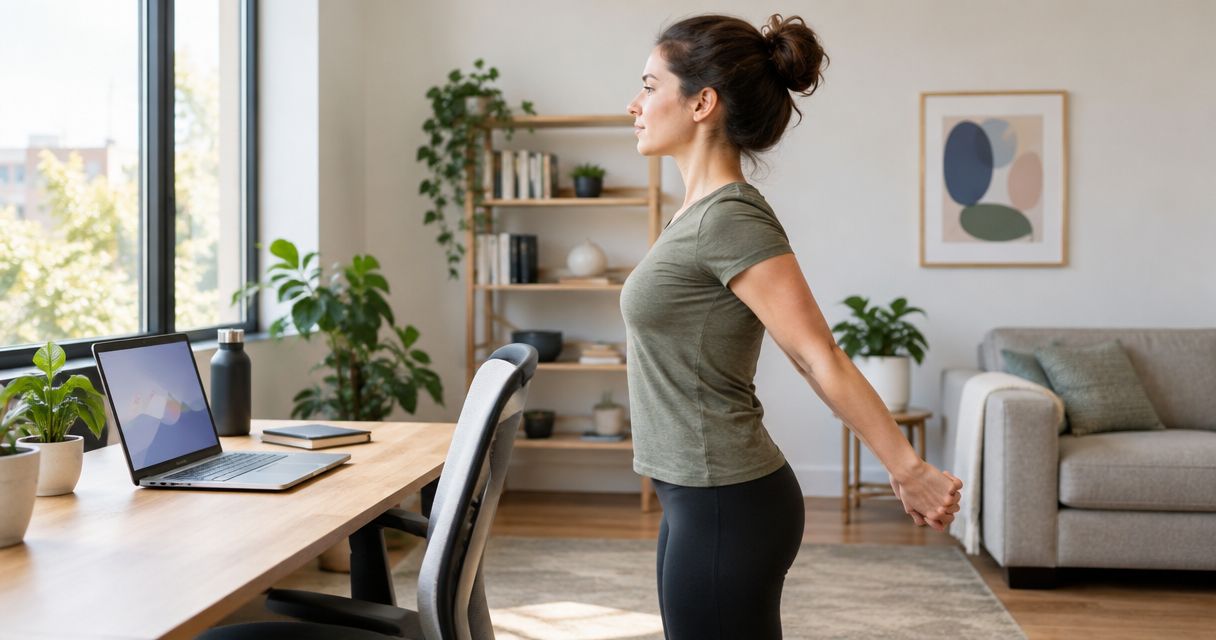
Shoulder-blade movement means gently moving your shoulders forwards and backwards, then letting them settle. The purpose is to explore movement, not squeeze your shoulder blades together for the rest of the day.
With your arms relaxed, allow your shoulders to move slightly forwards. Gently move them back, without lifting them towards your ears or arching your lower back. Return to a comfortable resting position.
If you notice yourself working hard to maintain the final position, release it. A movement break should not become another task you hold continuously.
Shoulder-blade movement pros:
- Works in sitting or supported standing.
- Needs no stretching equipment.
- Makes it easier to notice unnecessary shoulder bracing.
Shoulder-blade movement cons:
- Strong squeezing can feel uncomfortable.
- It does not replace assessment of persistent shoulder pain.
Best for: Someone who notices they hold their shoulders still while typing.
Verdict: Try relaxed movement; skip prolonged squeezing or rigid posture correction.
4. Wall slide: best for moving beyond keyboard height
A wall slide involves sliding your hands upwards along a wall within a comfortable range. It changes the arm position you use at a keyboard and gives you a supported guide for the movement.
Face a clear wall and place your hands against it at a comfortable height. Slide them upwards only as far as feels easy, then return. Stand close enough that you do not need to reach or lean heavily into the wall.
Do not chase extra height by arching your back or pushing through shoulder pain. You do not need to reach overhead for the movement to count.
Wall slide pros:
- Provides a clear movement guide.
- Takes you away from the keyboard position.
- Allows you to choose the height.
Wall slide cons:
- Shoulder pain can limit the movement.
- Reaching higher can encourage unwanted back arching.
Best for: Someone who comfortably raises their arms and wants an alternative to seated exercises.
Verdict: Try within your comfortable reach; leave painful overhead movement for assessment.
5. Sit-to-stand: best for breaking up prolonged sitting
Sit-to-stand means standing up from a stable chair and sitting back down with control. It adds a useful everyday task to a routine otherwise focused on the neck and shoulders.
Use a firm chair that will not roll or slide. Place your feet securely, lean forwards comfortably and stand, using armrests if needed. Return to sitting slowly enough to stay in control.
If standing is difficult, you feel unsteady or you need another person's help, seek individual guidance rather than practising alone. Supported seated movement is still an option.
Sit-to-stand pros:
- Interrupts a long seated spell.
- Practises an everyday movement.
- Can include armrest support when appropriate.
Sit-to-stand cons:
- Chair height changes how demanding it feels.
- Balance problems or leg pain can make independent practice unsuitable.
Best for: Someone who can stand safely and wants a movement break beyond stretching.
Verdict: Try from a stable chair if you can stand safely; seek guidance if you feel unsteady.
6. Standing hip-flexor stretch: best for changing hip position
A standing hip-flexor stretch gently changes the position around the front of the hip after sitting. It is not a test of flexibility, and a deeper lunge is not the goal.
Stand beside a stable support and place one foot behind the other in a short split stance. Keep your body upright and gently shift your weight forwards until you notice a mild stretch at the front of the rear hip. Change sides without rushing.
Avoid arching your lower back to create a stronger sensation. If standing balance is uncertain, leave this option out and ask for a supported alternative.
Standing hip-flexor stretch pros:
- Offers a standing alternative to desk exercises.
- Does not require kneeling on the floor.
- Allows a short stance and gentle range.
Standing hip-flexor stretch cons:
- Requires safe standing balance.
- Back arching can make the movement uncomfortable.
Best for: Someone comfortable in supported standing who wants to change hip position.
Verdict: Try a gentle supported version; skip it if balance or back symptoms are a concern.
How to choose a movement break
Start with the position you want to change, not a long routine you feel obliged to finish. Choose one comfortable option, notice how you feel afterwards and avoid adding several unfamiliar exercises together.
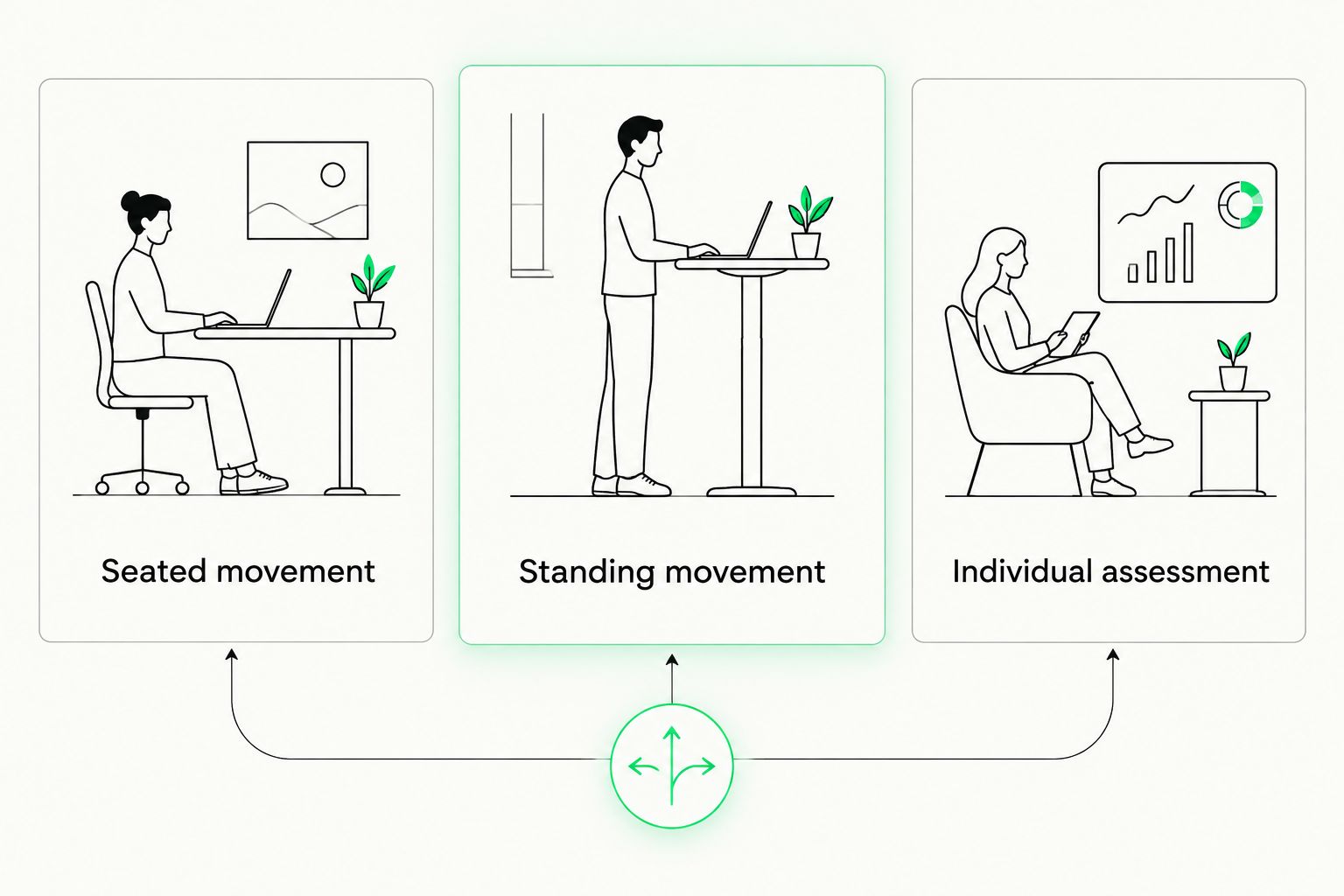
- Seated movement: Choose a gentle upper-back turn or shoulder movement when staying seated suits you.
- Standing movement: Choose sit-to-stand when you can stand safely.
- Individual assessment: Choose guidance when pain, balance difficulties or an existing condition makes selection unclear.
Build movement around natural pauses, such as finishing a task or leaving a meeting. You do not need to keep correcting yourself throughout the day.
How these exercises were ranked
This 2026 guide ranks exercises by desk access, ease of adjustment and the different movements they offer. The first option is a practical starting point, not a universal prescription or a claim of better clinical results.
Your own response matters more than the ranking. Stop an exercise that causes sharp pain, dizziness, tingling or symptoms travelling into a limb; seek clinical advice rather than repeatedly testing it.
Which posture exercises should you choose?
For a simple 2026 starting point, choose one comfortable seated movement and, if safe, a break from sitting. Add other exercises only when they fit your needs, rather than treating all six as a required programme.
Foveria Health's home physiotherapy suits Greater Sydney clients seeking individual assessment rather than a generic posture-exercise routine. You can discuss your goals with Simon, including the tasks and positions that are difficult at home.
For ongoing back symptoms, the home physiotherapy appointment guide for back pain explains another route to individual support. Foveria Health serves clients across Greater Sydney, including people seeking care in Punchbowl and nearby suburbs.
Discuss your home physiotherapy needs
Ask about an individual assessment and explain what you want to do more comfortably at home.
FAQ
What are the best posture exercises for people who work from home?
Seated upper-back rotation, gentle chin tucks and sit-to-stand are practical options for different movement needs. Choose according to comfort and safety rather than assuming every exercise belongs in your routine.
Can posture exercises fix my posture permanently?
Posture exercises do not create a permanent position you need to hold. A more useful goal is comfortable movement and the ability to change position during your day.
Should I stretch my neck if working at home makes it sore?
Do not force a sore neck into a stretch. Seek assessment if symptoms persist, worsen or include tingling, weakness, dizziness or pain travelling into your arm.
Is standing all day better than sitting at my desk?
Standing all day is not the goal. Changing between comfortable positions and including movement is more useful than replacing one prolonged position with another.
How many posture exercises should I do each day?
There is no single exercise count suitable for everyone. Start with a comfortable movement and ask a physiotherapist for an individual plan if you need guidance on frequency or progression.
Can I try these exercises after surgery or with osteoporosis?
Ask your treating clinician before trying this general exercise list after surgery or with significant osteoporosis. Movement restrictions and suitable exercises depend on your circumstances.
Can Foveria Health assess me at home in 2026?
Foveria Health offers in-home physiotherapy assessment and treatment across Greater Sydney. Ask about your suburb and explain your symptoms, access needs and goals when enquiring.
One last thing
The best change to your 2026 workday might be permission to stop holding yourself so stiffly. Let your shoulders rest, change position and choose movement you can do comfortably—not the exercise that looks most impressive.