Best starting option for stiffness: gentle joint movements. Best for chair transfers: sit-to-stand. Best for everyday endurance: short walks. This 2026 guide to the best exercises for arthritis pain at home explains how to choose movements that suit your affected joints, balance and daily goals.
- The best exercises for arthritis pain at home depend on your affected joints, symptoms and everyday goals.
- Gentle joint movements suit stiffness; sit-to-stand suits practising chair transfers; short walks build activity into your day.
- Foveria Health offers home physiotherapy with Simon for people wanting an individual assessment in Greater Sydney.
- Stop exercises that cause sharp pain, increasing swelling or a feeling that your joint will give way.
Why this matters
Arthritis can make ordinary tasks feel harder: getting out of bed, standing from a chair or opening your hand around a mug. Exercise selection should start with the task you want to make easier, not the longest list of movements.
Arthritis is not one condition, and an exercise that suits one person will not suit everyone. Your diagnosis, recent symptoms, previous surgery and other health conditions all matter.
Foveria Health home physiotherapy suits people who want Simon to assess movement in the setting where they use it every day. You can learn about the practice through Foveria Health.
What makes the best home exercises for arthritis?
Use these criteria before choosing an exercise:
- Joint relevance: The movement addresses the joint or task troubling you.
- Manageable symptoms: You can move without sharp pain or steadily increasing discomfort.
- Safe support: Your chair, bench or usual walking aid provides the support you need.
- Everyday usefulness: The exercise connects with walking, dressing, transfers or another personal goal.
- Easy adjustment: You can reduce the range, resistance or amount when needed.
- Repeatability: The routine fits your home and energy rather than becoming another difficult chore.
The options below cover movement, strength and walking. They are starting points for discussion, not a personalised prescription or a requirement to complete every exercise.
Arthritis exercises at a glance
| Exercise | Best for | Main purpose | Key limitation |
|---|---|---|---|
| Gentle joint movements | Stiffness and getting moving | Practises comfortable bending and straightening | Does not replace strengthening |
| Sit-to-stand | Getting out of chairs | Practises an everyday transfer | Difficult if the chair is too low or balance is poor |
| Short walks | Everyday endurance | Builds walking into your routine | Weight-bearing can aggravate some painful joints |
| Supported heel raises | Push-off during walking | Works the calf muscles | Needs secure support and steady balance |
| Seated knee extension | Thigh muscle work while seated | Straightens the knee against gravity | Does not practise standing or balance |
| Gentle hand opening and closing | Finger movement | Practises opening and closing the hand | Unsuitable for forceful gripping through pain |
1. Gentle joint movements: best for easing into activity
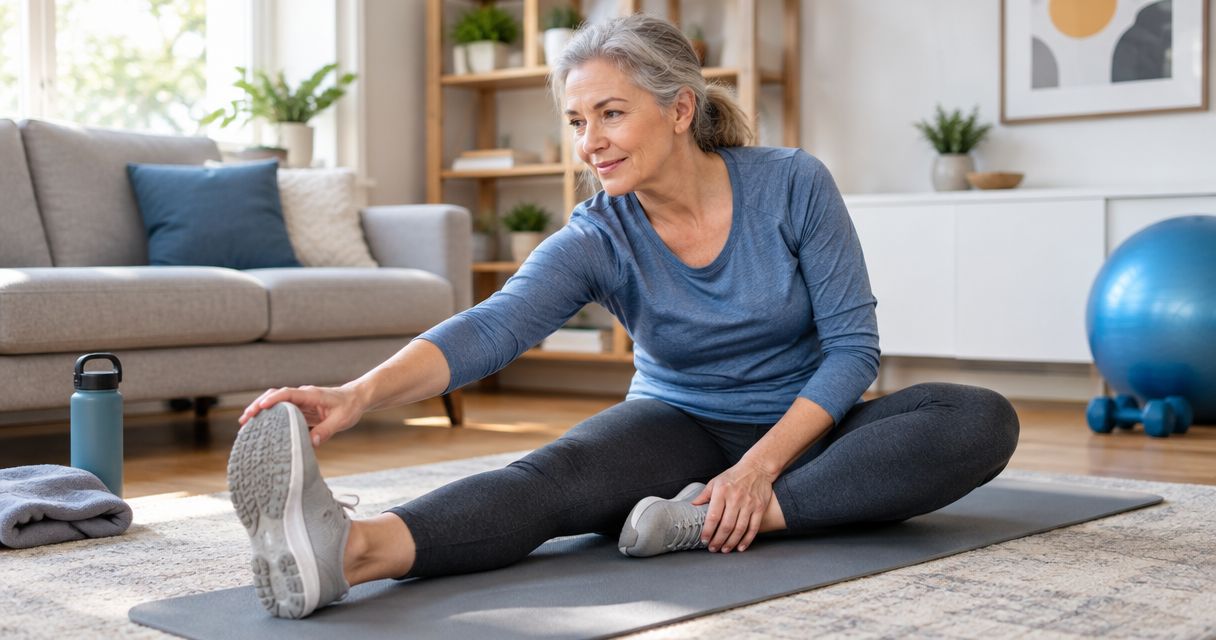
Gentle joint movements take an affected joint through a comfortable range without forcing the end position. Examples include slowly bending and straightening your knee while seated, or opening and relaxing your hand.
Best for: People whose main barrier is stiffness rather than difficulty carrying their weight.
Choose a supported position. Move slowly, stop short of a painful limit and return with control; do not push harder simply because the joint feels stiff.
Gentle joint movement pros:
- You can practise many movements while seated.
- The range is easy to adjust.
- No exercise equipment is needed for simple movements.
Gentle joint movement cons:
- It does not provide the same muscle challenge as strengthening.
- Forcing the range can aggravate symptoms.
Notice whether movement feels easier afterwards and whether discomfort settles. If a joint becomes increasingly painful, swollen or difficult to move, stop and seek advice rather than repeatedly trying to loosen it.
Verdict: Try gentle movement as a starting point for stiffness, without forcing the joint.
2. Sit-to-stand: best for practising chair transfers
Sit-to-stand involves rising from a stable chair and sitting back down with control. It directly rehearses a task you use throughout the day.
Best for: People who want to work towards easier chair transfers and can practise safely with appropriate support.
Use a firm chair that will not slide. Bring your feet into a comfortable position, lean your body forwards and stand using the armrests if needed; reach back before lowering yourself steadily.
Sit-to-stand pros:
- It connects exercise with an everyday goal.
- Armrests allow you to use assistance.
- The movement involves several leg muscles together.
Sit-to-stand cons:
- A low, soft chair makes the task harder.
- Pain, dizziness or poor balance can make unsupported practice unsafe.
Do not remove hand support just to make the exercise look more advanced. If standing requires someone to lift you, ask a physiotherapist to assess the transfer before practising it as an exercise.
Verdict: Choose sit-to-stand when chair transfers are your goal and the setup is safe.
3. Short walks: best for everyday endurance
Walking is a practical way to include movement in your day. At home, that might mean a clear indoor route rather than a long outdoor walk.
Best for: People who want to maintain or build walking activity and can walk safely with their usual support.
Choose an even, uncluttered route. Wear secure footwear, use your prescribed walking aid and finish before tiredness makes your steps less steady.
Short walking pros:
- It practises a useful daily activity.
- You can divide activity into smaller outings.
- Indoor walking avoids some outdoor obstacles.
Short walking cons:
- Painful feet, knees or hips can limit tolerance.
- Walking alone does not address every strength or balance need.
A shorter, comfortable route is more useful than repeatedly pushing until you limp. If walking has become noticeably harder, an assessment can help distinguish a need for exercise adjustment from a need for further medical review.
Verdict: Choose short walks for everyday activity, not as a test of pain tolerance.
4. Supported heel raises: best for calf strength
A heel raise involves lifting your heels while keeping the front of your feet on the floor. The calf muscles contribute to pushing off as you walk.
Best for: People who can stand steadily at a secure bench and want calf muscle exercise.
Face a fixed bench and place your hands on it. Lift both heels within a comfortable range, then lower slowly; keep your weight shared rather than rolling onto the outside of your feet.
Supported heel raise pros:
- A fixed bench provides hand support.
- The movement needs little floor space.
- You can make the lift smaller when needed.
Supported heel raise cons:
- Standing practice still requires balance.
- Painful toes, feet or ankles can make the movement unsuitable.
Do not use a movable chair as your only support. If you cannot stand comfortably or need substantial help to remain upright, ask about a seated alternative rather than attempting this standing exercise.
Verdict: Try supported heel raises only when standing and foot loading feel manageable.
5. Seated knee extension: best for seated thigh muscle work
Seated knee extension means straightening your knee while sitting, then lowering your foot with control. It works the muscles at the front of your thigh without requiring you to balance in standing.
Best for: People who need a seated option for thigh muscle exercise.
Sit in a stable chair with your back supported. Slowly straighten one knee as far as feels comfortable, then lower your foot; avoid flicking the leg or forcing the knee straight.
Seated knee extension pros:
- It removes the standing balance demand.
- You can work each leg separately.
- The movement is easy to observe and adjust.
Seated knee extension cons:
- Straightening the knee can still provoke symptoms.
- It does not rehearse standing, stepping or transfers.
Start without adding ankle weights unless a clinician has recommended them. If you have had recent surgery, follow your treating team's instructions rather than assuming a general arthritis exercise is suitable.
Verdict: Choose seated knee extension for seated muscle work when the movement is comfortable.
6. Gentle hand opening and closing: best for finger movement
Slowly opening and closing your hand practises finger movement without requiring a strong grip. Keep the movement relaxed rather than squeezing tightly into a fist.
Best for: People whose main goal is comfortable finger movement for everyday hand use.
Support your forearm on a table. Gently open your fingers, then curl them towards your palm only as far as feels comfortable; leave out any movement that causes sharp pain or catching.
Gentle hand movement pros:
- You can practise it sitting at a table.
- No squeezing tool is required.
- Each finger's comfortable range can guide the movement.
Gentle hand movement cons:
- It does not provide a full hand-strengthening programme.
- Swollen or painful finger joints need individual adjustment.
A tighter fist is not automatically a better result. If gripping, dressing or handling cutlery remains difficult, ask about assessment of the task itself as well as the hand movement.
Verdict: Choose relaxed hand movement for finger mobility, not forceful squeezing through pain.
How to put the options together
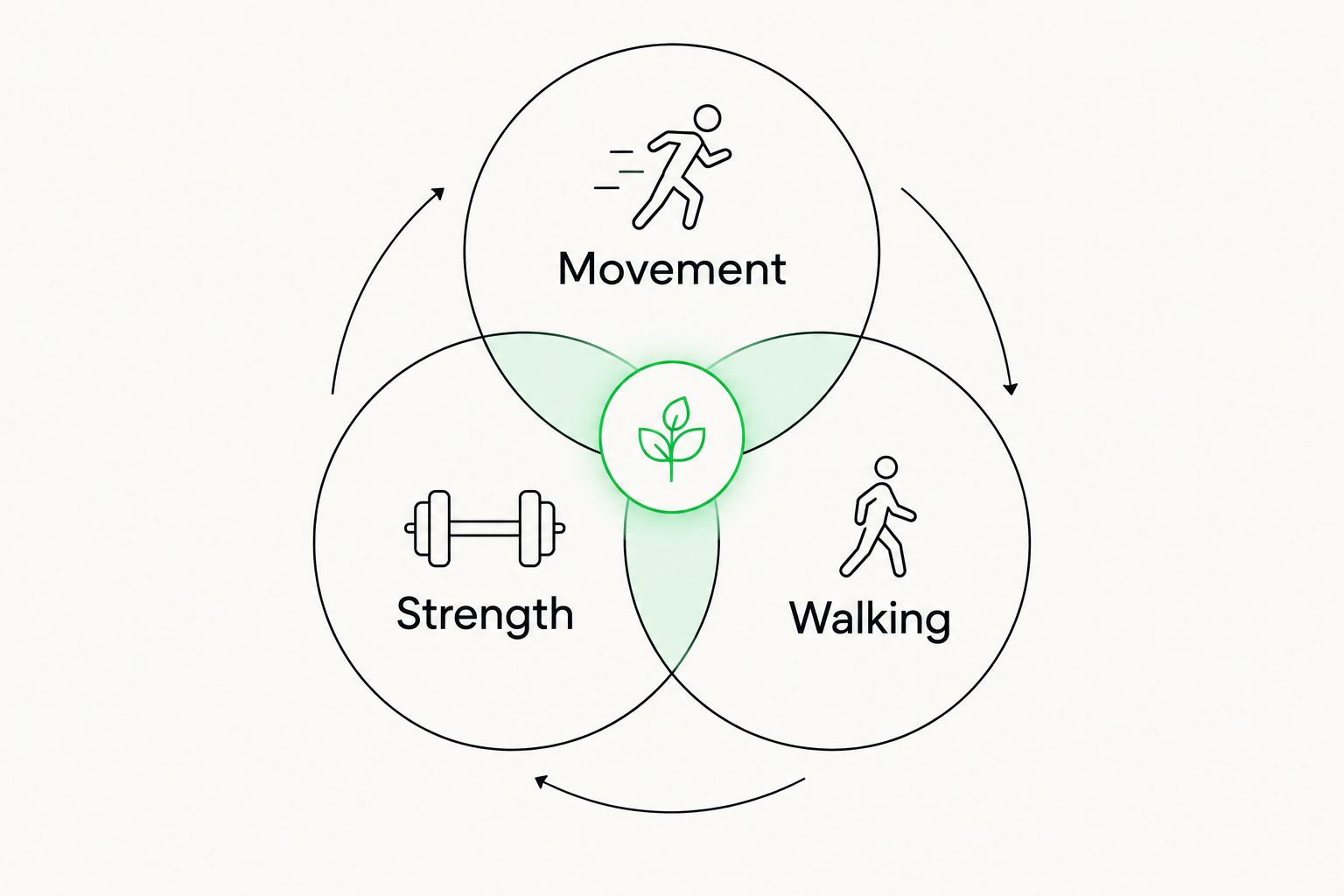
Think about three different needs rather than collecting more exercises:
- Movement: Practise a comfortable joint range.
- Strength: Work on a muscle or an everyday task.
- Walking: Include activity that matches your current walking ability.
You do not need every category in every session. A person with sore hands needs a different plan from someone whose main difficulty is rising from a chair.
There is no single repetition target that suits every person with arthritis. Ask your physiotherapist to specify the amount, rest and progression for your situation, including what to do when symptoms change.
Change one part of your routine at a time. Keep a brief note of the exercise, how it felt and whether your usual activities were harder afterwards; that information helps make the next adjustment more specific.
When to pause and ask for help
Stop if an exercise causes sharp pain, a joint giving way, dizziness or increasing swelling. Seek advice if symptoms remain worse afterwards or your usual movement has changed.
A newly hot, swollen joint with fever or feeling unwell needs urgent medical assessment. Sudden inability to bear weight, particularly after an injury, also needs prompt medical attention rather than another exercise attempt.
During a flare, do not assume your usual strengthening routine remains appropriate. Ask your treating clinician which movements to keep, reduce or pause, especially if you have inflammatory arthritis or recent surgery.
How these exercises were ranked
The order reflects distinct uses: getting a stiff joint moving, practising chair transfers, walking, calf work, seated thigh work and finger movement. It is not a claim that one exercise treats every type of arthritis better than another.
The selection prioritises everyday relevance, adjustable movement and simple home setups. None requires buying equipment, but each has limits that depend on your symptoms and safety.
Which arthritis exercises should you choose?
Start with the everyday task you want to improve. Choose comfortable joint movement for stiffness, sit-to-stand for chair transfers, or a short walking route for walking activity.
If several joints hurt, you feel unsteady, or you are unsure what is safe, an individual assessment is the better next step. Foveria Health offers in-home assessment and treatment across Greater Sydney, including care focused on your goals with Simon.
Families, home care providers and support coordinators can help by sharing the person's priorities, current assistance and relevant treatment instructions. For help deciding what to ask, read how to choose mobile physiotherapy in Sydney.
FAQ
What's the best exercise for arthritis pain at home?
The best exercise depends on your affected joints and daily goals. Gentle joint movement suits stiffness, while supported strengthening and walking address different needs; an assessment helps you choose safely.
Should I exercise if my arthritis hurts?
Do not push through sharp pain, increasing swelling or a joint giving way. Ask your treating clinician how to adjust activity during a flare and what level of discomfort is acceptable for your condition.
How many repetitions should I do?
Your repetition target should match your symptoms, strength and current activity. Ask a physiotherapist for an individual starting amount and clear instructions for increasing or reducing it.
Is walking better than strengthening for arthritis?
Walking and strengthening serve different purposes rather than replacing each other. Walking practises endurance and everyday mobility, while strengthening targets muscles and tasks such as rising from a chair.
Can an older person do arthritis exercises while seated?
Yes, some joint movements and muscle exercises can be done while seated. A seated position removes the standing balance demand, but the movement still needs to suit the person's joints and health.
Can Foveria Health help me choose exercises at home?
Foveria Health provides in-home physiotherapy assessment and treatment across Greater Sydney. Simon can assess your movement and discuss exercises around your goals, home environment and current abilities.
One last thing
The chair you practise from matters. A low sofa and a firm chair with armrests create different demands, so struggling with one does not mean you should simply push harder.
Show your physiotherapist the actual chair, doorway or household task that troubles you. That detail makes the exercise discussion about your life, not just a movement on a page.