Best for settling your breathing: breathing control. Best for a slower out-breath: pursed-lip breathing. Best for activity: paced breathing. The best breathing techniques for respiratory conditions at home depend on whether you need help with breathlessness, everyday movement or clearing mucus—not on which exercise ranks highest.
- The best breathing techniques for respiratory conditions at home match the symptom and your existing treatment plan.
- Breathing control suits quiet recovery; pursed-lip breathing encourages a slower, unforced out-breath.
- Paced breathing links breathing with movement; active cycle of breathing techniques targets mucus clearance.
- Foveria Health offers respiratory physiotherapy at home in Greater Sydney for people needing individual assessment.
- Sudden or severe breathing difficulty needs urgent medical help, not another breathing exercise.
Why this matters
Breathlessness and difficulty clearing mucus are different problems. An exercise intended to move mucus is not automatically the right choice when you feel short of breath, and repeatedly taking large breaths can make you uncomfortable.
Foveria Health is a suitable option for Greater Sydney clients seeking respiratory physiotherapy assessment at home. You can discuss your needs with Simon through Foveria Health, including what you find difficult and what you want to manage more comfortably.
This 2026 guide explains the purpose and limits of each approach. It does not diagnose the cause of breathlessness or replace your prescribed medicines, respiratory action plan or individual advice.
Call 000 for severe breathing difficulty, particularly if you cannot speak normally, have chest pain, become confused, or your lips look blue or grey. Do not wait for a physiotherapy appointment. New or worsening breathlessness also needs medical advice; the guide to when breathlessness needs urgent assessment explains this distinction.
What makes the best breathing technique?
Choose a technique by its purpose and your response, rather than treating this list as a routine to complete.
- Symptom match: Is the main problem breathlessness, activity-related discomfort or mucus that is difficult to clear?
- Comfort: The technique should not require straining, forced breaths or pushing through dizziness.
- Condition fit: COPD, asthma and bronchiectasis do not all need the same breathing advice.
- Everyday usefulness: You should understand when to use it, such as after walking or during an established airway-clearance routine.
- Clear limits: You need to know when to stop and when symptoms require medical help.
- Individual teaching: A physiotherapist can check your technique and adapt it to your breathing pattern and goals.
Breathing techniques at a glance
These options have different jobs. The order below prioritises matching the technique to a clear home-care need, not claiming that one treats every respiratory condition.
| Technique | Best for | Main feature | Key limitation |
|---|---|---|---|
| Breathing control | Quiet recovery between activities | Gentle breathing with relaxed shoulders | Does not replace treatment for worsening symptoms |
| Pursed-lip breathing | Slowing the out-breath | Breathing out through softly narrowed lips | Forcing the breath can increase discomfort |
| Paced breathing | Everyday movement | Linking breathing with effort | Does not make unsafe activity safe |
| Active cycle of breathing techniques | Clearing troublesome mucus | Alternating breathing control, expansion breaths and huffing | Needs individual teaching and a reason to clear mucus |
| Diaphragmatic breathing | Exploring a more comfortable breathing pattern | Gentle lower-rib and abdominal movement | Can feel harder for some people, including those with COPD |
1. Breathing control: best for quiet recovery
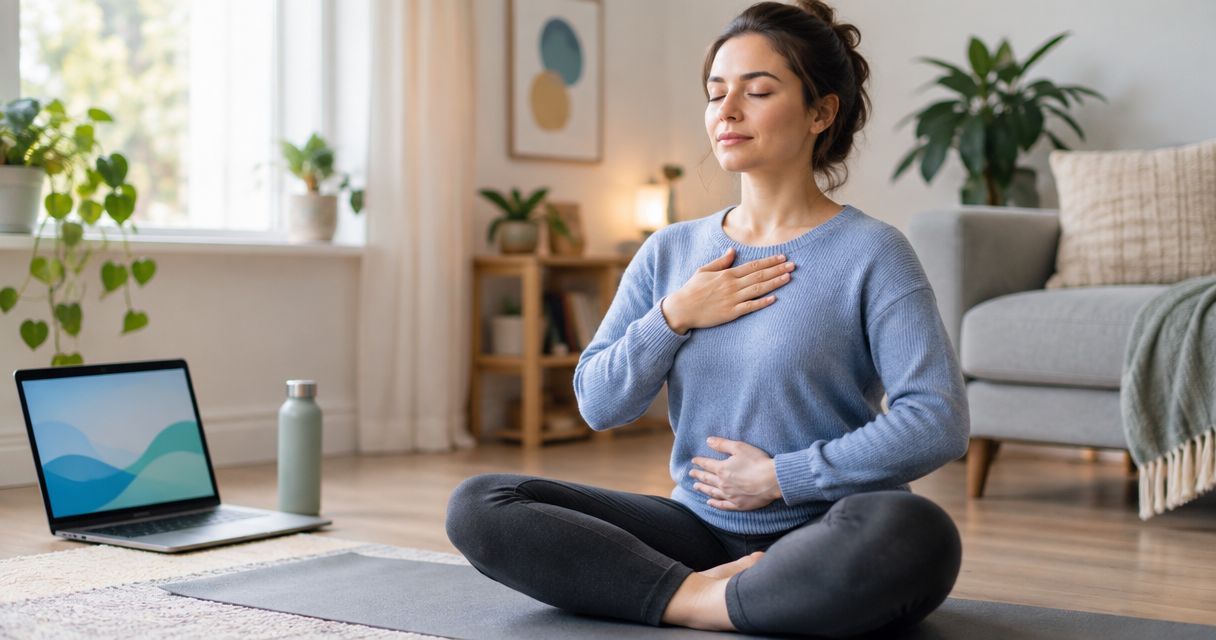
Breathing control means allowing gentle, comfortable breaths while reducing unnecessary tension around your shoulders and upper chest. It is also a resting phase within some airway-clearance routines.
Sit in a supported position that feels comfortable. Let your shoulders soften and allow an easy breath in and out, without trying to fill your lungs completely or hold your breath.
Breathing control pros:
- Does not need equipment.
- Gives you a simple focus during a familiar recovery pause.
- Can sit between more active parts of an individually taught breathing routine.
Breathing control cons:
- Focusing closely on breathing feels uncomfortable for some people.
- It does not explain why breathlessness is happening.
- It is not an appropriate response to emergency symptoms.
Best for: Someone who has been shown how to use quiet breathing during recovery from familiar activity.
In 2026, the useful question is still whether breathing control feels comfortable for you—not whether you can take an unusually deep breath. Stop if the exercise makes breathing harder or causes dizziness.
Verdict: Use for gentle recovery when it fits your existing care advice.
2. Pursed-lip breathing: best for a slower out-breath
Pursed-lip breathing involves breathing in gently, then breathing out through lips loosely shaped as though you are cooling food. It is commonly taught to people with COPD to help slow their breathing, particularly the out-breath.
Keep your lips soft rather than tightly pressed together. Let air leave steadily; do not squeeze your chest or force your lungs empty.
A commonly taught example is breathing in for 2 counts and out for 4 counts. These counts are a teaching aid, not a target to struggle towards: use a comfortable rhythm and follow your clinician's instructions.
Pursed-lip breathing pros:
- Needs no equipment.
- Provides a clear cue for slowing the out-breath.
- Can be used during a familiar recovery pause when individually advised.
Pursed-lip breathing cons:
- Rigid counting can feel uncomfortable.
- Forceful breathing defeats the gentle approach.
- It does not replace prescribed treatment during a flare-up.
Best for: Someone, particularly a person with COPD, who has been advised to practise a slower, relaxed out-breath.
Verdict: Use gently if it helps; do not force a longer breath.
3. Paced breathing: best for everyday movement
Paced breathing links your breathing rhythm with a task. One common approach is to breathe out during effort, such as the effort of standing from a chair, rather than holding your breath.
The aim is coordination, not completing more activity at any cost. Choose a familiar task and ask your physiotherapist how to match breathing, movement and rests to your ability.
Paced breathing pros:
- Connects breathing practice with a meaningful daily activity.
- Helps you notice unintentional breath-holding.
- Can be adapted to the task rather than a fixed exercise schedule.
Paced breathing cons:
- Coordinating movement and breathing takes practice.
- Stairs and transfers can involve balance or strength difficulties as well as breathlessness.
- A breathing rhythm cannot make an unsuitable activity safe.
Best for: Someone seeking guidance on managing familiar activities such as dressing, walking indoors or standing up.
For your 2026 home-care plan, describe the actual task that causes trouble. “I stop halfway through getting dressed” gives a physiotherapist more useful information than “I need breathing exercises”.
Verdict: Use alongside an appropriate activity and rest plan, not to push through symptoms.
4. Active cycle of breathing techniques: best for mucus clearance
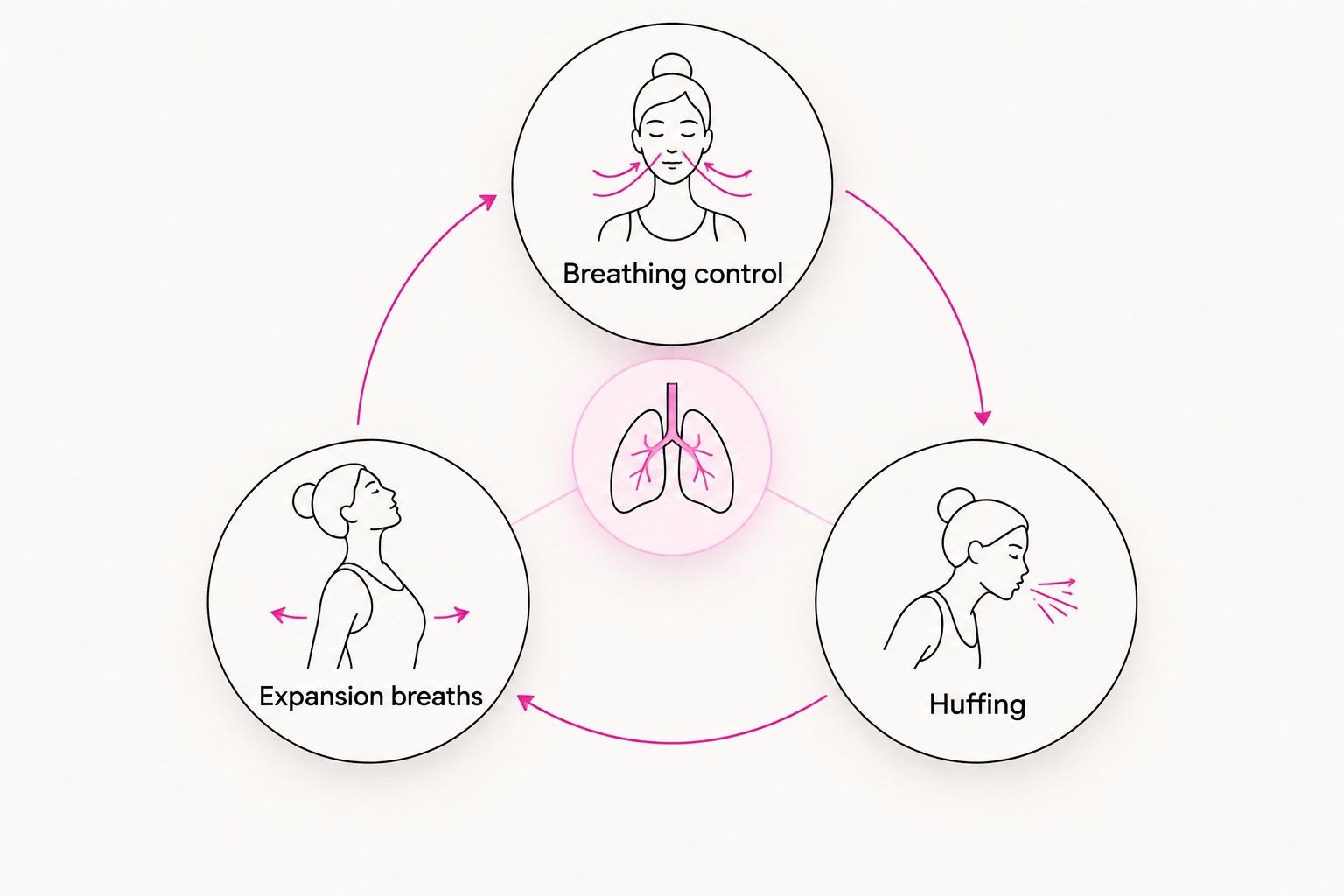
Active cycle of breathing techniques, often shortened to ACBT, is an airway-clearance approach. It combines 3 stages: breathing control, thoracic expansion breaths and forced expiration, often called huffing.
ACBT is different from a general relaxation exercise. A respiratory physiotherapist should establish whether you need it and teach the amount of each part that suits you.
Breathing control
Gentle breathing provides a resting phase. You return to comfortable breathing between the more active parts of the routine.
Expansion breaths
These are deeper breaths used within the airway-clearance cycle. The depth, pace and any pauses need to suit your condition rather than follow a generic online prescription.
Huffing
A huff is an open-mouth breath out, similar to steaming a mirror. It is different from repeatedly coughing as hard as possible; your physiotherapist can demonstrate the appropriate effort.
ACBT pros:
- Has a specific purpose when mucus clearance is needed.
- Includes recovery breathing between active stages.
- Can be adapted through individual assessment and teaching.
ACBT cons:
- Is not necessary for every person with breathlessness.
- Repeated huffing or coughing can be tiring.
- Technique and symptom changes need attention, especially if you cough up blood or become more breathless.
Best for: Someone with troublesome mucus who has been assessed and taught an airway-clearance plan.
Verdict: Seek individual teaching before starting an ACBT routine.
5. Diaphragmatic breathing: best for individual breathing-pattern work
Diaphragmatic breathing encourages gentle movement around the lower ribs and abdomen while limiting unnecessary upper-chest tension. It is sometimes called belly breathing, although pushing your stomach out is not the goal.
A physiotherapist can help you explore whether this approach feels easier or harder. It is not automatically the best option for everyone with a respiratory condition, and some people with COPD find it uncomfortable or more effortful.
Diaphragmatic breathing pros:
- Can help you recognise where breathing movement occurs.
- Does not require specialist equipment.
- Can be explored in a supported position during assessment.
Diaphragmatic breathing cons:
- Can increase breathing effort for some people.
- Trying to keep the chest completely still creates unnecessary tension.
- Is not a general treatment for every cause of breathlessness.
Best for: Someone whose clinician recommends individual breathing-pattern practice after assessment.
Verdict: Hold off on a fixed routine until you know it suits your breathing.
How these techniques were ranked
This 2026 guide ranks techniques by their distinct purpose, ease of understanding and need for individual instruction. It does not rank them by a promised improvement or suggest that completing all five produces a better result.
Breathing control and pursed-lip breathing address breathing comfort. Paced breathing relates to activity, ACBT addresses mucus clearance, and diaphragmatic breathing needs particular attention to individual suitability.
Which breathing technique should you choose?
Start with your main difficulty and your current care plan. If a clinician has already taught you a comfortable technique, use that advice rather than replacing it with a different routine from a list.
If you have unexplained breathlessness, seek medical assessment first. If you have an established respiratory condition but are unsure about technique, ask for individual teaching rather than practising every option.
Foveria Health offers respiratory physiotherapy at home across Greater Sydney. For people in Punchbowl and nearby suburbs, as elsewhere in Greater Sydney, an enquiry can explain your symptoms, home circumstances and goals without assuming a particular treatment is right.
Make your enquiry useful
Share the following information when arranging an assessment:
- Your diagnosed respiratory condition, if known.
- Whether the main concern is breathlessness, mucus or difficulty with activity.
- Any recent deterioration, hospital admission or change in treatment.
- Your existing respiratory action plan and exercises.
- The everyday activity you want help with.
- Whether you want a family member, carer or support coordinator involved.
Professional referrers should also describe the person's usual function and any relevant precautions, with consent. NDIS participants and home care providers can ask what documentation is needed; do not assume a particular appointment or treatment is funded.
Discuss your home physiotherapy needs
Tell Simon about your breathing concerns, daily activities and goals for an individual assessment.
FAQ
What's the best breathing technique for breathlessness at home?
There is no single best technique for every cause of breathlessness. Breathing control or pursed-lip breathing can be useful when individually advised, but new or worsening symptoms need medical assessment.
Is pursed-lip breathing better than belly breathing for COPD?
Pursed-lip breathing is commonly taught for COPD, while belly breathing does not suit everyone. Ask your clinician which approach feels comfortable and fits your breathing pattern rather than treating either as compulsory.
Should I take deep breaths when I feel short of breath?
Do not force repeated deep breaths to manage unexplained breathlessness. Use your established treatment plan and seek medical help for new, worsening or severe symptoms.
Which breathing technique helps clear mucus?
Active cycle of breathing techniques is an airway-clearance approach used when mucus clearance is needed. A respiratory physiotherapist should assess suitability and teach the breathing, huffing and recovery components.
How long should I practise breathing exercises at home?
Use the duration and frequency recommended for your individual condition. Stop if practice causes dizziness, pain or worsening breathlessness, and ask your clinician to review the technique.
Can a family member help with breathing exercises?
A family member can support a routine that has been taught and agreed with you. Ask them to learn the instructions and warning signs rather than pressuring you to continue through symptoms.
Can I arrange respiratory physiotherapy at home in Sydney?
Foveria Health provides respiratory physiotherapy at home across Greater Sydney. Discuss your needs with Simon to establish whether an assessment is appropriate; urgent breathing problems need medical care instead.
One last thing
The most useful breathing exercise is not necessarily the deepest breath. A comfortable, appropriately taught technique has a clearer purpose than trying to fill your lungs as much as possible.
For your next appointment in 2026, write down one activity that matters to you and what interrupts it. That gives the conversation a practical starting point: your daily life, not a breathing target.