Best starting option for uncomplicated neck stiffness: gentle neck turns. Best for small, controlled movement: chin nods. Best for shoulder movement breaks: shoulder blade squeezes. This 2026 guide explains how to approach these exercises at home, when to stop, and when an assessment comes first.
- The best exercises for neck pain at home depend on your symptoms; gentle neck turns suit comfortable movement practice.
- Chin nods and shoulder blade squeezes offer different movement options, not guaranteed pain relief.
- Stop exercises that cause dizziness, spreading arm pain, numbness or weakness, and seek medical advice.
- Foveria Health offers home physiotherapy in Greater Sydney for people who want an individual assessment with Simon.
Why this matters
Neck pain can make reading, dressing, sleeping and looking over your shoulder uncomfortable. Choosing an exercise because it looks simple does not establish whether it suits the reason for your pain.
There is no single best neck exercise for everyone. This guide focuses on gentle movement options for uncomplicated stiffness, not rehabilitation after an injury or surgery. New, severe, worsening or unexplained symptoms need assessment rather than a longer exercise list.
Foveria Health offers home physiotherapy for Greater Sydney clients who want an individual assessment with Simon. You can ask Foveria Health about your symptoms, your goals and whether an appointment at home suits your needs.
Before exercising: check whether you need help
Do not start neck exercises after a significant fall, collision or other neck injury without appropriate medical advice. Follow your treating team's instructions after surgery or if you have a known condition affecting neck stability.
Call 000 in Australia for a medical emergency, including sudden weakness, facial drooping, difficulty speaking, or a sudden severe headache with concerning neurological symptoms. Do not try stretching to see whether these symptoms settle.
Seek prompt medical advice for neck pain with fever, feeling seriously unwell, new balance problems, clumsy hands, or new arm or leg weakness. New numbness or pain spreading down an arm also deserves assessment, particularly when it is worsening.
Stop an exercise if it brings on dizziness, visual disturbance, tingling, numbness or increasing pain. This is not a test of how much discomfort you can tolerate.
What makes the best exercises for neck pain at home?
For this 2026 guide, a useful home exercise meets these criteria:
- Comfortable movement: you control the range rather than pushing into pain.
- Clear purpose: you understand whether the exercise practises turning, nodding, shoulder movement or upper-back movement.
- Simple setup: you can use a stable chair or an ordinary walking space.
- Easy adjustment: you can make the movement smaller or stop without assistance.
- Everyday relevance: the exercise connects with something you want to do more comfortably.
An exercise is not better because it produces a stronger stretch. Avoid pulling your head with your hands, forcing a movement, or asking someone else to push your neck further.
Home neck exercises at a glance
These rankings organise exercises by their purpose, not proven superiority over one another. Walking appears as a movement-break option, rather than a specific neck exercise.
| Rank and option | Best for | What it involves | Main limitation |
|---|---|---|---|
| 1. Gentle neck turns | Practising comfortable rotation | Slowly looking left and right | Unsuitable if turning causes dizziness or spreading symptoms |
| 2. Small chin nods | Practising controlled nodding | A small, relaxed nod without forcing the chin backwards | Easy to turn into a forceful movement |
| 3. Shoulder blade squeezes | Adding shoulder movement | Gently drawing shoulder blades towards each other | Does not directly address every cause of neck pain |
| 4. Seated upper-back extension | Adding upper-back movement | Gently straightening the upper back with the neck relaxed | Needs individual advice with spinal injury or fracture concerns |
| 5. Comfortable walking breaks | Breaking up prolonged sitting | Walking at a comfortable pace in a suitable space | Requires a separate safety plan if walking or balance is difficult |
1. Gentle neck turns: best for comfortable rotation
Gentle neck turns practise the movement you use to look beside you. Keep the movement easy; reaching a particular angle is not the goal.
Sit in a stable chair with your feet supported. Slowly turn your head towards one side, return to the middle, then try the other side within a comfortable range. Keep your shoulders relaxed rather than twisting your whole body to move further.
Gentle neck turns pros:
- They need no exercise equipment.
- You can make the movement smaller immediately.
- They relate directly to looking left and right.
Gentle neck turns cons:
- Turning can provoke symptoms in some neck conditions.
- They are not a substitute for assessment after an injury.
Best for: people practising comfortable turning when no warning signs are present. Notice whether the movement feels manageable during and afterwards, rather than chasing equal movement on both sides.
Verdict: Skip neck turns that cause dizziness, spreading arm symptoms or increasing pain.
2. Small chin nods: best for controlled nodding
A chin nod is a small movement, like beginning to nod yes. It is not a forceful chin tuck, and you do not need to press your head backwards.
Sit comfortably with your gaze ahead. Make a small nod, then release back to your resting position. Keep your jaw relaxed and breathe normally; if you are straining or holding your breath, make the movement smaller or stop.
Small chin nods pros:
- They offer a small-range movement option.
- They need no resistance equipment.
- They encourage attention to movement control rather than force.
Small chin nods cons:
- Instructions are easy to misunderstand without demonstration.
- A small movement can still aggravate an irritable neck.
Best for: people who have been advised to practise comfortable nodding or who can do so without provoking symptoms. Ask a physiotherapist to check the movement if you are unsure what should move.
Verdict: Skip forceful chin tucks or nodding that increases your symptoms.
3. Shoulder blade squeezes: best for shoulder movement breaks
Shoulder blade squeezes add movement around the shoulders without deliberately stretching the neck. They are an option for changing position after reading, computer work or other seated tasks.
Sit or stand comfortably with your arms relaxed. Gently draw your shoulder blades towards each other, then let them relax. Avoid lifting your shoulders towards your ears, arching your lower back or holding a rigid pose.
Shoulder blade squeezes pros:
- They fit into an ordinary sitting break.
- You can perform them without weights or bands.
- They focus on the shoulder area rather than forced neck movement.
Shoulder blade squeezes cons:
- Repeated squeezing can aggravate some shoulder conditions.
- Holding the position all day adds effort rather than variety.
Best for: people wanting a simple shoulder movement break that feels comfortable. The aim is movement, not keeping your shoulders pinned back throughout the day.
Verdict: Skip sustained squeezing and any version that worsens neck or shoulder pain.
4. Seated upper-back extension: best for upper-back movement
Seated upper-back extension gently changes the position of your upper back. It is different from tipping your head backwards or trying to make your neck crack.
Sit on a stable chair with your feet supported. Gently straighten through your upper back while keeping your neck comfortable, then relax. Do not use a chair edge to force your spine backwards.
Seated upper-back extension pros:
- It offers movement outside the neck itself.
- It uses an ordinary seated position.
- You can keep the movement small and controlled.
Seated upper-back extension cons:
- It needs individual guidance if you have a spinal fracture, recent spinal surgery or relevant movement restrictions.
- Moving mainly through the neck changes the exercise and can provoke symptoms.
Best for: people who can comfortably change their upper-back position and have no relevant restrictions. If you have osteoporosis, unexplained back pain or a fracture history, ask your clinician which movements suit you before trying it.
Verdict: Hold until assessed if you have spinal injury concerns or movement restrictions.
5. Comfortable walking breaks: best for breaking up sitting
Walking is not a targeted neck exercise. It is a way to change position and add general movement when you have been sitting for a long period.
Choose a familiar, clear space and a pace that feels comfortable. Use your usual prescribed walking aid, and follow any existing advice about supervision. Do not add deliberate neck turns while walking if your balance is uncertain.
Comfortable walking breaks pros:
- They change the position of your whole body.
- They fit around everyday activities.
- They offer an alternative to repeatedly stretching the neck.
Comfortable walking breaks cons:
- They do not replace assessment of persistent neck pain.
- Walking needs individual planning when falls, fatigue or balance problems are concerns.
Best for: people who can walk safely and want a movement break from sitting. If walking is not suitable, ask about a supported seated alternative.
Verdict: Hold unsupported walking if you need assistance or have new balance problems.
How to choose a manageable home routine
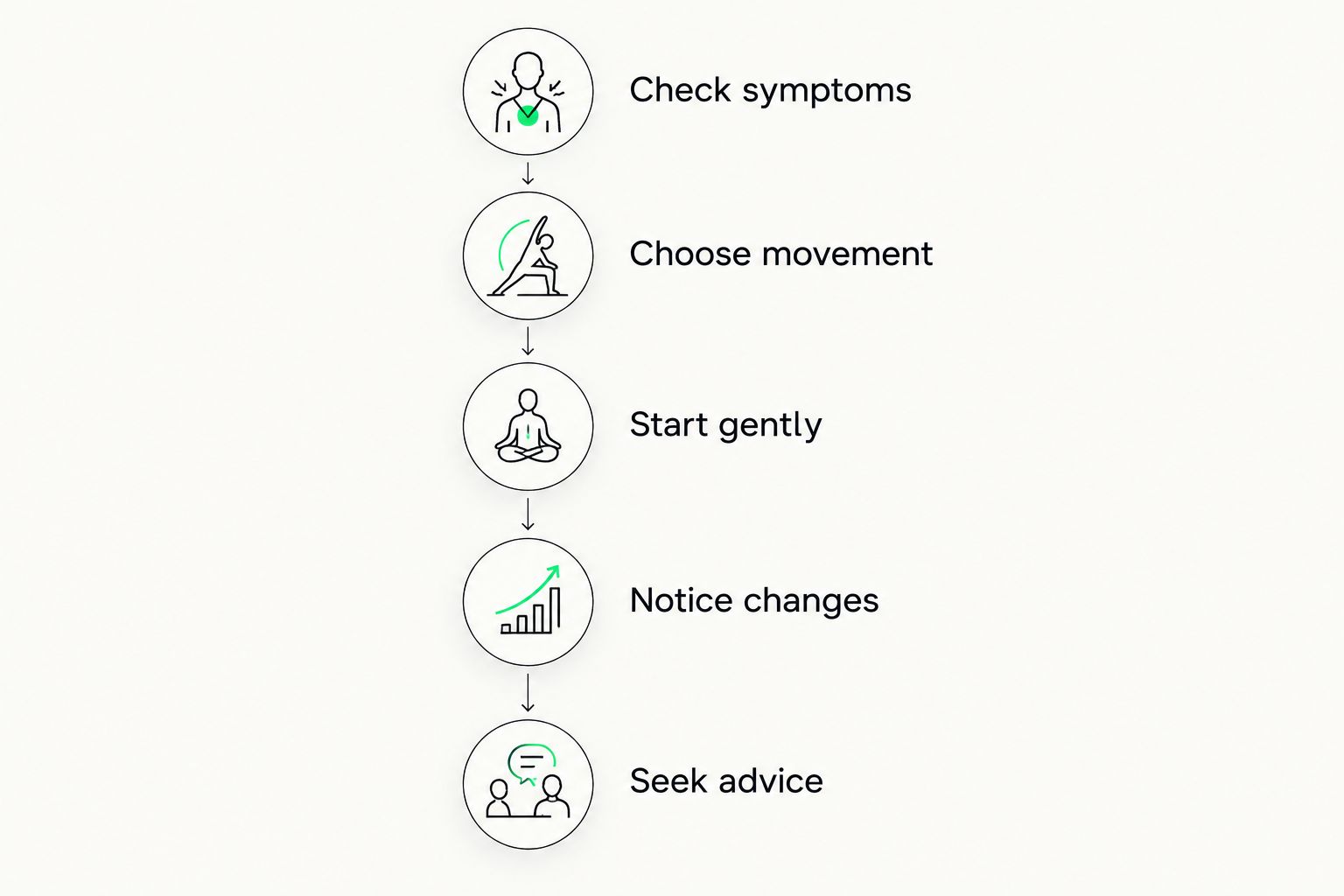
In 2026, use this list as a conversation starter, not a prescription to complete every exercise. A manageable routine should reflect your symptoms, health history and everyday goals.
- Check symptoms: identify warning signs before starting.
- Choose movement: select an option that matches your goal and feels comfortable.
- Start gently: keep the range easy rather than forcing a stretch.
- Notice changes: stop if symptoms increase or spread.
- Seek advice: ask for assessment if the choice or response is unclear.
There is no universal repetition count or hold time for neck pain. Ask your physiotherapist for an individual starting amount, progression advice and clear instructions about what should make you stop.
Keep a simple note of which movement you tried and how you felt afterwards. This gives your clinician more useful information than whether you completed a generic routine.
When home physiotherapy is the better next step
Consider assessment when neck pain keeps returning, disturbs sleep, limits daily tasks or leaves you unsure which movements are appropriate. An exercise list cannot examine strength, sensation, movement or your medical history.
Foveria Health provides in-home physiotherapy across Greater Sydney, including for older people, NDIS participants and private clients. An appointment with Simon offers an opportunity to discuss personal goals and the practical demands of your home environment.
For a home physiotherapy enquiry in 2026, explain when symptoms began, whether there was an injury and whether pain travels into an arm. Mention any recent surgery, falls, existing exercise instructions and assistance needed during a visit.
Families, home care teams and support coordinators can share the person's goals with their consent. Describe the actual difficulty, such as turning towards a visitor or getting comfortable to read, rather than requesting a particular exercise or treatment.
Discuss physiotherapy at home
Ask about an assessment with Simon for neck pain affecting your everyday activities.
How these exercises were ranked
The order reflects a practical starting point: direct neck movement first, then shoulder and upper-back options, followed by a general movement break. The criteria are comfortable control, simple setup, ease of adjustment and relevance to everyday tasks.
This 2026 ranking does not establish which exercise treats your particular condition best. Your assessment and response to movement take priority over the order of this list.
Which neck exercise should you choose?
For uncomplicated stiffness without warning signs, gentle neck turns are a simple starting option if they feel comfortable. Choose a different movement or seek advice if turning aggravates symptoms; do not push through to finish the list.
If you are arranging care for an older parent, choose assessment over repeated encouragement to stretch through pain. The useful next step is understanding what limits the person and what they want to do more comfortably.
FAQ
What's the best exercise for neck pain at home?
There is no single best exercise for every cause of neck pain. Gentle neck turns are a simple option for uncomplicated stiffness when they feel comfortable and no warning signs are present.
How many neck exercises should I do each day?
Your exercise amount should match your symptoms and individual assessment. Ask your physiotherapist for a starting amount and progression advice rather than following a universal repetition target.
Should neck exercises hurt?
Do not push through increasing pain, dizziness, numbness, weakness or spreading arm symptoms. Stop the movement and seek advice about whether it is appropriate for you.
Are chin nods better than neck stretches?
Chin nods are not universally better than neck stretches. They practise a different movement, and the suitable choice depends on your symptoms, goals and assessment.
Can an older person do these exercises sitting down?
Several options in this guide use a seated position, but sitting does not make every exercise suitable. Use a stable chair and seek individual advice if there are falls, spinal conditions or other health concerns.
When should I get urgent help for neck pain?
Get urgent medical help for neck pain with concerning new neurological symptoms, serious injury or signs of serious illness. Call 000 in Australia for an emergency, including sudden weakness, facial drooping or difficulty speaking.
Can Foveria Health assess neck pain at home?
Foveria Health offers in-home physiotherapy assessment and treatment across Greater Sydney. Ask about an appointment with Simon and explain your symptoms, location and goals when enquiring.
One last thing
The most useful change is not always another stretch. If a particular task repeatedly brings on discomfort, show your physiotherapist how you do it: where you sit, what you look towards and how you support your arms.
Bring a real-life goal to your appointment. “I want to read comfortably” gives your care a clearer direction than “I need better posture”.