
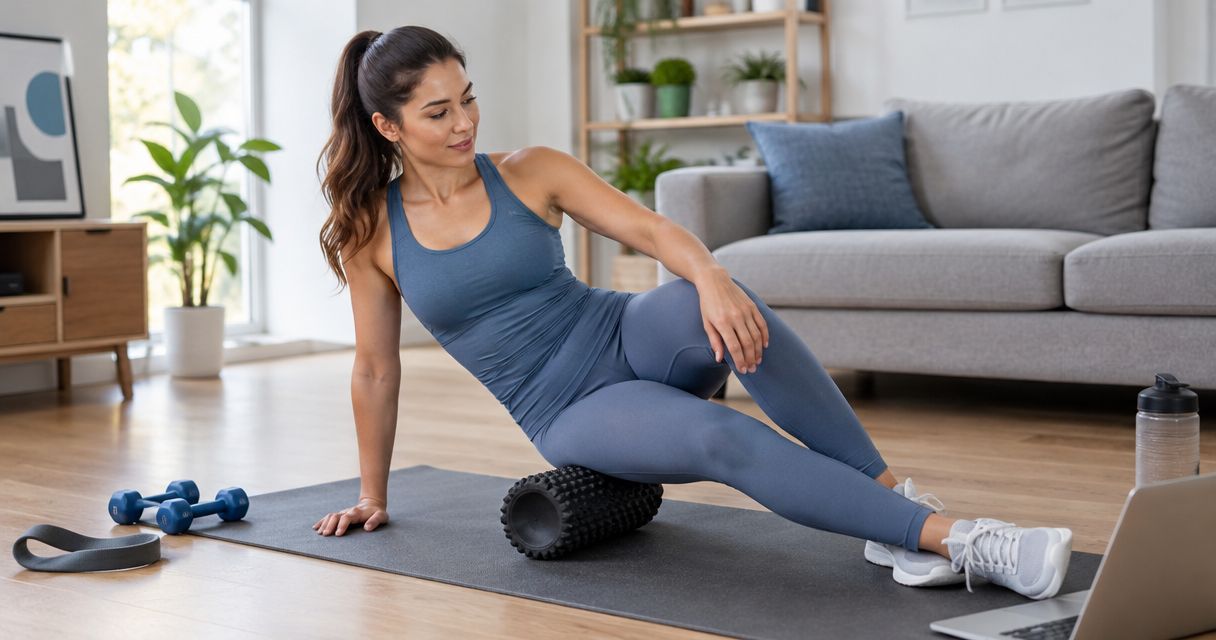
Best overall for an assessed strengthening programme: resistance bands. Best for practising everyday transfers: a suitable stable chair. Best no-purchase starting point: equipment you already own, checked by your physiotherapist. This 2026 guide compares the best equipment for physiotherapy at home and explains what to discuss before choosing it.
- The best equipment for physiotherapy at home matches your assessed needs, not a generic shopping list.
- Resistance bands suit prescribed strengthening; a stable chair supports selected seated exercises and transfer practice.
- Foveria Health provides home physiotherapy for Greater Sydney clients seeking assessment and treatment at home.
- Wait for individual advice before choosing weights, a pedal exerciser or equipment for floor exercises.
Why this matters
You do not need to turn your living room into a gym before a physiotherapist visits. A useful starting point is what you want to manage more comfortably: getting out of a chair, moving around the house or returning to an activity you enjoy.
Foveria Health offers mobile physiotherapy across Greater Sydney, including assessment and treatment at home. Foveria Health suits people seeking home physiotherapy shaped around their everyday surroundings and personal goals.
For older people, families and support coordinators, an equipment decision also involves practical questions. Can the person grip it, reach it and put it away? Does someone need to help? Those details matter more than how many exercises appear on the packaging.
What makes the best equipment for physiotherapy at home?
For this 2026 guide, the strongest choice is the item that fits the person and the prescribed task. Use these criteria before buying anything:
- Goal match: The equipment has a clear purpose in your physiotherapy plan, rather than simply offering general exercise.
- Safe positioning: You can use it in the position your physiotherapist recommends, with any required support.
- Manageable handling: Grip, adjustment and storage suit your hands, movement and assistance needs.
- Appropriate challenge: Resistance or movement demands match your assessed ability and can be reviewed.
- Home fit: The item works in your available space without obstructing everyday movement.
- Clear instructions: You understand what to do, what to avoid and when to seek advice.
An item that fails one of these checks is not a good choice just because it is commonly used in rehabilitation. Your home programme should determine the equipment, not the other way around.
Home physiotherapy equipment at a glance
These recommendations cover equipment types, not particular brands or models. Each has a different role; they are not interchangeable.
| Equipment | Best for | Standout feature | Key limitation |
|---|---|---|---|
| Resistance bands | Prescribed strengthening with flexible positioning | Elastic resistance in a compact format | Grip, attachment and resistance need checking |
| Stable chair | Selected seated exercises and transfer practice | Uses a familiar household setting | Not every household chair is suitable |
| Hand weights | Prescribed strengthening with a defined external load | A clearly labelled weight | Holding and controlling the load can be difficult |
| Exercise mat | Prescribed floor exercises when transfers are appropriate | Cushions contact with the floor | Does not make floor transfers safe |
| Pedal exerciser | Selected seated pedalling programmes | Pedalling while seated in a separate chair | Positioning, stability and resistance need assessment |
1. Resistance bands: best for adaptable strengthening
Resistance bands provide elastic resistance during movement. A physiotherapist can select exercises that use a band while you sit, stand or take another suitable position; the band itself does not determine which position is safe.
For a home programme, their main practical advantage is compact storage. However, being small and familiar does not make every band exercise appropriate for every person.
Resistance band pros:
- Take up little storage space.
- Come in different forms, including strips, loops and handled designs.
- Can support different prescribed movements without a large machine.
Resistance band cons:
- Holding the band can be difficult with hand pain or reduced grip.
- A worn band or unsuitable attachment creates a safety concern.
- Colour alone does not establish equivalent resistance across different brands.
Ask your physiotherapist which band type and resistance to use, how to hold or attach it, and how to recognise damage. Do not copy an online exercise simply because it uses the same-looking band.
Best for: People whose assessed strengthening programme suits elastic resistance.
Verdict: Buy only after the band type, resistance and technique are agreed.
2. Stable chair: best for everyday transfer practice
A suitable chair can support selected seated exercises and practice related to sitting down or standing up. Using a familiar household chair also lets your physiotherapist consider the movement in its everyday setting.
Suitability depends on the task and the person. Seat height, armrests, cushioning and whether the chair moves all deserve attention before it becomes exercise equipment.
Stable chair pros:
- Connects exercise with a daily activity.
- Can provide a seated position for selected exercises.
- Gives your physiotherapist a chance to assess furniture you already use.
Stable chair cons:
- Wheels, sliding feet or unstable construction can make a chair unsuitable.
- A low or deeply cushioned seat changes the demands of getting up.
- Armrests help some tasks but do not suit every exercise setup.
Do not assume a dining chair is suitable because it feels sturdy when you sit still. Ask your physiotherapist to check the actual chair, floor and movement together, including whether assistance is needed.
Best for: People working on assessed seated activities or everyday chair transfers.
Verdict: Hold off buying a special chair until your existing seating is assessed.
3. Hand weights: best for clearly defined strengthening loads
Hand weights add an external load to selected movements. They are useful when your physiotherapist wants a particular load rather than the changing elastic resistance of a band.
The right choice depends on more than the number printed on the weight. Handle shape, grip comfort and the ability to pick it up and put it down also affect suitability.
Hand weight pros:
- Provide a labelled load for a prescribed exercise.
- Do not require an attachment point.
- Offer different handle designs and formats.
Hand weight cons:
- Reduced grip can make a weight difficult to hold securely.
- Dropping a weight can cause injury or damage.
- One load will not necessarily suit every prescribed movement.
Ask for the exact load and movement instructions rather than choosing something described only as “light”. Household objects are not automatically good substitutes: their shape, contents and grip can differ from purpose-made equipment.
Best for: People prescribed strengthening exercises using a defined handheld load.
Verdict: Buy the specified weight only after grip and movement are checked.
4. Exercise mat: best for assessed floor-based exercises
An exercise mat provides a cushioned surface for exercises performed on the floor. It is an accessory to an appropriate programme, not a reason to begin floor exercises.
The important question comes first: can you get down and back up using an agreed, safe method? A mat does not answer that question or replace assistance.
Exercise mat pros:
- Cushions contact with a hard floor.
- Defines a space for prescribed floor exercises.
- Can be stored away between sessions.
Exercise mat cons:
- Getting to and from the floor can be unsuitable for some people.
- A soft or moving surface is not appropriate for every task.
- An unrolled mat can obstruct a walking route.
If you are recovering from surgery, discuss your current precautions before considering floor exercises. Ask whether an alternative position would better suit your programme rather than trying to adapt an exercise yourself.
Best for: People prescribed floor exercises who have an assessed way to access the floor.
Verdict: Wait until floor access and the exercise surface are checked.
5. Pedal exerciser: best for selected seated pedalling programmes
A pedal exerciser places a pedalling mechanism in front of a separate chair. It allows a seated pedalling movement without using a full exercise bicycle.
That format is not automatically suitable for someone who feels unsteady. Your physiotherapist still needs to consider the chair, device position, foot contact and movement demands.
Pedal exerciser pros:
- Allows pedalling from a separate seat.
- Takes up less space than a full exercise bicycle.
- Offers a different movement format from bands or hand weights.
Pedal exerciser cons:
- The device or chair can move during use if the setup is unsuitable.
- Reaching the pedals and maintaining foot position can be difficult.
- Resistance settings do not establish whether the activity suits your condition.
Discuss the purpose before buying one, especially after surgery or if exercise brings on symptoms. A seated device still involves physical effort; it should not become an unsupervised substitute for an agreed plan.
Best for: People whose assessed programme specifically includes seated pedalling.
Verdict: Wait for an assessment of both the activity and the home setup.
How we ranked these options
The 2026 order reflects practical roles in a home programme, not comparative clinical testing or a claim that one item produces better outcomes. Resistance bands lead for adaptable strengthening; a stable chair is the clearest starting point for everyday transfer tasks.
The remaining options serve narrower purposes. Choose by goal match, handling, positioning and home fit—not by rank alone. No equipment recommendation replaces an individual assessment.
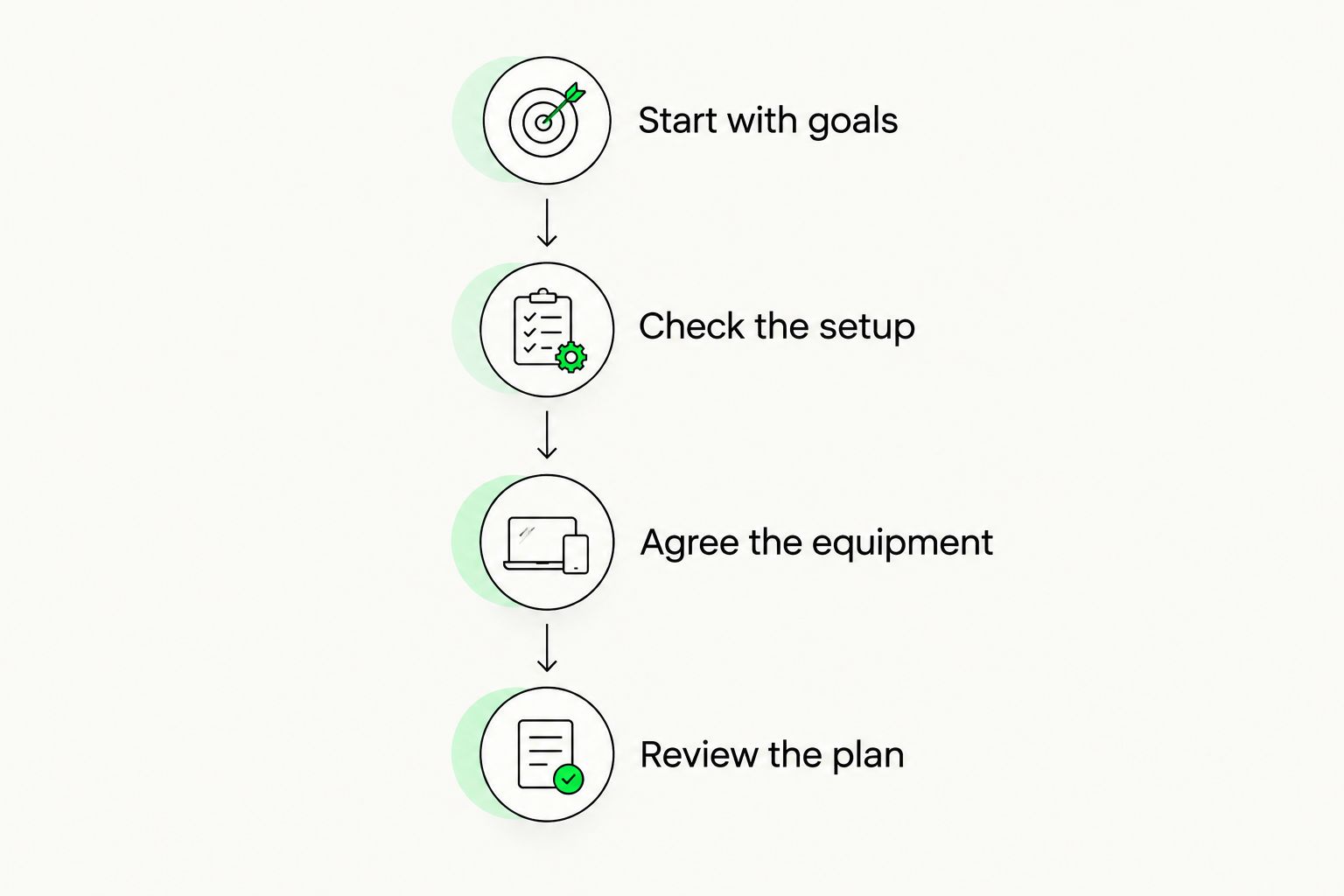
Choose equipment in this order
Start with goals
Describe the activity you want help with in everyday language. “Getting up from my usual chair” gives more useful context than “getting fitter”, especially when a family member or support worker is arranging the appointment.
Check the setup
Show the physiotherapist your usual exercise area, furniture and any equipment you already own. If space is a concern, read the guide to space for physiotherapy at home before rearranging a room.
Agree the equipment
Ask which item, specification and setup match the agreed activity. Confirm whether someone needs to assist and whether the proposed helper understands their role.
Review the plan
Know how the programme will be reviewed and who to contact with questions. Tell your physiotherapist if equipment becomes difficult to use, symptoms change or your home circumstances change.
What families and professional referrers should share
For a 2026 home physiotherapy enquiry, share the person's priorities, relevant discharge instructions and details of equipment already in use. With the person's consent, explain who helps at home and any practical concerns about handling or storage.
Foveria Health provides home physiotherapy for aged care, NDIS, private and Medicare clients across Greater Sydney. Discuss appointment arrangements and any proposed equipment separately; do not assume that access to physiotherapy confirms funding for an equipment purchase.
If you are arranging care in Punchbowl or a nearby suburb, ask Simon about the person's goals and the proposed visit location. Avoid purchasing equipment on their behalf before their preferences and needs are understood.
Which equipment should you choose?
For an undecided reader, the best next step is an assessment—not a starter kit. Keep existing equipment available to show your physiotherapist, but wait for advice before adding resistance or changing an established programme.
Resistance bands are the default pick when an assessed strengthening plan calls for them. A suitable existing chair is the better starting point when the goal is a daily transfer, while weights, mats and pedal exercisers need a specific reason to be included.
FAQ
What's the best equipment for physiotherapy at home in 2026?
The best equipment for physiotherapy at home matches your assessed goals and ability. Resistance bands suit selected strengthening programmes, while a suitable stable chair supports selected seated exercises and transfer practice.
Do I need to buy equipment before my first home physiotherapy visit?
You do not need to buy equipment in advance unless your physiotherapist has specifically asked you to. Show them what you already own and discuss your goals before choosing anything else.
Are resistance bands better than hand weights?
Neither resistance bands nor hand weights are better for every person. Bands provide elastic resistance, while hand weights provide a labelled external load; your prescribed movement and handling needs guide the choice.
Can an older person use an ordinary chair for physiotherapy?
An ordinary chair can suit selected exercises if its setup is appropriate for the person and task. Ask the physiotherapist to check stability, seat height, cushioning, armrests and the surrounding floor.
Is a pedal exerciser suitable after surgery?
A pedal exerciser needs individual clearance within your post-surgery plan. Discuss your surgeon's instructions and have your physiotherapist assess the movement and setup before using one.
Will my funding pay for home physiotherapy equipment?
Confirm the particular equipment purchase with your relevant funder or plan contact before committing. A physiotherapy appointment and an equipment purchase are separate decisions; do not assume one confirms the other.
Can Foveria Health help me decide what equipment suits my home?
Foveria Health offers in-home physiotherapy assessment and treatment across Greater Sydney. Discuss your goals and existing equipment with Simon so equipment questions can form part of the assessment.
One last thing
Your everyday furniture deserves a place in the equipment conversation. Before buying anything in 2026, show your physiotherapist the chair you actually use and explain the task that feels difficult. The most useful recommendation starts with your life at home, not a catalogue.