Best overall, once cleared: short, supported walks. Best for gentle ankle movement: ankle pumps. Best for activating the front thigh: quadriceps squeezes. The best exercises for hip replacement recovery at home in 2026 are the exercises your surgical team has prescribed for your operation, precautions and current ability—not a routine chosen by recovery week alone.
- The best exercises for hip replacement recovery at home follow your surgical team's instructions, not a fixed calendar.
- Short, supported walks are the practical starting point once your team has cleared walking.
- Ankle pumps and gentle muscle squeezes serve different purposes; they do not replace prescribed walking or clot-prevention treatment.
- Foveria Health provides home physiotherapy assessment and treatment across Greater Sydney.
Why this matters
Hip replacement recovery involves more than getting the joint moving. You also need to manage everyday tasks, use your walking aid safely and understand which movements your team wants you to avoid.
A 2026 exercise list cannot tell you your permitted weight-bearing level or whether you have specific hip precautions. Your discharge instructions take priority over this guide.
For support in your own surroundings, Foveria Health offers mobile physiotherapy assessment and treatment. Foveria Health is best suited to Greater Sydney clients seeking physiotherapy assessment and treatment at home.
What makes the best hip replacement recovery exercises?
Use these criteria when discussing your 2026 home programme with your physiotherapist:
- Surgical clearance: the exercise matches your operation, weight-bearing instructions and precautions.
- Everyday purpose: the movement supports a goal such as walking to the bathroom or getting out of a chair.
- Controlled technique: you can complete it without twisting, straining or losing balance.
- Suitable support: your bed, chair, walking aid or stable hand support makes the exercise manageable.
- Manageable response: your symptoms during and after exercise stay within the limits your treating team has explained.
There is no universal set of repetitions, hold times or daily sessions after hip replacement. Ask your physiotherapist to write down your individual dose and progression rules.
Hip replacement exercises at a glance
The order below reflects practical home-recovery purposes, not proof that one exercise produces better surgical outcomes than another.
| Exercise | Best for | Main role | Key limitation |
|---|---|---|---|
| Short, supported walks | Everyday walking practice | Practises moving around your home with your prescribed aid | Requires weight-bearing clearance and a safe route |
| Ankle pumps | Gentle ankle movement while resting | Moves the ankles without deliberately bending the hip | Does not replace walking or prescribed clot prevention |
| Quadriceps squeezes | Front-thigh muscle activation | Tightens the thigh while the leg stays supported | Does not practise standing or balance |
| Buttock squeezes | Gentle buttock muscle activation | Tightens the buttock muscles without a large hip movement | Does not replace later functional strengthening |
| Heel slides | Controlled hip and knee bending | Practises bending within your permitted range | Must stay within individual hip precautions |
| Supported standing hip abduction | Later standing hip control | Practises moving the leg sideways with support | Needs clearance, balance and suitable weight-bearing ability |
1. Short, supported walks: best for everyday walking practice
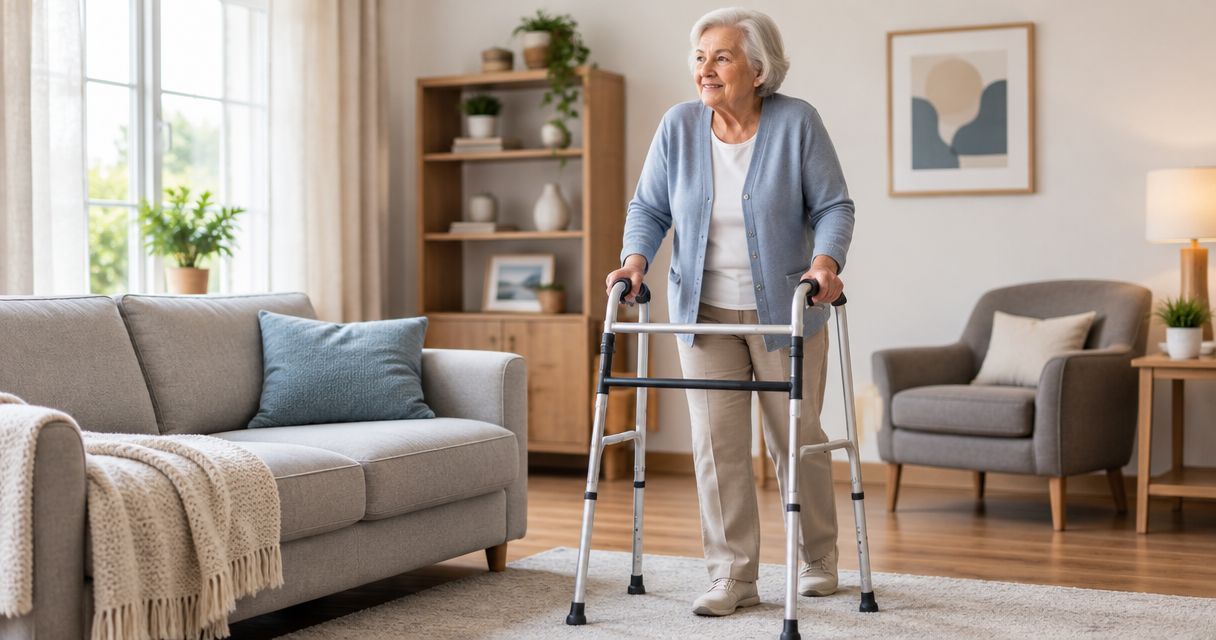
Short, supported walks practise a task you need at home: moving safely between rooms. Use the walking aid and assistance recommended by your treating team, even when the distance looks manageable without them.
Choose a clear route with somewhere safe to stop. Follow the walking pattern you were taught rather than trying to take longer steps or walk faster.
Short, supported walks pros:
- Connect directly with everyday independence.
- Let you practise using your prescribed walking aid.
- Help identify practical barriers such as narrow passages.
Short, supported walks cons:
- Fatigue or dizziness makes walking less safe.
- A limp or incorrect aid use needs assessment, not extra distance.
Best for: people cleared to walk who need to rebuild confidence with household movement.
Verdict: Hold until walking and weight-bearing instructions are clear. Once cleared, use your prescribed walking plan rather than pushing through symptoms.
2. Ankle pumps: best for gentle movement while resting
Ankle pumps involve moving your feet up and down at the ankles while your legs are supported. Keep the movement comfortable and avoid turning it into a forceful stretch.
Use ankle pumps if they are included in your discharge programme. They are not a substitute for prescribed medicines, compression or other clot-prevention instructions.
Ankle pumps pros:
- Need no exercise equipment.
- Allow ankle movement while you are resting.
- Do not require standing balance.
Ankle pumps cons:
- Do not strengthen the hip for walking.
- Do not establish that calf pain or swelling is harmless.
Best for: people whose team has included gentle ankle movement during rest periods.
Verdict: Hold if ankle movement causes new pain; seek advice rather than forcing it.
3. Quadriceps squeezes: best for front-thigh activation
Quadriceps squeezes tighten the muscle at the front of your thigh while your leg remains supported. Your physiotherapist can show you how to gently straighten the knee without lifting or straining the whole leg.
Keep breathing normally. If you cannot feel the intended muscle working, ask for a technique check rather than pressing harder.
Quadriceps squeezes pros:
- Practise muscle activation without standing.
- Need no added weights.
- Allow your physiotherapist to check thigh control.
Quadriceps squeezes cons:
- Do not practise walking or balance.
- Discomfort or difficulty activating the muscle needs individual adjustment.
Best for: people prescribed a supported exercise for front-thigh muscle activation.
Verdict: Hold if the movement produces sharp pain or conflicts with your discharge instructions.
4. Buttock squeezes: best for gentle buttock activation
Buttock squeezes involve gently tightening and relaxing the buttock muscles in a comfortable, supported position. Avoid lifting your hips into a bridge unless that separate exercise has been prescribed.
The aim is a controlled muscle contraction, not the strongest squeeze you can manage. Ask your physiotherapist to check your position if the exercise feels unclear.
Buttock squeezes pros:
- Practise activation without a large hip movement.
- Need no equipment.
- Do not require standing balance.
Buttock squeezes cons:
- Do not replace walking or later strengthening.
- An uncomfortable resting position can make the exercise unsuitable.
Best for: people prescribed gentle buttock muscle activation during supported exercise.
Verdict: Hold if you need to strain, hold your breath or change position against your precautions.
5. Heel slides: best for controlled hip and knee bending
Heel slides involve sliding your heel towards you along the bed, then returning it, within the movement range your team permits. Keep the movement controlled and avoid twisting the operated leg.
Do not use how far the heel travels as a recovery score. Your permitted hip movement matters more than reaching the same position as someone else.
Heel slides pros:
- Practise hip and knee movement with the leg supported.
- Make movement limits easier to discuss with your physiotherapist.
- Need no added resistance.
Heel slides cons:
- Too much bending can conflict with individual precautions.
- Bedding friction can make the movement harder to control.
Best for: people specifically cleared to practise supported hip and knee bending.
Verdict: Hold until your permitted bending range and technique are clear.
6. Supported standing hip abduction: best for standing hip control
Supported standing hip abduction means moving your leg sideways while holding a stable support. Your physiotherapist should specify which leg moves, how you stand and whether this exercise belongs in your current programme.
Keep the movement small enough to control without leaning your body sideways. A chair that slides or tips is not a suitable support.
Supported standing hip abduction pros:
- Practises hip movement in standing.
- Gives your physiotherapist a way to assess movement control.
- Can connect later exercise with upright daily tasks.
Supported standing hip abduction cons:
- Requires safe balance and suitable weight-bearing ability.
- Leaning or turning the foot changes the intended movement.
Best for: people cleared for standing hip exercises who have appropriate support.
Verdict: Hold until your physiotherapist confirms that standing hip abduction is appropriate.
How to turn the list into your own home programme
Start with your discharge plan, not all the exercises in the table. Adding more movements is not automatically a better recovery programme.
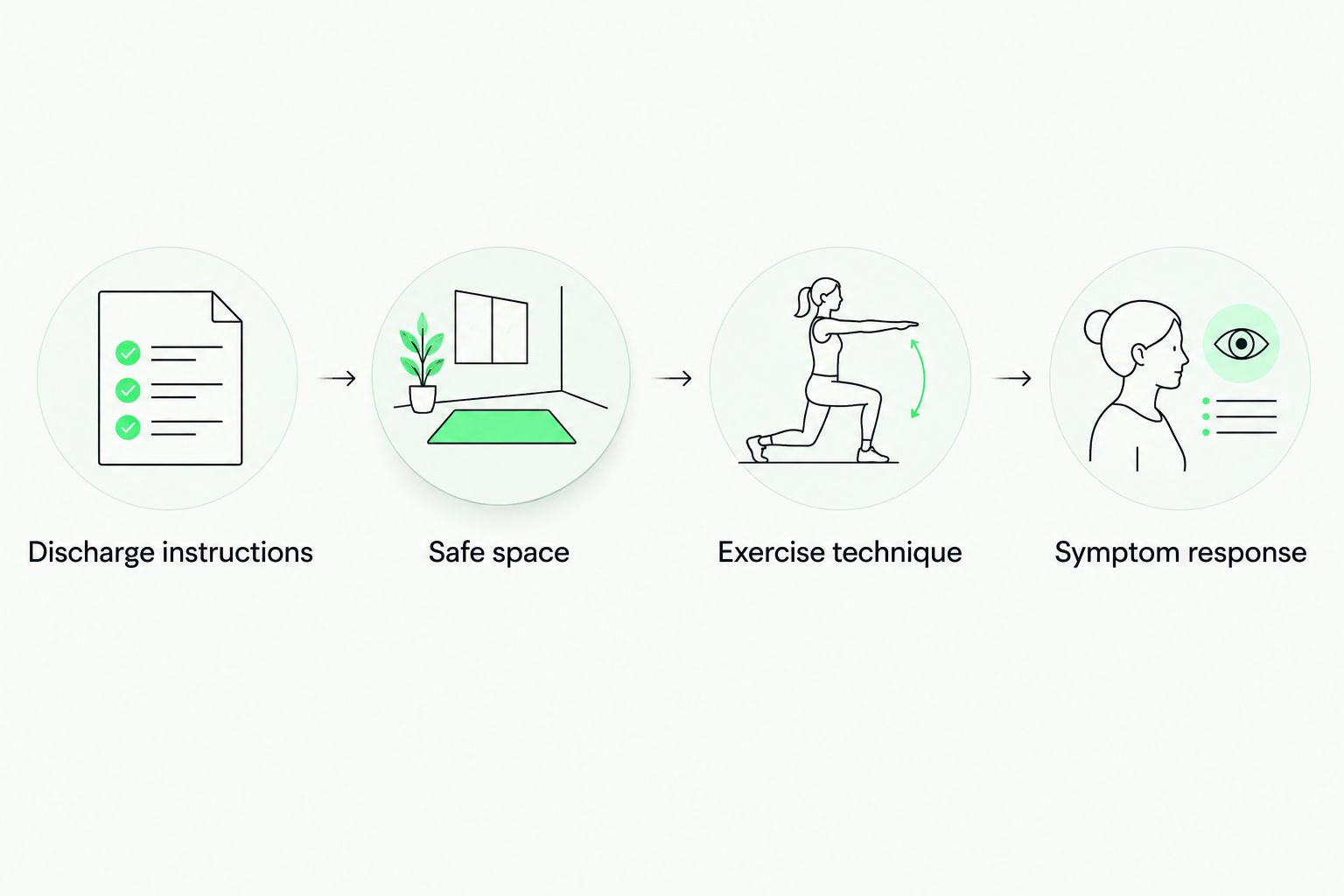
Use these checks before practising:
- Discharge instructions: confirm your precautions and permitted weight-bearing.
- Safe space: clear your route and keep your prescribed aid within reach.
- Exercise technique: check the position and movement with your physiotherapist.
- Symptom response: know when to stop and who to contact.
These checks connect the hospital plan with what actually happens beside your bed, in the hallway and near your usual chair.
For a family helping after discharge, the guide to physiotherapy at home after hip replacement explains the wider planning conversation.
Ask these 3 questions
- Which exercises should I do now, and which should wait?
- What repetitions, hold times and rest periods apply to me?
- What symptoms mean I should stop or contact the treating team?
Make these 2 preparations
- Keep your discharge summary and exercise instructions together.
- Arrange help with tasks your team has advised you not to attempt alone.
Families can help by keeping instructions accessible and noting difficulties. Do not pull someone through a movement or add resistance unless the treating physiotherapist has taught you how.
When to stop and seek medical help
Do not exercise through sudden severe hip pain, a new inability to bear weight, or a leg that looks unusually positioned. Seek urgent medical assessment rather than testing the movement again.
New calf pain or one-sided leg swelling needs urgent medical advice after surgery. Sudden breathlessness, chest pain or collapse is an emergency: call 000 in Australia.
Contact your surgical team promptly about fever, increasing wound redness, wound discharge or worsening pain. An exercise adjustment is not a substitute for assessing a possible surgical complication.
How the exercises were ranked
This 2026 guide ranks exercises by their practical role at home: walking, gentle ankle movement, muscle activation, supported bending and standing control. It is not a claim that the exercises suit every surgical approach or recovery stage.
Your individual programme can have a different order. Surgical restrictions, other health conditions and the help available at home determine what belongs in it.
Which exercises should you choose?
Choose the exercises already prescribed for you, then ask for a review when they no longer match your ability or goals. Short, supported walks are the default functional choice only after your team has cleared them.
For a 2026 home physiotherapy discussion, bring one specific goal: reaching the bathroom safely, managing your usual chair or walking to your front door. Foveria Health offers personal, goal-focused care at home with Simon across Greater Sydney, including Punchbowl and nearby suburbs.
Discuss your home physiotherapy needs
Explain your surgery, discharge instructions and everyday goals for assessment at home.
FAQ
What's the best exercise after a hip replacement at home?
Short, supported walks are a practical functional choice once your surgical team has cleared walking. Your prescribed programme determines which additional exercises are appropriate.
How many repetitions should I do after hip replacement?
Use the repetitions, hold times and daily frequency prescribed by your treating team. There is no single dose that suits every operation, precaution or recovery stage.
Can I do heel slides straight after hip replacement?
Do heel slides only if your treating team has included them and explained your permitted bending range. Do not copy another person's range or force the heel closer.
Should I stop exercising if my hip hurts?
Stop an exercise that causes sharp, sudden or increasing pain and follow your team's symptom advice. Sudden severe pain or a new inability to bear weight needs urgent medical assessment.
Are ankle pumps enough to prevent blood clots?
No. Ankle pumps do not replace your prescribed clot-prevention treatment or movement plan. New calf pain or one-sided swelling needs urgent medical advice.
Can a family member help with hip replacement exercises?
A family member can help keep the space clear, organise instructions and provide assistance taught by the treating team. They should not force movements, add resistance or improvise hands-on support.
Can Foveria Health provide physiotherapy at home in Sydney?
Foveria Health provides mobile physiotherapy assessment and treatment across Greater Sydney. Discuss your location, surgical instructions and support needs when arranging an appropriate appointment.
One last thing
Your usual chair is part of recovery planning, not just somewhere to rest. Ask your physiotherapist to assess how you approach it, sit down and stand up within your precautions; a good exercise session does not remove the need for a safe everyday transfer.