Best starting technique: pursed-lip breathing. Best for everyday effort: paced breathing. Best for settling after activity: relaxed breathing control. This 2026 guide explains the best breathing exercises for COPD at home, including when to stop and ask for help.
- The best breathing exercises for COPD at home depend on whether you need help during activity or recovery.
- Pursed-lip breathing is a useful starting technique; keep the out-breath gentle rather than forcing air out.
- Paced breathing links your out-breath to effort, such as standing from a chair.
- Foveria Health offers respiratory physiotherapy at home; ask Simon about techniques suited to your everyday goals.
- Breathing exercises support COPD care; they do not replace prescribed treatment or urgent medical assessment.
Foveria Health provides mobile physiotherapy across Greater Sydney, including respiratory physiotherapy. For people who find travel difficult, an assessment at home lets the conversation focus on familiar tasks and personal goals.
Why this matters
COPD, or chronic obstructive pulmonary disease, makes it harder to move air through your lungs. Breathlessness can interrupt ordinary activities, from getting dressed to walking between rooms. A breathing technique gives you something practical to use alongside your prescribed care.
The aim is not to take the biggest possible breath. It is to find a comfortable breathing pattern that helps you manage effort without adding strain. Different techniques suit different situations, and none reverses COPD.
Sudden or severe breathlessness needs medical attention, not another round of exercises. In Australia, call 000 if you are struggling to breathe, cannot speak normally because of breathlessness, have chest pain, become confused, or have blue or grey lips. Follow your COPD action plan for worsening symptoms and read more about when breathlessness needs urgent assessment.
What makes the best breathing exercises for COPD at home?
For your 2026 home routine, choose techniques using these criteria rather than trying to master every exercise:
- Comfort: the technique should not leave you more breathless, dizzy or tense.
- Purpose: match the technique to resting, recovering or moving.
- Simplicity: you should be able to remember it without complicated counting.
- Gentle effort: avoid breath-holding, forceful emptying or repeated oversized breaths.
- Personal fit: your symptoms, usual breathing pattern and medical advice matter more than a generic ranking.
- Connection to daily life: practise something that helps with a task you actually want to do.
COPD breathing exercises at a glance
The order below is a practical starting order, not a claim that one technique works best for everyone. A physiotherapist can help you decide which approach deserves a place in your routine.
| Technique | Best for | Main feature | Key limitation |
|---|---|---|---|
| Pursed-lip breathing | A simple starting technique | A gentle, longer out-breath through lightly narrowed lips | Forcing the breath out adds effort |
| Paced breathing | Everyday physical effort | Breathing out during the harder part of a task | Requires practice and does not replace rest breaks |
| Relaxed breathing control | Settling after activity | Comfortable breathing with supported posture | Is not treatment for an acute deterioration |
| Diaphragmatic breathing | Individually assessed breathing-pattern work | Attention to lower-rib and abdominal movement | Does not suit everyone with COPD |
1. Pursed-lip breathing: best starting exercise for COPD at home
Pursed-lip breathing means breathing out gently through lips held as though you were softly blowing on warm food. The narrowed opening slows the out-breath. It is a commonly taught COPD technique for managing breathlessness.
Start in a comfortable, supported position. Let your shoulders soften rather than pulling them upwards to draw in more air.
How to try pursed-lip breathing
- Breathe in gently through your nose, if comfortable.
- Lightly narrow your lips without clenching your jaw.
- Breathe out slowly and gently through your lips.
- Let the next breath come without a big gasp.
The American Lung Association's patient guidance describes breathing in for 2 seconds and out for 4 seconds. Treat that as an example of a longer out-breath, not a target you must achieve. Drop the counting if it makes breathing harder.
Pursed-lip breathing pros:
- Needs no equipment.
- Can be practised while sitting comfortably.
- Gives you a simple cue: a gentle, longer out-breath.
Pursed-lip breathing cons:
- Tight lips or forceful blowing create unnecessary effort.
- Counting can distract you from comfort.
- It does not replace prescribed inhalers or other treatment.
Best for: someone wanting a straightforward technique to discuss with their physiotherapist.
Verdict — Try: pursed-lip breathing gently; stop if it increases discomfort or breathlessness.
2. Paced breathing: best COPD breathing technique for everyday effort
Paced breathing matches your breathing to the task in front of you. A common cue is to breathe in before the effort and breathe out during the harder part, rather than holding your breath.
Standing from a chair is a useful example. Prepare while seated, then breathe out as you stand, using your usual safe support. Do not change how you use a walking aid or attempt a difficult transfer just to practise breathing.
How to use paced breathing
- Identify the part of the task that takes the most effort.
- Prepare with a comfortable breath before that effort.
- Breathe out during the effort without forcing the air.
- Pause and recover before the next part if needed.
For walking or stairs, ask your physiotherapist to help you find a rhythm suited to your own pace. There is no universal number of steps per breath that everyone with COPD should follow.
Paced breathing pros:
- Connects practice to meaningful daily activities.
- Provides an alternative to holding your breath during effort.
- Works alongside slower pacing and planned rests.
Paced breathing cons:
- Coordinating movement and breathing takes practice.
- A breathing rhythm cannot make an unsafe activity safe.
- Trying to keep a rigid rhythm can add stress.
Best for: people who notice breath-holding while standing, dressing or doing household tasks.
Verdict — Try: paced breathing with a familiar, manageable task before using it during harder activity.
3. Relaxed breathing control: best for recovering after activity
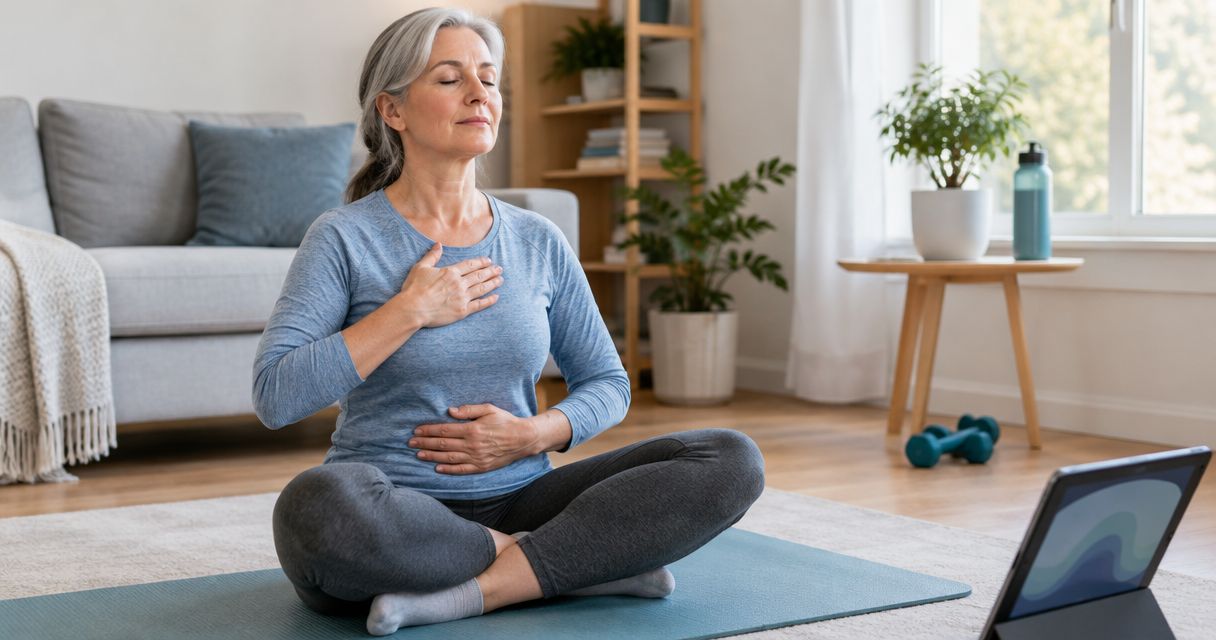
Relaxed breathing control means allowing comfortable breaths while reducing unnecessary tension. It is not repeated deep breathing. The aim is to settle into a manageable pattern rather than chase a completely breathless-free feeling.
Sit with your feet supported and your arms resting comfortably. Some people find leaning slightly forwards with their forearms supported helpful; choose a position that feels steady and does not compress your breathing.
How to practise breathing control
Let your shoulders and hands relax. Breathe gently, through your nose if comfortable, without deliberately making each breath larger. If pursed-lip breathing already helps you, use it for the out-breath rather than adding another demanding instruction.
Wait until you feel ready before restarting the task. If your breathing is not settling as it usually does, follow your action plan and seek medical advice rather than repeatedly pushing through.
Relaxed breathing control pros:
- Needs no special equipment.
- Fits naturally into a planned rest break.
- Encourages you to notice tension and stop rushing.
Relaxed breathing control cons:
- Focusing closely on breathing feels uncomfortable for some people.
- It does not explain why symptoms have changed.
- It is not a substitute for urgent care when breathlessness is severe.
Best for: settling after a familiar activity that brings on your usual breathlessness.
Verdict — Try: a supported position and gentle breathing; skip repeated oversized breaths.
4. Diaphragmatic breathing: best for individually assessed practice
Diaphragmatic breathing is often called belly breathing. It directs attention towards movement around the abdomen and lower ribs while trying to reduce unnecessary upper-chest effort.
This technique needs more caution in COPD. Lung hyperinflation can change how the diaphragm works, and deliberately pushing the abdomen out does not suit everyone. A technique that looks calm in a demonstration can still feel tiring in your own body.
When to ask for guidance
Ask your physiotherapist whether diaphragmatic breathing fits your breathing pattern before making it a regular exercise. If recommended, practise in the position and manner you have been shown; do not press on your abdomen or force a large breath.
Stop if you feel more breathless, dizzy or strained. Those symptoms are not a sign that you need to work harder at the exercise.
Diaphragmatic breathing pros:
- Offers a way to notice breathing movement.
- Requires no equipment.
- Can form part of individually guided breathing-pattern work.
Diaphragmatic breathing cons:
- Is not suitable for every person with COPD.
- Can increase effort or discomfort.
- Online instructions cannot assess how your diaphragm is functioning.
Best for: people whose physiotherapist has assessed and recommended this technique.
Verdict — Wait: get individual guidance before adding diaphragmatic breathing to your routine.
How these techniques are ranked
This 2026 guide prioritises simple techniques that connect to everyday situations, with clear limits on self-directed practice. Pursed-lip breathing comes first because it offers a straightforward starting cue; paced breathing addresses effort, while relaxed breathing control addresses recovery.
Diaphragmatic breathing sits last because suitability needs more individual attention. This is a practical guide, not a head-to-head clinical trial or a promise of results.
Turn a breathing exercise into a useful home routine
A routine is more useful when it starts with your goal rather than a list of repetitions. You might want to get dressed with fewer interruptions, feel less rushed during a transfer, or recover more calmly after walking to the bathroom.
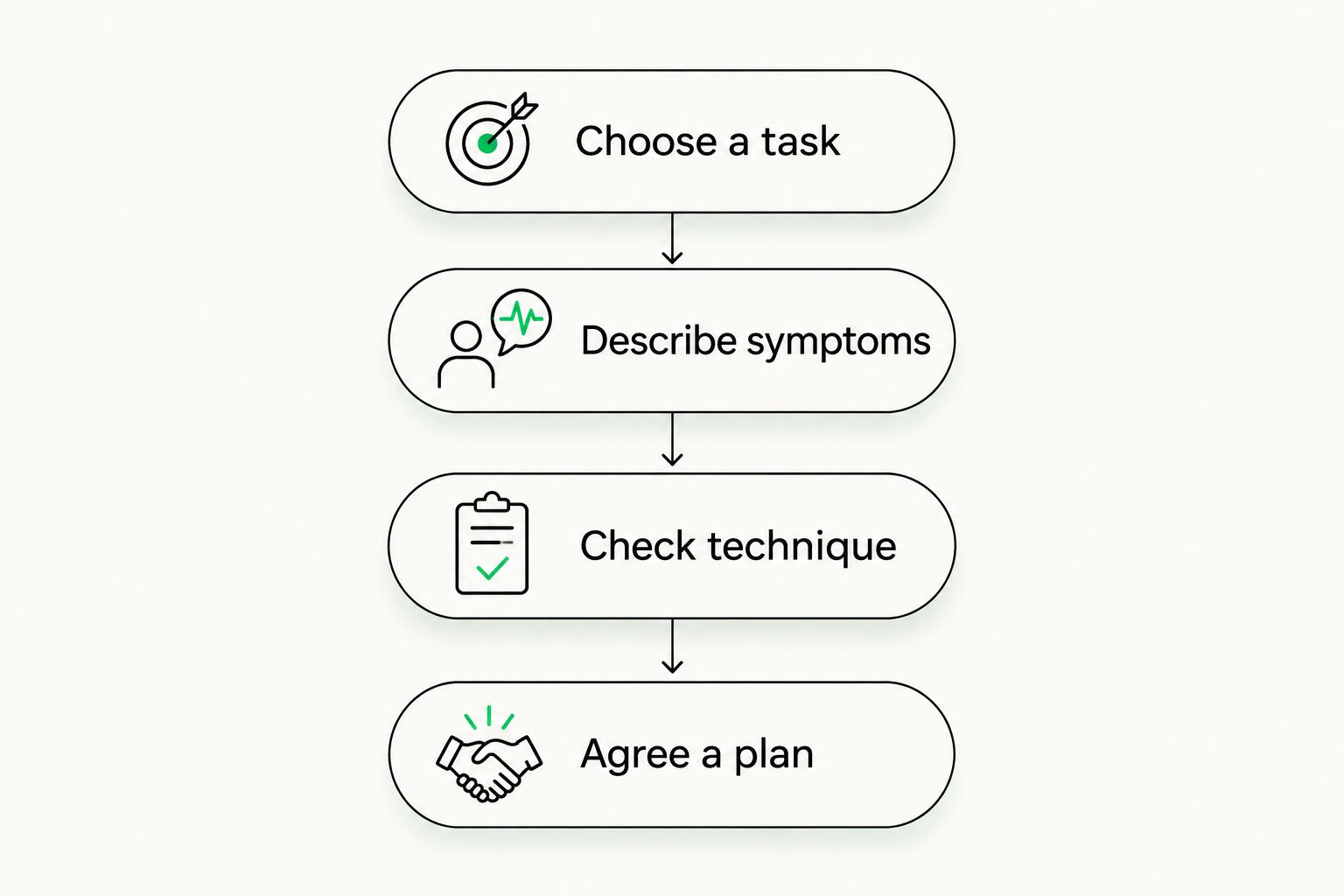
Use these steps to prepare a conversation with your physiotherapist:
- Choose a task: name the everyday activity you want help with.
- Describe symptoms: explain what you feel, when it starts and whether it has changed.
- Check technique: ask someone qualified to watch how you breathe during that task.
- Agree a plan: clarify what to practise, when to rest and when to seek help.
A family member or support worker can help you remember the plan, with your consent. Their role is to support your chosen pace, not coach you to take bigger breaths or finish despite worsening symptoms.
Foveria Health respiratory physiotherapy is best suited to people seeking assessment and treatment in their own homes across Greater Sydney. Ask Simon about your goals, including tasks around the home in Punchbowl, nearby suburbs or elsewhere in Greater Sydney.
For home care providers and support coordinators, a useful enquiry describes the person's goals, relevant respiratory history, current supports and consent to share information. Confirm appointment arrangements directly; do not assume a particular referral or funding pathway applies.
Discuss breathing support at home
Ask Simon about respiratory physiotherapy and the everyday activities you want help with.
Which COPD breathing exercise should you choose?
Start by discussing pursed-lip breathing, then match the next technique to your main difficulty. Choose paced breathing for effort and relaxed breathing control for recovery. Leave diaphragmatic breathing for an individual assessment.
Your 2026 routine should also sit alongside your prescribed medicines, COPD action plan and advice about physical activity or pulmonary rehabilitation. Breathing exercises are one part of care, not a replacement for the rest.
FAQ
What's the best breathing exercise for COPD at home?
Pursed-lip breathing is a useful starting technique for managing COPD breathlessness at home. Paced breathing suits everyday effort, while relaxed breathing control suits recovery; your clinician can help choose what fits you.
How do I do pursed-lip breathing without forcing it?
Breathe in gently, then breathe out slowly through lightly narrowed lips. Keep your jaw and shoulders relaxed, and drop any counting that makes breathing uncomfortable.
Is belly breathing better than pursed-lip breathing for COPD?
Belly breathing is not automatically better and does not suit everyone with COPD. Ask a physiotherapist to assess it before making it part of your regular routine.
Should I take big, deep breaths when I feel breathless?
Do not force repeated big breaths to manage breathlessness. Use the gentle technique you have been taught, stop the activity and follow your action plan if symptoms are worsening.
Can breathing exercises replace my COPD inhalers?
No, breathing exercises do not replace prescribed COPD inhalers or other treatment. Keep following your treatment plan and ask your prescribing clinician before changing medicines.
How often should I practise COPD breathing exercises in 2026?
Your practice schedule should match your symptoms, goals and clinician's advice, rather than a generic daily target. Ask which technique to practise, when to use it and what symptoms mean you should stop.
Can someone assess my breathing exercises at home in Sydney?
Foveria Health provides respiratory physiotherapy at home across Greater Sydney. Ask Simon whether an assessment is appropriate for your situation and confirm the appointment arrangements directly.
When is breathlessness an emergency rather than an exercise problem?
Severe breathing difficulty, difficulty speaking because of breathlessness, chest pain, confusion, or blue or grey lips require urgent help. In Australia, call 000 rather than continuing breathing exercises.
One last thing
A breathing exercise is not a test you pass by making every breath longer. If the technique makes you work harder to breathe, stop and ask for it to be checked. A comfortable approach you understand is more useful than a complicated routine you dread.