

Bankstown families’ home visit physiotherapy is assessment and treatment at home aimed at supporting everyday movement and personal goals. This guide explains how to arrange home visit physiotherapy in Bankstown, involve family without taking over, and prepare useful questions about referrals and funding.
- For home visit physiotherapy Bankstown families can discuss personal, goal-focused care at home with Simon at Foveria Health.
- Choose between home physiotherapy and clinic appointments according to the person’s goals, travel needs and preferences.
- Check referral requirements, funding arrangements and appointment details before confirming a home visit.
- Prepare everyday examples of difficulty, relevant health information and the person’s own priorities.
Why home physiotherapy matters for Bankstown families
A clinic appointment involves more than the treatment itself. Families also arrange transport, coordinate support and help the person explain what happens between appointments. Home physiotherapy brings the assessment into the setting where those everyday concerns arise.
A question about getting out of a chair becomes more specific when the physiotherapist can see that chair. The same applies to moving through a hallway or managing the entrance to the home. That context helps you explain the problem without relying only on memory.
Foveria Health is best for Greater Sydney families seeking personal, goal-focused physiotherapy at home with Simon. You can use the Foveria Health website to start an enquiry and explain what you need in Bankstown, Punchbowl or another Greater Sydney suburb. Confirm the address and appointment arrangements directly rather than assuming a particular visiting schedule.
Home visits still need to suit the person and the clinical question. A home setting does not replace every clinic service, and an assessment does not promise a particular result. For families arranging care in 2026, the useful starting point is the person’s daily life, not a list of treatments to request.
How to arrange a home physiotherapy visit
Start with the person’s own goals
Before contacting a provider, ask what the person wants help with. Keep the conversation practical: which part of the day feels difficult, uncomfortable or less manageable? Their answer gives the enquiry a clearer purpose than a broad request to improve mobility.
Write down up to 3 everyday goals in the person’s own words. These are conversation starters, not a treatment plan. Examples include feeling more confident moving between rooms, discussing discomfort when sitting, or understanding what support is appropriate after leaving hospital.
Families can contribute observations, but the person receiving care should remain central. If someone communicates differently or needs assistance explaining their preferences, describe the support that helps them participate. Do not treat a family member’s priorities as automatic agreement from the client.
- Ask which everyday activity the person wants to discuss first.
- Record when and where the difficulty occurs.
- Separate the person’s goals from the family’s concerns.
- Note communication preferences and who helps explain them.
- Bring questions rather than choosing exercises in advance.
Compare home visits with clinic appointments
Start by checking what the person can realistically attend and what they prefer. An existing physiotherapist or treating clinician can help clarify whether the assessment question suits a home appointment or needs another setting.
A home visit removes the journey to the clinic and allows discussion of the actual home environment. Its limitation is that treatment must fit the space and resources available there. A clinic has a different setting; ask what facilities are relevant rather than assuming equipment alone makes it the better choice.
Foveria Health offers mobile physiotherapy across Greater Sydney, including in-home assessment and musculoskeletal, respiratory and manual therapy treatment. Discuss the person’s needs with Simon before choosing a treatment approach. The service description is a starting point for that conversation, not a reason to request every treatment listed.
- Describe the practical demands of travelling to a clinic.
- Ask whether the main concern suits assessment at home.
- Explain any stairs, shared spaces or access restrictions.
- Tell the provider about existing physiotherapy or other treatment.
- Confirm the visit location before making arrangements.
Clarify referrals and funding before booking
Gather the documents you already have before contacting the practice. These might include a referral, discharge information or correspondence from a support coordinator or home care provider. You do not need to interpret those documents yourself; identify what they are and ask what the practice needs.
Foveria Health works with private, NDIS, aged care through Support at Home, and Medicare-funded clients. That does not establish any individual person’s eligibility or confirm how a particular appointment will be funded. Ask the practice and the relevant funder or plan contact to confirm the arrangement for the proposed service.
For a 2026 appointment, check the requirements applying to that appointment rather than relying on an old referral or a previous booking. Self-managed and plan-managed NDIS participants should explain how their plan is managed. Home care providers and support coordinators should identify their role and who can authorise arrangements.
- State the proposed funding arrangement when you enquire.
- Ask whether a referral is required for that arrangement.
- Confirm what documents the practice needs before booking.
- Identify who will receive invoices and handle administration.
- Ask what needs confirmation from the funder or plan contact.
Prepare a clear enquiry
You can begin with a short written summary or notes for a phone conversation. Keep the health concern, the practical arrangements and the funding questions separate. This makes it easier to answer each point without losing the person’s main goal.
Prepare 1 page of notes rather than a long account of every past appointment. Include the suburb, the main concern, relevant recent changes and any current care involved. Ask how to share health documents appropriately instead of sending a full medical history through an unfamiliar channel.
When enquiring with Simon, explain what personal, goal-focused care would mean for this client. A family might want help understanding the assessment; a support coordinator might need clarity about communication with the wider support team. Agree on those expectations instead of assuming every person involved will receive updates.
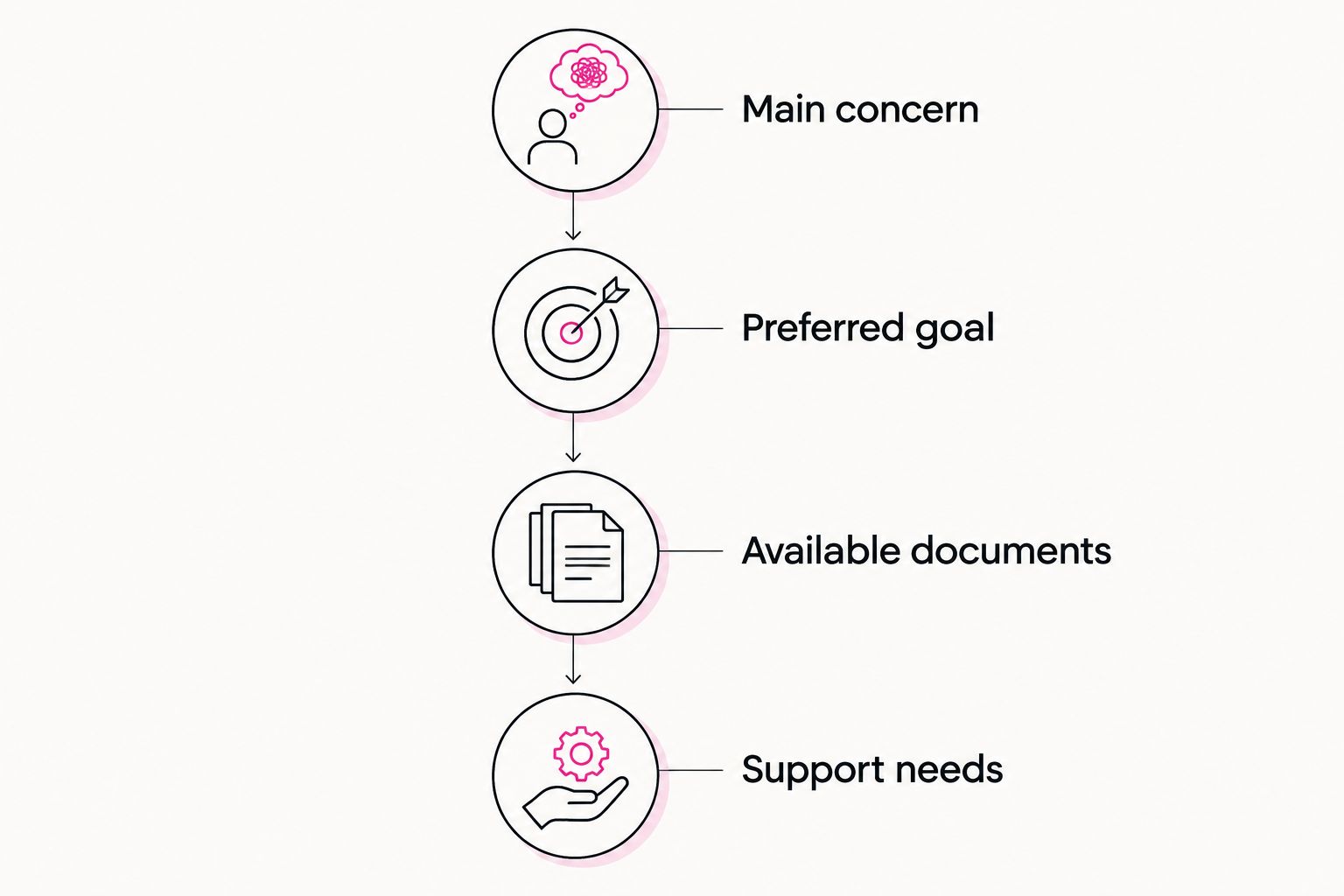
- Give the suburb and describe access to the property.
- Summarise the main concern and the person’s preferred goal.
- Mention relevant existing care and available documents.
- Explain any communication or support needs.
- Ask who should attend and how information will be shared.
Prepare the home without rearranging everything
Ask the practice what preparation is needed for the planned appointment. Start with ordinary practical details: how the physiotherapist will find the entrance, where the conversation can take place, and whether someone needs to answer the door.
You do not need to turn your living room into a treatment room. Keep the setting familiar and explain any space limitations beforehand. Avoid moving heavy furniture or changing the person’s usual setup just to make the home look ready for assessment.
For a 2026 visit, confirm the address, access instructions and the person attending with the client. If family members or support workers will join, discuss their role with the client first. Privacy matters even when everyone is trying to help.
- Confirm the entrance and any parking or building instructions.
- Explain stairs, narrow access or shared living areas.
- Ask what space is needed for the planned assessment.
- Keep relevant documents somewhere easy to find.
- Agree who will attend and how they will support the client.
Agree on the next step after assessment
Before the appointment ends, ask the physiotherapist to explain the findings and proposed next step in plain language. Repeat your understanding back if anything is unclear. A useful plan connects the assessment with the person’s stated goals rather than leaving the family with treatment names alone.
If exercises or other activities are recommended, ask for instructions suited to the person and their support arrangements. Clarify what help is appropriate and what to do if the instructions are difficult to follow. Do not add activities from a general article to an individual plan.
Where several people support the client, identify 2 contact roles: the person handling appointments and the person helping with agreed follow-up. One person can hold both roles. For professional referrers coordinating care in 2026, confirm consent and communication expectations before requesting assessment information.
- Ask how the findings relate to the person’s goals.
- Request an explanation of the proposed next step.
- Clarify any individual instructions and who will assist.
- Ask how questions between appointments should be raised.
- Agree who manages appointments and follow-up communication.
Compare the appointment options
Best for should describe the person’s needs, not declare one setting the winner. Use this comparison to prepare questions, then confirm the appropriate arrangement with the provider.
| Option | Best for | Practical benefit | Key limitation |
|---|---|---|---|
| Home physiotherapy with Foveria Health | Greater Sydney clients seeking personal, goal-focused care at home with Simon | Assessment takes place in the client’s everyday setting | The proposed service, home setup and appointment arrangements need confirmation |
| Clinic-based physiotherapy | People who prefer a clinic and can manage the journey | Separates the appointment from the home environment | Travel and attendance need arranging; the home environment is not directly observed |
| A coordinated plan involving existing providers | People whose current care needs to inform a new physiotherapy appointment | Gives the physiotherapist relevant context from other care | Information sharing requires consent and clear responsibilities |
These options are not interchangeable packages. Coordination can support either a home or clinic appointment, and the appropriate treatment setting depends on the assessment question. Tell the provider what care is already in place before adding another service.
Common mistakes Bankstown families make
Booking around the family’s goals alone
A relative might prioritise walking further while the client wants help understanding discomfort during everyday tasks. Both concerns deserve discussion, but they are not the same goal. Ask the person what matters most and make that visible in the enquiry.
Assuming a funding label confirms the appointment
Mentioning NDIS, Support at Home or Medicare does not settle the arrangements for an individual service. Confirm the proposed appointment, documents and administrative responsibilities before booking. For care arranged in 2026, use current confirmation rather than relying on what applied previously.
Changing the home before asking what is needed
Moving furniture or replacing a usual chair can remove useful context and create unnecessary work. Explain the existing setup first. Ask the physiotherapist what preparation is appropriate for the visit rather than guessing.
Letting everyone become the main contact
Different instructions from relatives, support workers and coordinators make arrangements harder to follow. Nominate a contact for booking and agree who helps with follow-up. Keep the client involved and respect their preferences about sharing information.
FAQ
What is home visit physiotherapy in Bankstown?
Home visit physiotherapy in Bankstown is physiotherapy assessment and treatment provided in a person’s home. It allows the appointment to consider everyday goals and the home setting; confirm the proposed service and address with the provider.
Is home physiotherapy better than going to a clinic?
Home physiotherapy is not automatically better than a clinic appointment. Home visits suit discussion of the everyday home environment, while the right setting depends on the person’s needs, preferences and assessment question.
Can I arrange a home physiotherapy visit for my parent?
You can help arrange an enquiry while keeping your parent involved in the decisions. Ask about their goals, who they want present and what information they agree to share.
Do I need a referral for home physiotherapy?
Confirm referral requirements with the practice for your proposed appointment and funding arrangement. Explain whether you are enquiring as a private client or through a funding pathway, and ask which documents are needed.
Can NDIS or Support at Home fund my visit?
Your individual funding arrangement needs confirmation before you book. The practice works with NDIS and Support at Home clients, but that does not confirm eligibility or funding for a particular person or appointment.
What should I prepare before the first home visit?
Prepare your main goals, relevant documents and clear access instructions. Ask the practice what space is needed and agree with the client who will attend.
What should a support coordinator include in an enquiry?
Include the client’s goals, suburb, communication needs and proposed funding arrangement. Confirm the client’s consent, your role and who will handle booking and follow-up communication.
One last thing
Write down the exact everyday task that prompted the enquiry. The chair, doorway or part of the routine involved gives the physiotherapist a clearer starting point than a general request for better mobility. You do not need a perfect explanation; you need the person’s own account of what they want help with.